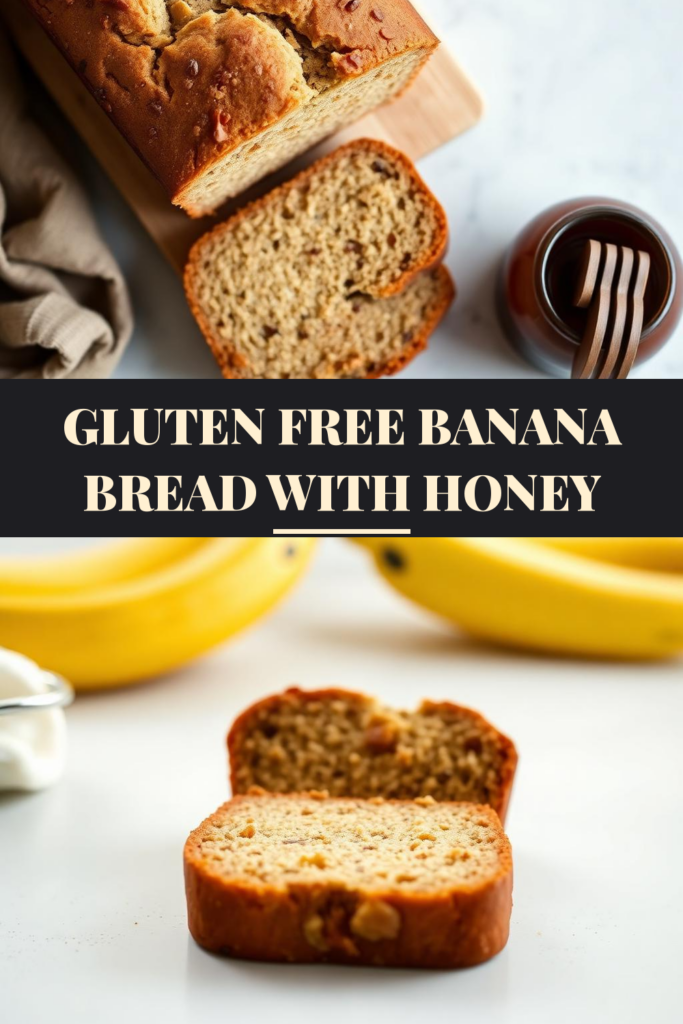
This gluten-free banana bread uses honey as the only sweetener, which adds a mild floral note and keeps the crumb moist. The key is using very ripe bananas and a proper gluten-free flour blend; without it, the loaf turns gritty or falls apart. You will need about 15 minutes of prep and 55 minutes of baking, and it slices best the next day.
Ingredients
- 1¾ cups (245 g) gluten-free all-purpose flour blend (with xanthan gum; if your blend lacks it, add 1 tsp xanthan gum)
- 1 tsp baking soda
- ½ tsp salt
- 1 tsp ground cinnamon (optional)
- 3 large ripe bananas, mashed (about 1½ cups / 340 g)
- ½ cup (170 g) honey
- ⅓ cup (75 g) neutral oil (sunflower, canola, or melted coconut oil)
- 2 large eggs, at room temperature
- 1 tsp vanilla extract
- 1 tbsp apple cider vinegar (helps the loaf rise without gluten)
Baking Order: Mix Wet, Then Dry, Then Rest the Batter
Gluten-free flours need time to absorb liquid. After mixing the batter, let it rest for 20 minutes before pouring into the pan. This prevents a gritty texture and helps the loaf hold together.
Instructions
- Preheat the oven to 350°F (175°C). Grease a 9×5-inch (23×13 cm) loaf pan and line with parchment paper, leaving overhang on two sides.
- In a medium bowl, whisk the flour blend, baking soda, salt, and cinnamon (if using). Set aside.
- In a large bowl, mash the bananas until mostly smooth. Whisk in the honey, oil, eggs, vanilla, and vinegar until well combined.
- Pour the dry ingredients into the wet mixture. Stir with a spatula until no dry streaks remain. The batter will be thick and slightly lumpy.
- Let the batter rest at room temperature for 20 minutes. Meanwhile, check the oven temperature.
- Pour the batter into the prepared pan and smooth the top. Bake for 50–60 minutes, until a toothpick inserted in the center comes out with only a few moist crumbs (no wet batter). If the top browns too quickly, tent loosely with foil after 30 minutes.
- Cool in the pan on a wire rack for 15 minutes, then lift out and cool completely on the rack before slicing. The loaf firms as it cools.
Substitutions That Work (and What Changes)
- No honey: Use ¾ cup (180 g) maple syrup or ¾ cup (150 g) granulated sugar. Maple syrup adds more liquid; reduce oil by 1 tbsp. Sugar makes a slightly drier, lighter crumb.
- No eggs: Use 2 flax eggs (2 tbsp ground flaxseed + 6 tbsp water, rested 5 minutes). The loaf will be denser and may need 5 extra minutes of baking.
- No oil: Use ⅓ cup (80 g) unsweetened applesauce. The loaf will be softer and less rich; reduce baking time by 5 minutes.
- No vinegar: Use 1 tsp lemon juice. It reacts with the baking soda the same way.
- Flour blend: If your blend contains xanthan gum, use it as is. If it does not, add 1 tsp xanthan gum or the loaf will crumble.
Mistakes That Ruin the Loaf (and How to Avoid Them)
Using under-ripe bananas. They lack sweetness and moisture. Use bananas with brown spots or fully black skins; they should mash easily.
Skipping the rest time. Gluten-free flours are gritty when not hydrated. The 20-minute rest is non-negotiable.
Overmixing. Stir just until combined. Overmixing develops too much air and makes the loaf collapse in the center.
Baking too long. The loaf is done when a toothpick comes out with moist crumbs, not clean. Overbaked gluten-free bread turns dry and crumbly. Start checking at 50 minutes.
Cutting while hot. The loaf is still setting; slicing early makes it fall apart. Wait until completely cool, at least 1 hour.
Storing and Freezing (Keeps 4 Days on the Counter)
Wrap the cooled loaf tightly in plastic wrap or store in an airtight container at room temperature for up to 4 days. The honey helps it stay moist. For longer storage, slice and freeze in a zip-top bag for up to 3 months. Thaw slices at room temperature or toast directly from frozen.
If the loaf develops any mold or off smell, discard it. Do not taste to check.
Related
- Coconut Mochi Bread Recipe (Chewy, Gluten-Free)
- Is Tapioca Flour Gluten-Free? What to Know
- Honey Cider Vinaigrette Recipe
Safe minimum internal temperatures follow USDA FSIS; raw-fish guidance follows the U.S. FDA. See our food safety notes.
Spotted an error? Tell us and we will correct it (corrections policy).