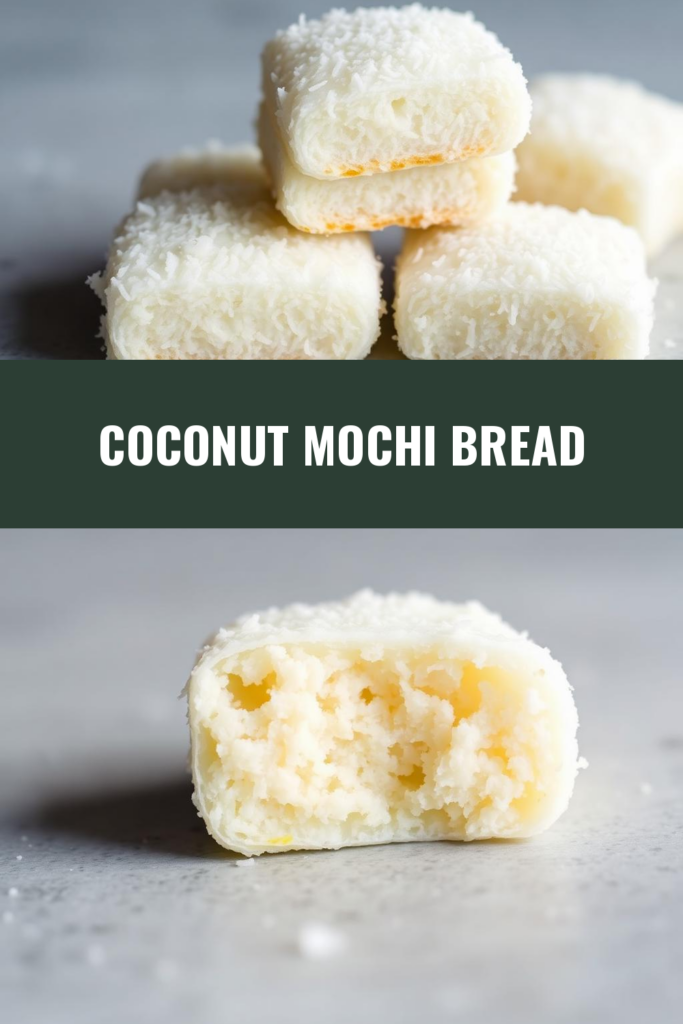
Coconut mochi bread is a chewy, lightly sweet baked good made from glutinous rice flour and coconut milk. Unlike wheat-based bread, it has a dense, bouncy crumb and a crisp crust, and it comes together in one bowl with no kneading or rising. The key is using the right flour and baking it long enough to set the center.
One Bowl, No Kneading: The Mix-and-Bake Method
This bread relies on mochiko (glutinous rice flour) rather than wheat flour, so there is no gluten to develop and no yeast to proof. You simply whisk the wet ingredients, stir in the dry ingredients, and pour the batter into a loaf pan. The result is a tender, chewy loaf that slices cleanly when cool.
Ingredients
- 2 cups (250 g) mochiko (glutinous rice flour), such as Mochiko brand
- 1 cup (200 g) granulated sugar
- 1 tablespoon (12 g) baking powder
- 1/2 teaspoon salt
- 1 can (13.5 oz / 400 ml) full-fat coconut milk
- 1/2 cup (120 ml) water
- 2 large eggs, room temperature
- 1/4 cup (60 ml) melted coconut oil or neutral oil (such as canola)
- 1 teaspoon vanilla extract
- 1 cup (85 g) unsweetened shredded coconut (optional, for texture)
Bake at 350°F (175°C) for 55–65 Minutes
- Preheat the oven to 350°F (175°C). Grease a 9×5-inch (23×13 cm) loaf pan and line with parchment paper, leaving overhang on two sides.
- In a large bowl, whisk together the mochiko, sugar, baking powder, and salt. If using shredded coconut, stir it in now.
- In a separate bowl or large measuring cup, whisk the coconut milk, water, eggs, melted coconut oil, and vanilla until smooth.
- Pour the wet ingredients into the dry ingredients and stir with a whisk or spatula until no lumps remain. The batter will be thin, about the consistency of pancake batter.
- Pour the batter into the prepared pan. Tap the pan on the counter a few times to release air bubbles.
- Bake for 55–65 minutes, until the top is deep golden brown and a toothpick inserted into the center comes out clean. If the top browns too quickly, loosely tent with foil after 40 minutes.
- Let the bread cool in the pan for 15 minutes, then lift it out using the parchment and transfer to a wire rack. Cool completely before slicing—at least 1 hour. The texture firms up as it cools.
Substitutions That Work (and What Changes)
- Mochiko: Use any glutinous rice flour labeled “sweet rice flour” or “mochiko.” Do not substitute regular rice flour or all-purpose flour—the texture will be completely different, dense and gummy.
- Coconut milk: Full-fat coconut milk gives the richest flavor and softest crumb. Light coconut milk works but produces a drier, less tender loaf. You can also use 1.5 cups (360 ml) of coconut milk and omit the water.
- Eggs: For an egg-free version, replace each egg with 1/4 cup (60 g) plain yogurt or 1 tablespoon ground flaxseed mixed with 3 tablespoons water. The bread will be slightly less tender and may need 5 extra minutes of baking.
- Oil: Melted butter or any neutral oil (such as grapeseed) can replace the coconut oil. Butter adds a richer flavor; oil keeps the crumb more neutral.
- Sugar: Reduce to 3/4 cup (150 g) for a less sweet bread, or use 1/2 cup (120 ml) honey or maple syrup, but reduce the water to 1/4 cup (60 ml) to keep the batter from being too thin.
What Ruins This Bread: Overmixing, Underbaking, and Slicing Too Early
Overmixing the batter develops a gummy, tough texture—stir just until the flour is moistened. Underbaking is the most common failure; the center may look set but still be wet and dense, so always test with a toothpick and bake the full 55 minutes. Finally, slicing while warm causes the bread to crumble and stick to the knife. Wait for it to cool completely, at least 1 hour, for clean slices.
If the top cracks, that is normal and does not affect the texture. If the bread sinks in the middle after cooling, it was underbaked or the oven temperature was too low—check with an oven thermometer.
Storing and Freezing Coconut Mochi Bread
Store the bread in an airtight container at room temperature for up to 3 days. It will become slightly firmer but stays chewy. For longer storage, wrap the cooled loaf tightly in plastic wrap and then foil, and freeze for up to 3 months. Thaw overnight in the refrigerator or at room temperature. To refresh, warm slices in a toaster or microwave for 10–15 seconds.
Do not refrigerate the bread—it will dry out and become hard. If the bread develops mold or an off smell, discard it.
Why Is It Chewy? The Role of Glutinous Rice Flour
Mochiko is made from short-grain glutinous rice, which contains no gluten but is high in amylopectin, a starch that gives a springy, chewy texture when baked. This is the same flour used for mochi, and it is naturally gluten-free. The coconut milk adds richness and moisture, while the eggs provide structure. The result is a bread that is denser than banana bread but lighter than a brick—somewhere between a muffin and a steamed cake.
Can I Make This in a Different Pan?
Yes. For muffins, divide the batter among 12 standard muffin cups lined with paper liners and bake at 350°F (175°C) for 25–30 minutes, until a toothpick comes out clean. For a round cake, use a 9-inch (23 cm) round pan and bake for 45–50 minutes. Adjust the time based on the pan’s depth; the loaf pan takes longest because it is deeper.
What to Serve With Coconut Mochi Bread
This bread is excellent on its own with coffee or tea, or toasted and spread with butter or jam. It also pairs well with fresh fruit or a scoop of coconut ice cream. Because it is not very sweet, it works for breakfast or as an afternoon snack.
Safe minimum internal temperatures follow USDA FSIS; raw-fish guidance follows the U.S. FDA. See our food safety notes.
Spotted an error? Tell us and we will correct it (corrections policy).





