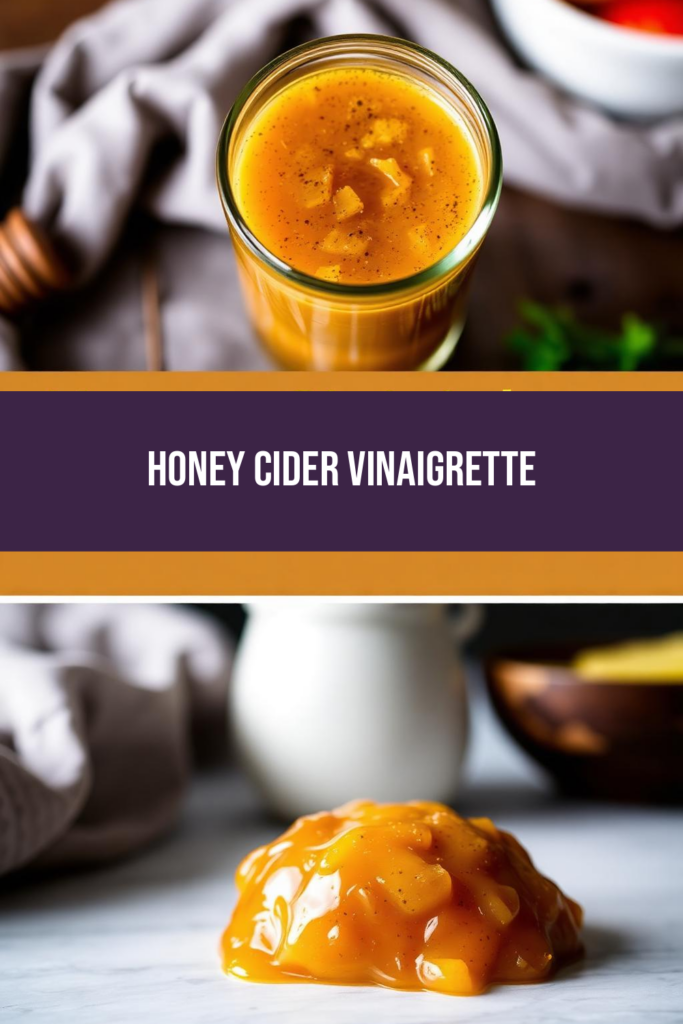
Time: 5 minutes · Serves: 4 · The key step: whisk the cider vinegar with honey and mustard first, then add oil slowly so the dressing emulsifies.
Honey cider vinaigrette is a tangy-sweet salad dressing made with apple cider vinegar, honey, Dijon mustard, and olive oil. It suits green salads, grain bowls, roasted vegetables, and slaws, and it keeps for up to a week in the fridge.
Emulsify the Dressing in 30 Seconds
The only technique that matters is building an emulsion. Vinegar and oil separate unless you force them together. The honey and mustard act as emulsifiers, but they need a slow oil stream to work. Whisk the vinegar, honey, mustard, salt, and pepper together first, then drizzle in the oil while whisking constantly. The result is a creamy, slightly thick dressing that clings to leaves instead of pooling at the bottom of the bowl.
If you prefer a blender or a jar, both work. A blender makes the most stable emulsion; a jar with a tight lid needs a vigorous shake for 20 seconds. Either way, the oil goes in last.
Ingredients
- 3 tbsp (45 ml) apple cider vinegar
- 1 tbsp (15 ml) honey
- 1 tsp (5 ml) Dijon mustard
- 1/4 tsp fine sea salt
- 1/8 tsp black pepper
- 1/2 cup (120 ml) extra-virgin olive oil
Swap the Dijon for 1/2 tsp dry mustard powder if needed; it will be slightly less smooth. Use a mild honey like clover or orange blossom; a strong buckwheat honey will dominate the vinegar.
Instructions
- In a small bowl, whisk together the vinegar, honey, mustard, salt, and pepper until the honey dissolves completely, about 30 seconds.
- While whisking steadily, add the olive oil in a thin, slow stream. Continue whisking until the dressing is thick and no oil streaks remain, about 1 minute.
- Taste and adjust salt or honey. The dressing should be tangy with a clear honey sweetness; if it tastes sharp, add 1 tsp more honey.
- Use immediately or refrigerate in a sealed jar. If refrigerated, let it sit at room temperature for 10 minutes and shake well before serving.
What Ruins This Dressing
The most common failure is a broken dressing, where the oil floats on top. That happens when the oil is added too fast or the bowl is too cold. Fix it by whisking in 1 tsp of warm water or a small ice cube, then whisking vigorously until it re-emulsifies.
Another mistake is using old cider vinegar. Check the bottle’s “best by” date; vinegar does not spoil, but it loses acidity over time, making the dressing flat. If the vinegar tastes weak, add an extra 1/2 tsp.
Over-salting is easy because salt dissolves slowly in vinegar. Start with 1/4 tsp and add more only after tasting. Finally, do not use a metal bowl if you are whisking by hand; it reacts with the vinegar and gives a metallic taste. Use glass or ceramic.
Storage and Make-Ahead
Store the dressing in a sealed glass jar in the refrigerator for up to 5 days. The oil will solidify when cold; that is normal. Bring it to room temperature for 10 minutes and shake well before each use. Do not leave the dressing at room temperature for more than 2 hours total, because it contains honey and vinegar, which are low-risk, but the oil can go rancid over time.
Make it up to 3 days ahead for a party. The flavor actually improves after a day because the honey and mustard meld. If you are making a large batch for a crowd, double the recipe and use a blender for a stable emulsion.
Serving Ideas
This vinaigrette pairs with a simple green salad of mixed lettuce, sliced apples, and toasted walnuts. It also works on roasted Brussels sprouts, a quinoa bowl with chickpeas, or a cabbage slaw. For a warm salad, toss it with roasted sweet potatoes and arugula while the vegetables are still warm.
Adjusting Sweetness and Tang
For a sweeter dressing, increase the honey to 1.5 tbsp (22 ml). For a more acidic dressing, use 4 tbsp (60 ml) vinegar and reduce the oil to 1/3 cup (80 ml). If you want a thinner dressing, add 1 tbsp (15 ml) water. Each change shifts the balance, so taste after adjusting.
Safe minimum internal temperatures follow USDA FSIS; raw-fish guidance follows the U.S. FDA. See our food safety notes.
Spotted an error? Tell us and we will correct it (corrections policy).