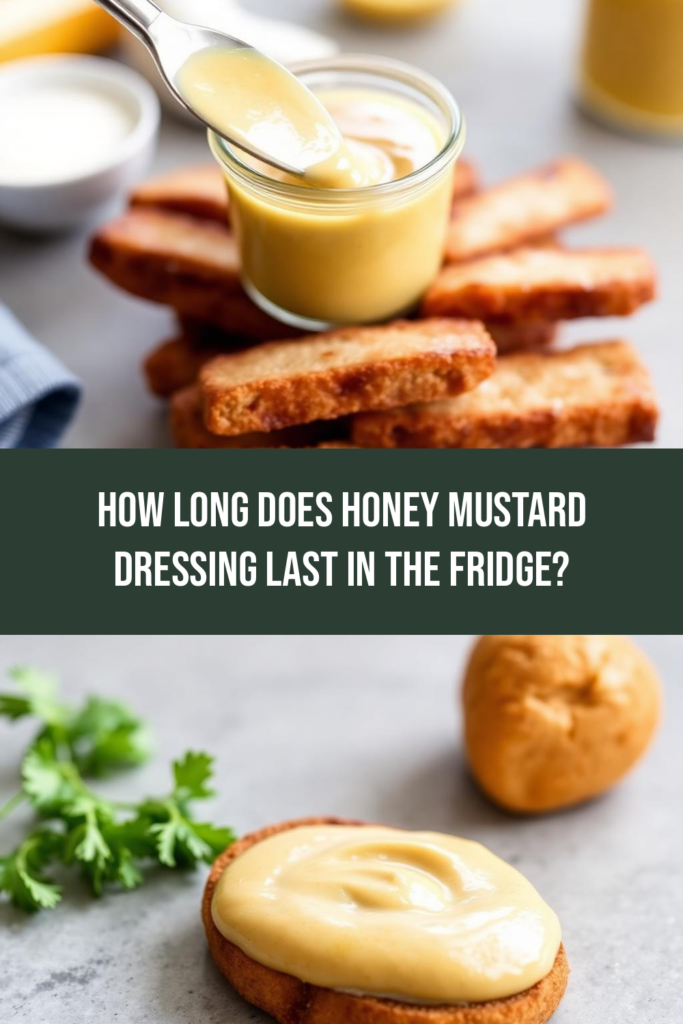
Opened honey mustard dressing lasts 3 to 6 months in the fridge; unopened, it lasts up to 1 year past the printed date. The most common mistake is treating it like a dairy-based dressing—it isn’t. Because honey mustard is high in acid and sugar, it keeps far longer than ranch or Caesar.
Opened Bottles Keep 3–6 Months, Not 1–2 Months
Once opened, a commercial honey mustard dressing stays safe and good-tasting for 3 to 6 months in the refrigerator. The exact time depends on the brand and its preservatives. Check the bottle’s “best by” date: after opening, most brands say to use within that window, but the dressing is usually fine for a few weeks beyond it if it looks and smells normal.
Why so long? Honey mustard dressing contains vinegar, lemon juice or citric acid, and sugar or honey. Acid and sugar both slow bacterial growth. The oil in the dressing also helps preserve it by keeping out oxygen when the bottle is closed.
Homemade honey mustard dressing is different. Without preservatives, it lasts 1 to 2 weeks in the fridge. If it contains fresh garlic or herbs, use it within 4 days—those ingredients can carry botulism spores, and refrigeration slows but does not stop them.
Signs It Has Gone Bad: Smell, Texture, Mold
Before using any honey mustard dressing, check three things:
- Smell: A sour, fermented, or yeasty odor means it’s spoiled. Fresh honey mustard smells tangy and sweet.
- Texture: Some separation is normal—oil rises to the top. Shake the bottle. If it doesn’t recombine into a smooth dressing, or if it’s slimy or curdled, discard it.
- Mold: Any fuzzy spots, dark specks, or film on the surface or around the rim means throw it out. Do not scrape off mold—bacteria can be throughout.
If the dressing passes all three checks, it’s safe to use. Taste a tiny bit if you’re still unsure—if it tastes off, it’s past its prime.
Homemade vs. Commercial: Shelf Life Differences
Commercial dressings contain preservatives like potassium sorbate or sodium benzoate. These extend shelf life significantly. Homemade dressings rely only on their ingredients.
| Type | Refrigerator shelf life | Key factor |
|---|---|---|
| Commercial, unopened | Up to 1 year past the date | Preservatives and sealed bottle |
| Commercial, opened | 3–6 months | Preservatives and cold storage |
| Homemade, basic (honey, mustard, vinegar, oil) | 1–2 weeks | No preservatives |
| Homemade with fresh garlic or herbs | 4 days | Botulism risk from garlic/herbs |
For homemade dressing, write the date on the container. After 1 week, check it daily. If you add fresh garlic or herbs, plan to use it within 4 days—or skip them and use garlic powder and dried herbs instead, which extends the life to the full 1–2 weeks.
How to Store It So It Lasts Longer
Storage mistakes shorten shelf life. Follow these rules:
- Refrigerate immediately after opening. Do not leave it on the counter for more than 2 hours total.
- Keep the cap tight. Oxygen is the enemy—it oxidizes the oil and lets in bacteria.
- Store in the main body of the fridge, not the door. The door’s temperature fluctuates every time you open it. The back of a shelf is coldest and most stable.
- Use a clean utensil. Never dip a used knife or spoon into the bottle. Saliva and food particles introduce bacteria.
- If you make your own, use a clean, dry jar. Moisture from washing can introduce bacteria. Dry it thoroughly before filling.
Freezing is not recommended. Honey mustard dressing separates when frozen and the emulsion breaks, leaving a watery, grainy texture that doesn’t recover even after shaking.
What to Do With a Bottle That’s Past Its Date
If the bottle is past the date but shows no signs of spoilage, you can still use it—but check it more carefully. The date is a quality indicator, not a safety deadline. If it smells, looks, and tastes fine, it’s safe.
If you’re not sure, discard it. A $3 bottle of dressing isn’t worth a bout of food poisoning. When in doubt, throw it out.
To avoid waste, buy smaller bottles if you don’t use dressing often. Or use the dressing as a marinade for chicken or pork—the acid and sugar help tenderize and caramelize. Just remember: any marinade that touched raw meat must be boiled before using as a sauce, or discarded.
Honey Mustard Dressing for Large Batches and Kids
If you make a big batch for a party or picnic, portion it into small containers and refrigerate. Only put out what you’ll use within 2 hours. Leftovers from the table must be discarded—they’ve been at room temperature too long.
For kids’ lunches, use small single-serving containers. They’ll stay safe in a lunchbox with an ice pack for a few hours, but any leftover after lunch should be tossed.
If your dressing separates after being in the fridge, shake it vigorously. If it doesn’t re-emulsify, it’s likely too old. For homemade, you can whisk in a teaspoon of Dijon mustard to help bring it back together.
Related
- How Long Does Pasta Salad Last in the Freezer?
- How Long Does Egg Salad Last in the Freezer?
- How Long Do Hard Boiled Eggs Last in the Freezer
Safe minimum internal temperatures follow USDA FSIS; raw-fish guidance follows the U.S. FDA. See our food safety notes.
Spotted an error? Tell us and we will correct it (corrections policy).