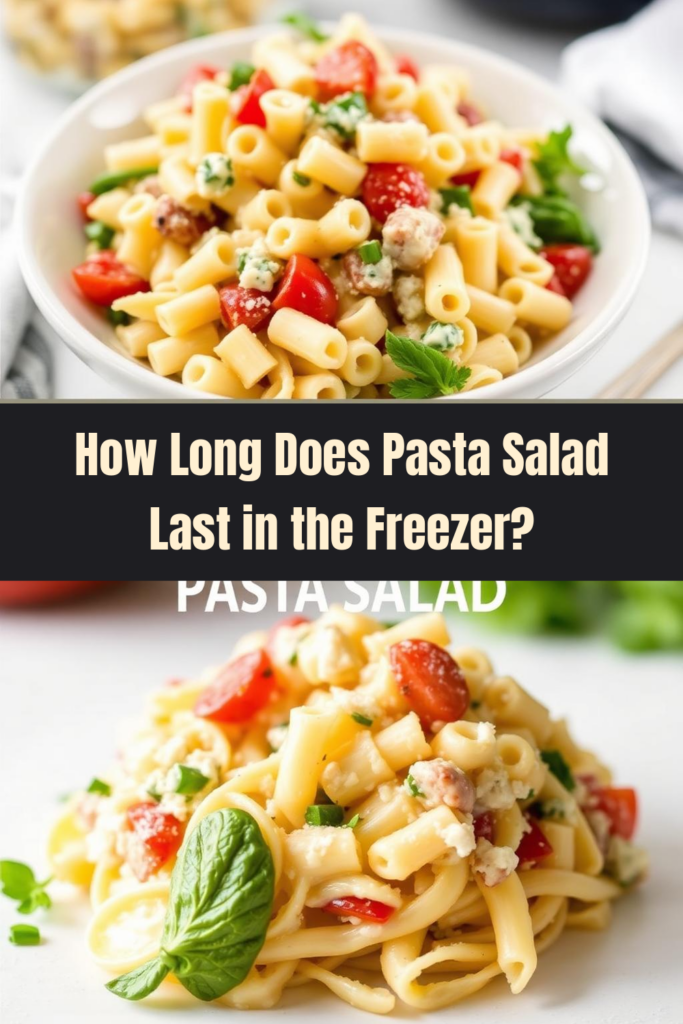
Pasta salad lasts in the freezer for 1 to 2 months before quality drops, though it is safe to eat indefinitely if kept at 0°F (-18°C). The limiting factor is texture: freezing breaks down mayonnaise, softens vegetables, and turns pasta mushy on thawing. For best results, freeze a pasta salad only if it has an oil-and-vinegar dressing, not a mayonnaise-based one.
Freezer Life Depends on the Dressing
Mayonnaise-based pasta salads (tuna, chicken, classic macaroni) do not freeze well. Mayonnaise separates when frozen and thawed, leaving a curdled, watery dressing that cannot be restored by stirring. Oil-and-vinegar dressings, like those in Italian or Greek pasta salads, freeze far better because the oil and vinegar re-emulsify with shaking after thawing.
If you freeze a mayo-based salad anyway, expect the dressing to break. You can partially repair it by whisking in 1–2 tablespoons (15–30 ml) of fresh mayonnaise after thawing, but the texture will still be softer than fresh. The safe freezer window for any pasta salad is 1–2 months; after that, freezer burn and off-flavors become noticeable.
How to Freeze Pasta Salad Without Ruining It
Follow these steps for the best texture and safety:
- Cool the pasta salad completely in the refrigerator first—never freeze warm food, as it raises the freezer temperature and can cause bacterial growth in the center.
- Portion into airtight freezer-safe containers or heavy-duty zip-top bags. Leave about ½ inch (1.25 cm) of headspace for expansion.
- Press out as much air as possible from bags before sealing. Air causes freezer burn and dries out the pasta.
- Label with the date and contents. Use within 2 months for best quality.
- Freeze at 0°F (-18°C) or lower. A full freezer holds temperature better than a partly empty one.
For a mayo-based salad, consider freezing only the cooked pasta and other solid ingredients (chicken, vegetables) without the dressing. Add fresh dressing after thawing. This avoids the separation problem entirely.
Thawing and Serving After Freezing
Thaw pasta salad in the refrigerator, not on the counter. A 2-cup (480 ml) portion takes about 8–12 hours; a large container may need 24 hours. Once thawed, do not refreeze—texture degrades further and safety risk increases with each temperature cycle.
After thawing, expect the pasta to be softer and vegetables (cucumbers, bell peppers, tomatoes) to be limp or watery. Drain any excess liquid before serving. For oil-based dressings, stir vigorously or shake the container to recombine the oil and vinegar. Add a splash of fresh olive oil or lemon juice to brighten the flavor.
Serve thawed pasta salad within 3–4 days, keeping it refrigerated at all times. Perishable ingredients (mayonnaise, dairy, eggs, meat, cooked pasta) must not sit out for more than 2 hours total, or 1 hour if the room is above 90°F (32°C).
What Freezing Does to Pasta and Vegetables
Ice crystals form inside pasta and vegetable cells during freezing, rupturing cell walls. On thawing, water leaks out, making pasta mushy and vegetables soggy. This is why frozen pasta salad never tastes like fresh—it is a texture change, not a safety issue.
To minimize damage:
- Cook pasta slightly underdone (al dente) before freezing—it will soften further during thawing.
- Rinse cooked pasta in cold water immediately after draining to stop cooking and remove excess starch.
- Use sturdy vegetables like carrots, broccoli, or olives; avoid high-water vegetables like tomatoes, cucumbers, and lettuce, which turn to mush.
- Add delicate ingredients (fresh herbs, cheese, croutons) after thawing, not before freezing.
Freezer Time Limits for Common Pasta Salads
| Type of Pasta Salad | Freezer Life | Best Method |
|---|---|---|
| Oil-and-vinegar (Italian, Greek) | 1–2 months | Freeze whole, shake after thawing |
| Mayonnaise-based (tuna, chicken, macaroni) | 1 month max, quality poor | Freeze pasta and solids only, add dressing later |
| Pesto-based | 2 months | Freeze whole, stir well after thawing |
| With raw vegetables (tomato, cucumber) | Not recommended | Freeze only the pasta, add vegetables fresh |
These limits are about quality, not safety. Food kept constantly at 0°F (-18°C) is safe indefinitely, but the taste and texture will degrade long before that. If a frozen pasta salad has been thawed in the refrigerator and kept there for more than 3–4 days, discard it—do not taste it to check safety.
Can You Freeze a Pasta Salad That Has Already Been in the Fridge?
Yes, if it has been refrigerated within 2 hours of making and is still within its 3–4 day fridge window. Freeze it as soon as possible after cooking, not after it has sat in the fridge for days. The sooner it freezes, the less bacterial growth and texture loss occur.
Do not freeze a pasta salad that has been left out at room temperature for more than 2 hours (1 hour above 90°F/32°C). Bacteria that cause food poisoning can multiply during that time, and freezing does not kill them—it only stops their growth. If in doubt, throw it out.
Better Storage Options Than Freezing
Most pasta salads are best eaten fresh, within 3–4 days in the refrigerator. If you need to make ahead for a party, prepare the dressing separately and toss it with the pasta and vegetables no more than a few hours before serving. Store the undressed pasta in an airtight container in the fridge for up to 3 days.
For longer storage without freezing, consider making a pasta salad that does not contain perishable ingredients—just pasta, oil, vinegar, and dried herbs. That can sit in the fridge for up to a week, though quality still declines. Freezing is a last resort, not a first choice, for pasta salad.
Related
- Chicken Casserole with Cream Cheese and Pasta
- Apple Cider Vinaigrette Salad Dressing Recipe
- Apple Cabbage Salad with Cider Vinaigrette
Safe minimum internal temperatures follow USDA FSIS; raw-fish guidance follows the U.S. FDA. See our food safety notes.
Spotted an error? Tell us and we will correct it (corrections policy).