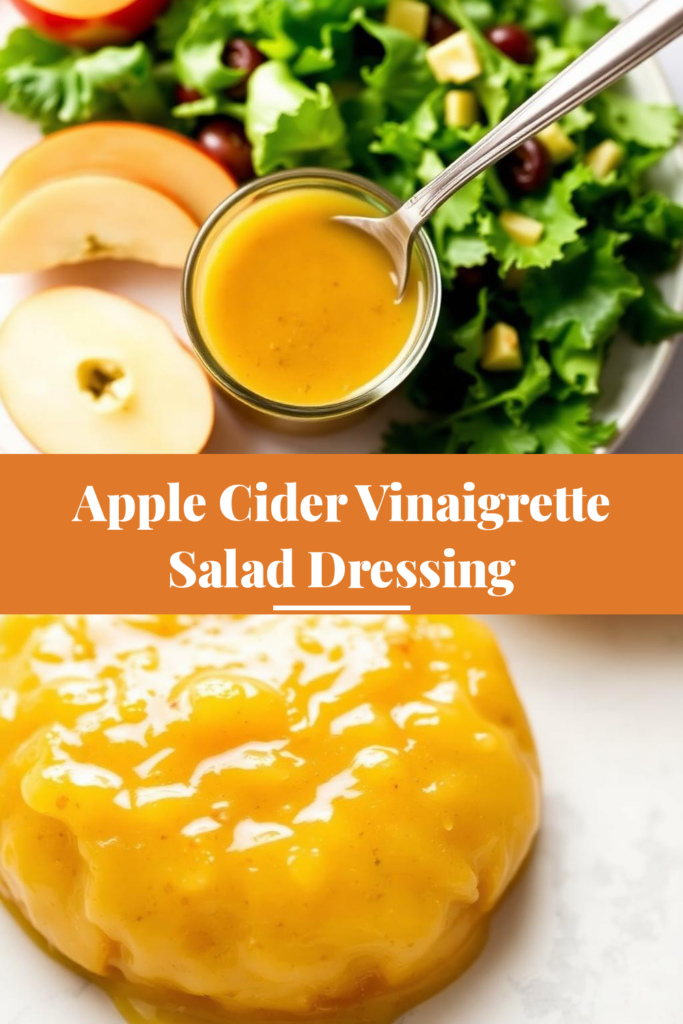
This apple cider vinaigrette is a tangy, slightly sweet dressing that works for a quick weeknight salad, a packed lunch, or a side dish at a weekend cookout. It pairs well with mixed greens, roasted vegetables, grain bowls, and slaws, and it comes together in about five minutes with a whisk or a jar.
Ingredients
- 1/4 cup (60 ml) apple cider vinegar
- 1 teaspoon Dijon mustard
- 1 teaspoon honey or maple syrup
- 1 small shallot, finely minced (about 1 tablespoon)
- 1/2 teaspoon salt
- 1/4 teaspoon black pepper
- 1/2 cup (120 ml) extra-virgin olive oil
Instructions
- In a small bowl or a jar with a tight-fitting lid, combine the apple cider vinegar, Dijon mustard, honey, minced shallot, salt, and pepper. Whisk or shake until the salt dissolves and the mustard is blended.
- Slowly drizzle in the olive oil while whisking constantly, or add the oil to the jar, seal, and shake vigorously for 20–30 seconds until the dressing is emulsified and creamy-looking.
- Taste and adjust salt or sweetness if needed. Use immediately or refrigerate in a sealed container.
Substitutions
Swap the Dijon mustard for 1/2 teaspoon of dry mustard powder; the dressing will be slightly less smooth. Replace honey with maple syrup for a more rounded sweetness, or use 1 teaspoon of sugar dissolved in the vinegar. For a milder onion flavor, skip the shallot and add 1/4 teaspoon garlic powder instead. If you only have white wine vinegar or red wine vinegar, use the same amount; the flavor will be less fruity but still tangy. For a dairy-free version, this dressing is already dairy-free; check the mustard label if you need to avoid all dairy.
Equipment That Matters
A whisk and a bowl work fine, but a jar with a lid makes emulsifying easier and lets you store the dressing in the same container. A fine-mesh strainer is useful if you want to remove the minced shallot bits for a smoother texture. If you use a blender or food processor, the dressing will be more stable and creamy, but you will need to wash the extra equipment.
Storage and Shelf Life
Store the vinaigrette in a sealed container in the refrigerator for up to 1 week. The olive oil will solidify when cold; let it sit at room temperature for 10–15 minutes, then shake or whisk before using. Do not leave the dressing at room temperature for more than 2 hours total. If you added fresh herbs or garlic, refrigerate and use within 4 days. The dressing will separate as it sits; that is normal.
How to Use It
Use about 2 tablespoons per 2 cups of greens; toss gently to coat. This vinaigrette works well with bitter greens like arugula or radicchio, as the sweetness balances their bite. It also makes a good marinade for chicken or pork; if using as a marinade, do not reuse leftover marinade that touched raw meat. For a grain salad, toss with cooked quinoa or farro while they are still warm so they absorb the dressing.
Adjusting the Balance
If the dressing tastes too sharp, add another 1/2 teaspoon of honey or maple syrup. If it tastes too sweet, add 1 teaspoon more vinegar. The salt level depends on your mustard; start with 1/2 teaspoon and add more after tasting. For a thinner dressing, add 1 tablespoon of water and shake well; this also helps if the dressing feels too thick after refrigeration.
Make-Ahead and Portions
This recipe makes about 3/4 cup (180 ml), enough for 4–6 salads. You can double it easily; use a 1:2 ratio of vinegar to oil as the base. If you want a smaller batch, use 2 tablespoons vinegar and 1/4 cup oil, keeping the other ingredients proportional. The dressing keeps for a week, so making a full batch ahead saves time for lunches.
Safety Notes
This dressing contains no raw eggs or flour, so it is safe for most people. If you add fresh garlic or herbs, keep it refrigerated and use within 4 days to avoid the risk of botulism. Always refrigerate any leftover dressing after serving, and do not leave it out for more than 2 hours. If you are serving this to children or pregnant people, the ingredients are all safe; just ensure the honey is pasteurized if you are concerned about infant botulism (never give honey to babies under 1 year).
Safe minimum internal temperatures follow USDA FSIS; raw-fish guidance follows the U.S. FDA. See our food safety notes.
Spotted an error? Tell us and we will correct it (corrections policy).





