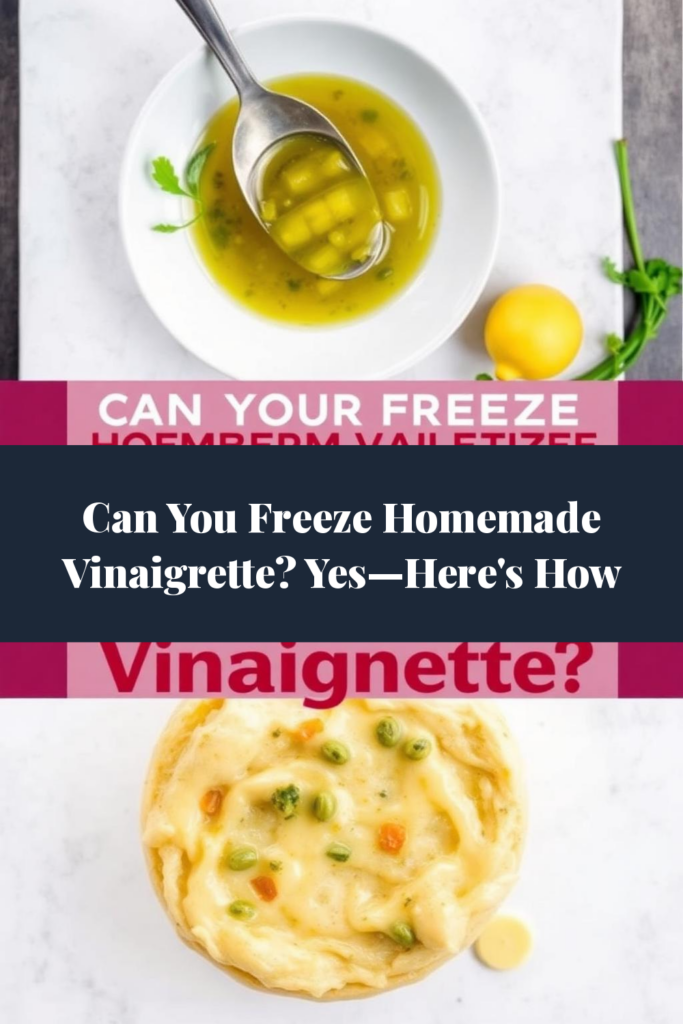
Yes, you can freeze homemade vinaigrette. Most oil-and-vinegar dressings freeze well for up to 3 months, though the texture will change slightly—emulsions can separate and oil may turn cloudy. The flavor stays intact, and a vigorous shake or blend after thawing brings it back close to fresh.
Which Vinaigrettes Freeze Well and Which Don’t
Simple vinaigrettes with oil, vinegar, mustard, and dried herbs freeze best. Mustard acts as a stabilizer, so a classic Dijon vinaigrette will re-emulsify more easily after thawing. Honey or maple syrup also help keep the texture smooth because they slow separation.
Vinaigrettes with fresh garlic, shallots, or fresh herbs are safe to freeze but lose their punch—freezing dulls fresh flavors and can make garlic turn bitter. If you freeze them, use within 1 month and add a pinch of fresh minced garlic or herbs after thawing to restore the taste. Do not freeze vinaigrettes containing dairy (buttermilk, cream, yogurt) or raw egg; those are better refrigerated and used within a few days.
How to Freeze Vinaigrette Without Ruining It
Freeze in small portions—ice cube trays or 2-ounce (60 ml) silicone molds work well. Each cube is about 2 tablespoons (30 ml), perfect for one salad. Once frozen solid, pop the cubes out and transfer them to a freezer bag or airtight container. Label with the date and type. For larger amounts, use a freezer-safe jar or container, leaving at least 1 inch (2.5 cm) of headroom because liquids expand when frozen.
To thaw, move the cubes to the refrigerator overnight or set the container in a bowl of cool water for 20–30 minutes. Do not microwave—it heats unevenly and can cook the oil, ruining the flavor. After thawing, shake the vinaigrette vigorously in a sealed jar for 30 seconds, or whisk it in a bowl. If it still looks separated, blend it with an immersion blender for 10 seconds.
How Long Frozen Vinaigrette Lasts
Frozen vinaigrette keeps its best quality for up to 3 months. After that, the oil can develop off-flavors from oxidation, even though it stays safe to eat indefinitely if kept at 0°F (-18°C) or below. For safety, never thaw at room temperature for more than 2 hours total. Once thawed, use within 7 days and keep it refrigerated.
If you freeze a vinaigrette that contains fresh garlic or shallots, use it within 1 month for the best taste. The garlic flavor fades and can turn slightly bitter with longer storage. Always write the freeze date and the ingredient list on the label—you won’t remember what’s in it after a month.
Signs Your Thawed Vinaigrette Has Gone Bad
After thawing, check for these signs before using:
- Off smell—rancid oil smells like old paint or crayons, and vinegar that has turned sour smells sharp and unpleasant.
- Mold—any fuzzy spots on the surface or around the container rim mean discard.
- Texture—a little separation is normal, but if the oil is thick and gloopy or the liquid is slimy, throw it out.
- Taste—only taste a tiny bit if the smell and texture seem fine; if it tastes bitter, soapy, or just wrong, discard it.
Never rely on taste or smell to decide if food is safe—if in doubt, throw it out. Freezing does not kill bacteria, so if the vinaigrette was left at room temperature for more than 2 hours before freezing, discard it.
Freezing a Vinaigrette That Has Already Been Opened
If you’ve already made and refrigerated a vinaigrette, you can still freeze it within its fridge life (usually 1–2 weeks for simple ones). Freeze it before the expiration date, and it will keep for the same 3-month window. However, if the vinaigrette has been sitting in the fridge for more than a week, the oil may already be starting to oxidize—freezing won’t reverse that. For best results, freeze within 3–4 days of making it.
For a vinaigrette with fresh garlic or herbs, freeze it within 24 hours to capture the freshest flavor. The longer it sits in the fridge, the more the garlic and herbs degrade, and freezing won’t restore them.
How to Re-Emulsify After Thawing
Re-emulsifying is the key step to making thawed vinaigrette look and taste fresh. The simplest method: pour the thawed vinaigrette into a jar with a tight lid, then shake hard for 30–60 seconds. If it still looks separated, add a teaspoon of Dijon mustard (if not already in it) and shake again—mustard contains lecithin, which helps oil and vinegar stay mixed.
For a smoother result, use an immersion blender. Pour the thawed vinaigrette into a tall cup, blend on low for 10–15 seconds, and it will become creamy and stable. If you don’t have a blender, whisk it in a bowl with a fork, adding the oil in a slow stream while whisking—this takes about 2 minutes but works.
After re-emulsifying, the vinaigrette may be slightly thicker or thinner than fresh. If it’s too thick, whisk in a teaspoon of water or vinegar. If it’s too thin, add a teaspoon of oil and shake again. The texture won’t be exactly like fresh, but it will be perfectly usable for salads, marinades, or drizzling over roasted vegetables.
Quick-Answer Line
Yes, freeze homemade vinaigrette for up to 3 months in small portions; thaw in the fridge, shake or blend, and use within 7 days.
Related
- Mrs Fields Banana Bread Recipe Homemade
- Bread Loaf Maker: How to Use One for Homemade Loaves
- Bread Loaf Mix for a Soft Homemade Loaf
Safe minimum internal temperatures follow USDA FSIS; raw-fish guidance follows the U.S. FDA. See our food safety notes.
Spotted an error? Tell us and we will correct it (corrections policy).