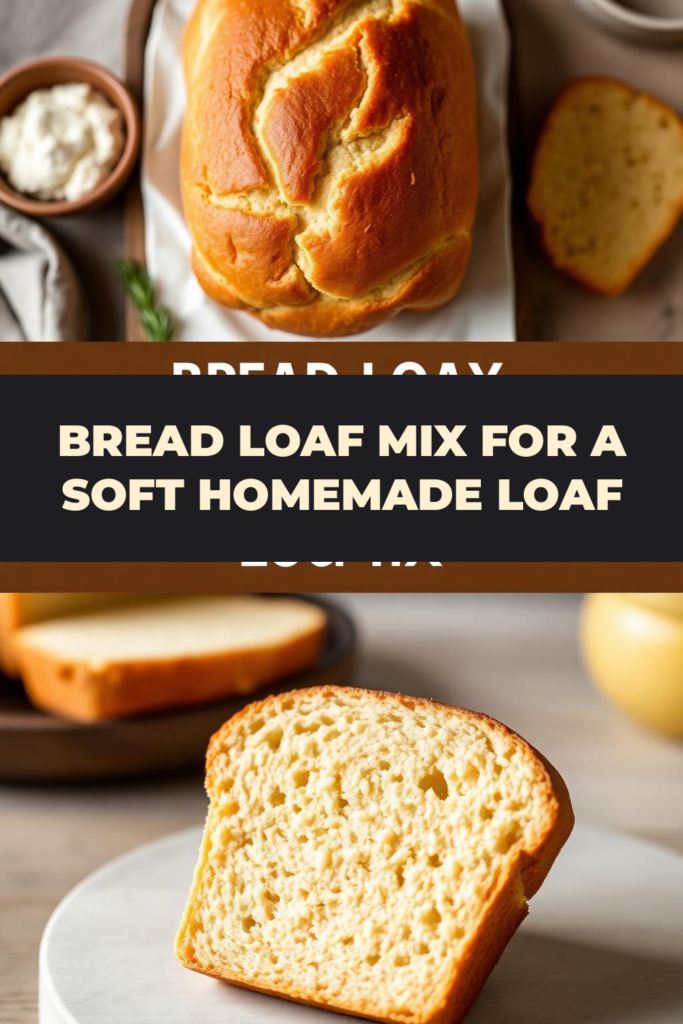
Bread loaf mix gives you a soft, tender loaf with a golden crust and a fine, even crumb, without measuring flour, salt, or yeast separately. The mix already contains the dry ingredients, so you only add liquid, fat, and sometimes an egg, then knead, rise, and bake. This method works for both white and whole wheat blends, and the result is a sandwich-ready loaf that slices cleanly.
Pick the Right Mix and Pan Before You Start
Bread loaf mixes come in two types: those that need yeast added (check the package) and those with yeast already in the mix. Read the label to confirm which you have, because the liquid temperature differs. For a mix with yeast already included, use warm water at 110–115°F (43–46°C); for a mix where you add yeast, dissolve the yeast in the warm water first and let it sit 5 minutes until foamy.
Use a 9×5-inch (23×13 cm) loaf pan for a standard 1-pound (about 454 g) mix. If your mix is larger (some are 2 pounds), use two pans or one 9×5-inch pan and bake longer. Grease the pan with butter or oil, or line it with parchment paper so the loaf releases cleanly.
Ingredients
- 1 package bread loaf mix (typically 1 lb / 454 g, or as directed on package)
- 1 cup (240 ml) warm water (110–115°F / 43–46°C) for yeast-included mixes; for add-yeast mixes, use 1 cup (240 ml) warm water plus the yeast packet from the mix
- 2 tbsp (30 ml) olive oil or melted butter (or as directed on package)
- 1 large egg (optional, for richer crumb; add 2 tbsp / 30 ml less water if using)
- Extra flour for kneading (about 1/4 cup / 30 g)
Note: Some mixes require milk instead of water; if so, use warm milk (110–115°F / 43–46°C).
Mix, Knead, and Rise the Dough
- In a large bowl, combine the bread loaf mix, warm water, oil (or butter), and egg if using. Stir with a wooden spoon until a shaggy dough forms, about 1 minute.
- Turn the dough onto a lightly floured surface. Knead for 8–10 minutes, adding flour 1 tbsp (15 ml) at a time if the dough sticks. The dough should be smooth and elastic, and spring back when poked.
- Shape the dough into a ball. Place it in a lightly oiled bowl, turn to coat, and cover with plastic wrap or a damp towel. Let rise in a warm place (75–80°F / 24–27°C) until doubled in size, about 1 to 1½ hours.
- Punch down the dough. On a lightly floured surface, flatten it into a rectangle about 8×10 inches (20×25 cm). Roll it up tightly from the short end, pinching the seam to seal.
- Place the rolled dough seam-side down in the prepared loaf pan. Cover loosely with plastic wrap and let rise again until the dough is about 1 inch (2.5 cm) above the rim of the pan, about 45 minutes to 1 hour.
Bake Until Golden and Hollow-Sounding
- Preheat the oven to 375°F (190°C). Place the risen loaf in the center of the oven.
- Bake for 30–35 minutes, until the top is deep golden brown and the loaf sounds hollow when tapped on the bottom. If the top browns too quickly, tent loosely with foil after 20 minutes.
- Check the internal temperature with an instant-read thermometer: it should read 190–200°F (88–93°C) in the center. This is a bread doneness cue, not a USDA meat temperature.
- Remove the pan from the oven and let it cool in the pan for 10 minutes. Then turn the loaf out onto a wire rack and cool completely, at least 1 hour, before slicing. Slicing warm bread compresses the crumb.
Swap Ingredients and Adjust the Crumb
If you want a softer crust, replace 2 tbsp (30 ml) of the water with milk, or brush the hot loaf with melted butter after baking. For a crisper crust, place a shallow pan of water on the oven floor during baking, or spray the loaf with water before baking.
To make it whole wheat, use a whole wheat bread loaf mix and increase the water by 2–3 tbsp (30–45 ml) because whole wheat flour absorbs more liquid. For a dairy-free version, use water and a neutral oil like canola or sunflower instead of butter. For an egg-free loaf, omit the egg and use the full 1 cup (240 ml) of water; the crumb will be slightly denser but still tender.
If you want a sweeter loaf, add 2 tbsp (25 g) sugar or honey to the dry mix before adding liquid. Honey will also make the crust brown faster, so lower the oven to 350°F (177°C) and bake 5 minutes longer.
Store and Freeze the Loaf
Once completely cool, store the bread in a plastic bag or airtight container at room temperature for up to 3 days. Do not refrigerate; it speeds up staling. For longer storage, wrap the cooled loaf tightly in plastic wrap, then foil, and freeze for up to 3 months. Thaw at room temperature for 2–3 hours, or toast slices directly from frozen.
If the bread develops mold or an off smell, discard it. Sliced bread goes stale faster than a whole loaf, so slice only what you need.
Serve It With or Toast It
This loaf is a plain white or whole wheat bread, so it works for sandwiches, toast, French toast, or bread pudding. For a classic pairing, serve warm slices with butter and jam, or use it for grilled cheese. The crumb is sturdy enough to hold fillings like tuna salad or egg salad without falling apart. For a savory twist, brush the top with garlic butter and sprinkle with parsley after baking.
Safe minimum internal temperatures follow USDA FSIS; raw-fish guidance follows the U.S. FDA. See our food safety notes.
Spotted an error? Tell us and we will correct it (corrections policy).