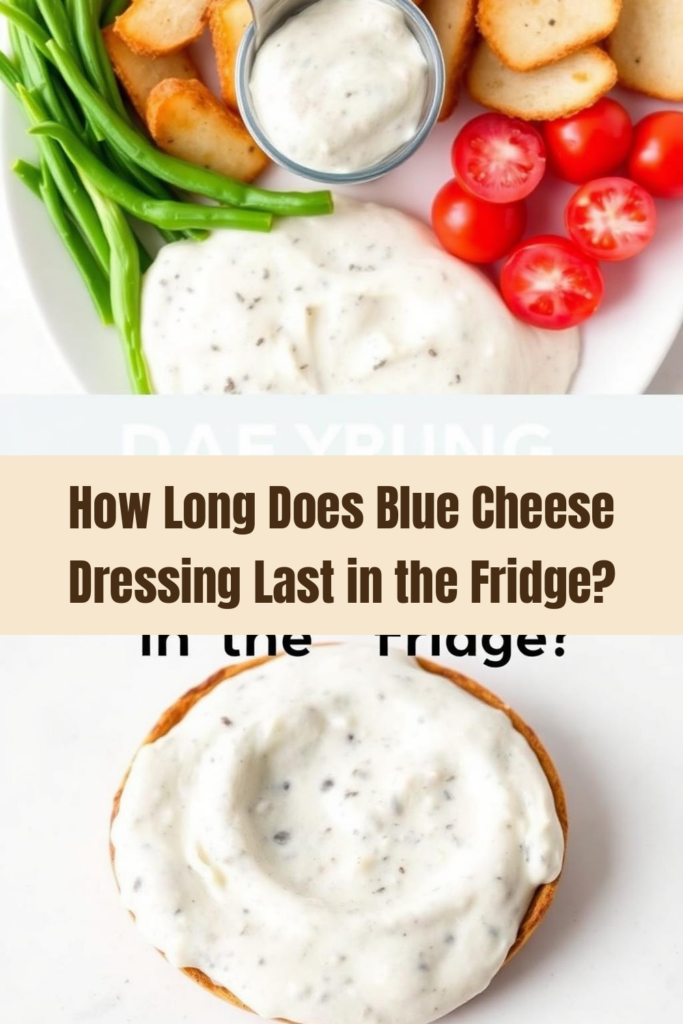
An opened bottle of blue cheese dressing lasts 2 to 4 weeks in the fridge; an unopened bottle lasts 1 to 2 months past the printed date. For example, a bottle opened on March 1 should be finished by March 29 at the latest, while an unopened bottle with a June 1 date is still fine to use through the end of July.
The 2-Week Rule for Opened Bottles
Once opened, refrigerate blue cheese dressing and use it within 2 weeks for the best quality. Many commercial dressings contain preservatives that stretch this to 4 weeks, but the 2-week mark is the safe, simple rule. If the label says “use within 14 days after opening,” follow that instead.
Homemade blue cheese dressing is different: it lasts only 3 to 4 days in the fridge because it lacks preservatives. This applies whether you made it with buttermilk, sour cream, or mayonnaise. Write the date on the container when you make it.
Unopened Bottles Last 1 to 2 Months Past the Date
An unopened bottle of commercial blue cheese dressing keeps for 1 to 2 months beyond the “best by” or “sell by” date printed on the bottle. The date is a quality marker, not a safety deadline. After that window, the dressing may separate or develop an off flavor, but it is not necessarily unsafe if the seal was intact and it was stored properly.
Store unopened bottles in the fridge, not the pantry, unless the label says otherwise. Once you open it, the 2-week clock starts.
What Shortens or Extends the Shelf Life
Three things change how long the dressing lasts:
- Temperature: Keep it at 40°F (4°C) or below. The door of the fridge is warmer than the shelves, so store the bottle on a middle or lower shelf, not in the door.
- Contamination: Always use a clean, dry spoon. Dipping a used knife or eating directly from the bottle introduces bacteria that shorten the life.
- Ingredients: Dressings with more vinegar or preservatives last longer. Homemade versions with fresh buttermilk or herbs spoil faster.
If the dressing sits out at room temperature for more than 2 hours (1 hour if the room is above 90°F/32°C), throw it out. Do not put it back in the fridge to “save” it.
How to Tell If It Has Gone Bad
Do not taste or smell the dressing to decide if it is safe. Instead, look for these signs:
- Mold: Any fuzzy spots, green, black, or white growth on the surface or around the rim.
- Texture: Separation is normal—shake the bottle. If it stays curdled, watery, or slimy after shaking, it is past its prime.
- Color: A dull, grayish, or darkening color compared to when you opened it.
- Gas: A swollen lid or a hiss when you open it means fermentation is happening.
When in doubt, throw it out. A $4 bottle of dressing is not worth a foodborne illness.
Freezing Blue Cheese Dressing
Freezing is possible but changes the texture. The emulsion breaks, and the dressing becomes watery and grainy when thawed. It works if you plan to use it in cooking, like a warm dip or a sauce, but not for pouring over a salad.
To freeze, pour the dressing into an airtight container, leaving 1 inch (2.5 cm) of headspace, and freeze for up to 3 months. Thaw in the fridge overnight, then shake vigorously. Use the thawed dressing within 3 days and do not refreeze.
What to Do with an Old Bottle
If you are near the 4-week mark and the dressing still looks fine, use it up quickly. Good uses include:
- As a dip for raw vegetables or chicken wings
- Mixed into a pasta salad or potato salad
- Spread on a sandwich instead of mayonnaise
- Whisked into a warm sauce for roasted vegetables
Never use dressing that has been left out overnight, even if it smells fine. The 2-hour rule applies every time.
Quick Reference Table
| Type | Fridge Life | Freezer Life |
|---|---|---|
| Opened commercial bottle | 2–4 weeks | 3 months (texture changes) |
| Unopened commercial bottle | 1–2 months past date | Not recommended |
| Homemade (with dairy or mayo) | 3–4 days | 1 month (texture changes) |
Write the opening date on the bottle with a marker. That is the single most reliable way to know how long it has been in the fridge.
Related
- How Long Does Pasta Salad Last in the Freezer?
- How Long Does Egg Salad Last in the Freezer?
- How Long Do Hard Boiled Eggs Last in the Freezer
Safe minimum internal temperatures follow USDA FSIS; raw-fish guidance follows the U.S. FDA. See our food safety notes.
Spotted an error? Tell us and we will correct it (corrections policy).