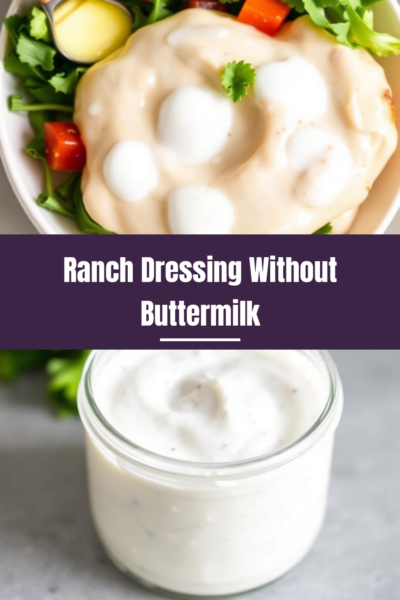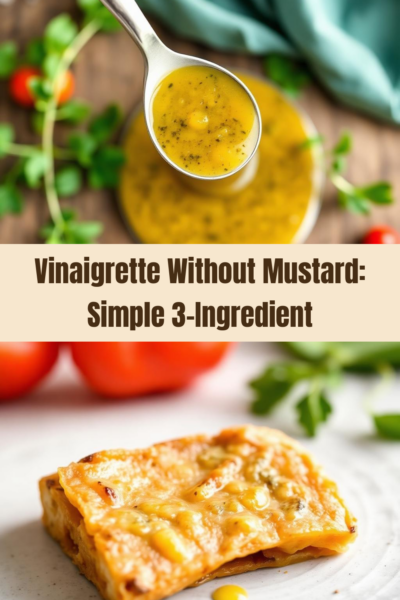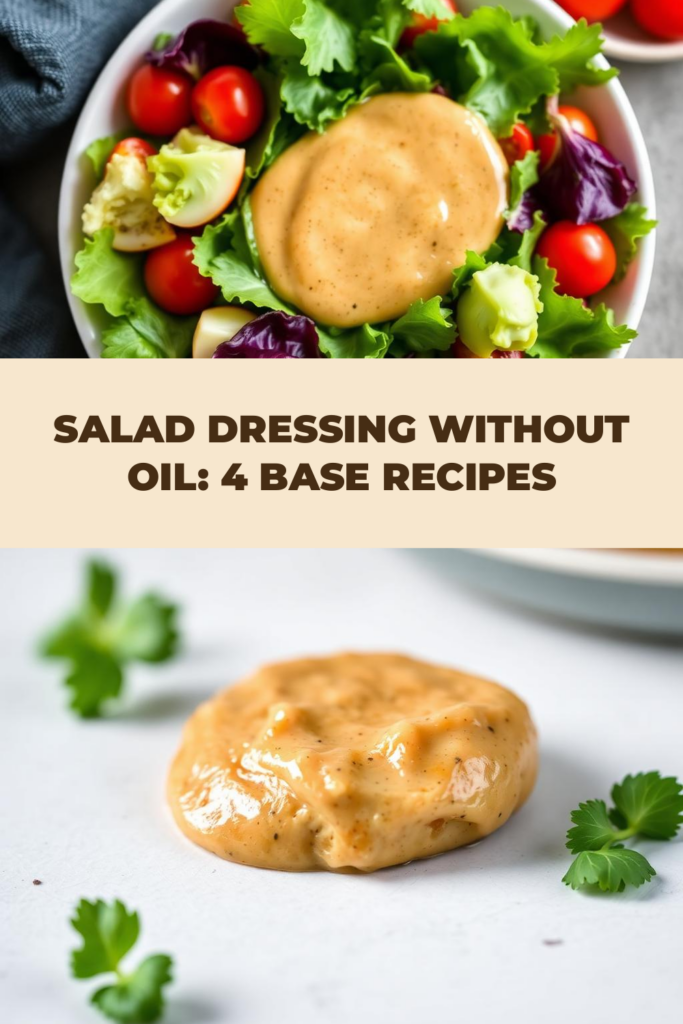
Oil-free salad dressings suit weeknight salads, packed lunches, and any meal where you want a lighter, sharper dressing that clings to greens without separating. They are built on four bases—yogurt, citrus, nut butter, and pureed fruit—each with a distinct texture and flavor. Use them on green salads, grain bowls, slaws, or roasted vegetables, and make them ahead since most keep for several days.
Ingredients
Each base makes about 1/2 cup (120 ml), enough for 4 side salads. Choose one base and its flavorings.
- Yogurt base: 1/2 cup (120 g) plain Greek yogurt (full-fat or 2%)
- Citrus base: 1/4 cup (60 ml) fresh lemon juice (about 1 lemon) or lime juice (about 2 limes)
- Nut butter base: 3 tbsp (48 g) natural peanut butter or almond butter
- Fruit puree base: 1/2 cup (120 g) mashed ripe avocado or 1/2 cup (120 g) pureed mango
- For all bases: 1 tbsp (15 ml) apple cider vinegar or white wine vinegar
- For all bases: 1 tsp (5 g) Dijon mustard (optional, helps emulsify)
- For all bases: 1 small garlic clove, minced (about 1/2 tsp)
- For all bases: 1/4 tsp fine salt
- For all bases: 1/4 tsp black pepper
- For all bases: 2–4 tbsp (30–60 ml) water or plain unsweetened plant milk, as needed
Instructions
- In a medium bowl or a jar with a tight-fitting lid, combine your chosen base, vinegar, mustard (if using), garlic, salt, and pepper.
- Whisk or shake until smooth. The yogurt and fruit puree bases will be thick; the citrus base will be thin.
- Add water or plant milk 1 tablespoon (15 ml) at a time, whisking after each addition, until the dressing reaches a pourable consistency. For the citrus base, you may not need any water.
- Taste and adjust salt or acid. If it tastes flat, add another teaspoon (5 ml) of vinegar or lemon juice.
- Use immediately or refrigerate in a sealed container. Shake or stir before serving, as separation is normal.
How to Tell It’s Done
The dressing is done when it is smooth, with no lumps of garlic or puree, and it coats the back of a spoon. It should be pourable but not watery. If it is too thick, it will clump on greens; if too thin, it will pool at the bottom of the bowl.
Storage and Shelf Life
Refrigerate all oil-free dressings in a sealed glass jar or container. Yogurt-based dressings keep 3–4 days; citrus, nut butter, and fruit puree dressings keep 4–5 days. Discard if there is any off odor or mold. Never leave dressing at room temperature for more than 2 hours (1 hour if above 90°F/32°C).
Scaling the Recipe
| Batch | Base amount | Yield | Servings |
|---|---|---|---|
| Half | 1/4 cup (60 g) base | 1/4 cup (60 ml) | 2 |
| Single | 1/2 cup (120 g) base | 1/2 cup (120 ml) | 4 |
| Double | 1 cup (240 g) base | 1 cup (240 ml) | 8 |
When scaling, keep the same ratios: for every 1/2 cup (120 g) of base, use 1 tbsp (15 ml) vinegar, 1 tsp (5 g) mustard, 1 clove garlic, 1/4 tsp salt, and 1/4 tsp pepper. Adjust water to reach the same consistency.
Equipment That Matters
A whisk and a medium bowl work for all bases. A jar with a lid makes mixing and storing easier—shake for 30 seconds. For the fruit puree base, a blender or food processor gives the smoothest result; if using a fork, mash the avocado or mango thoroughly before combining. No special equipment is required.
Flavor Variations
Herb and Shallot Yogurt Dressing
Add 2 tbsp (8 g) chopped fresh dill, parsley, or chives and 1 tbsp (10 g) finely minced shallot to the yogurt base. Omit the garlic if you prefer a milder flavor.
Spicy Citrus Dressing
Add 1/2 tsp (1 g) chili flakes or 1 tsp (5 ml) hot sauce to the citrus base. For a smoky note, add 1/4 tsp smoked paprika.
Ginger Peanut Dressing
Add 1 tsp (2 g) grated fresh ginger and 1 tsp (5 ml) low-sodium soy sauce or tamari to the nut butter base. Reduce salt to 1/8 tsp.
Avocado Lime Dressing
Use lime juice instead of lemon in the fruit puree base, and add 1/4 cup (4 g) fresh cilantro leaves. Blend until completely smooth.
Using the Dressings
Yogurt and fruit puree dressings are thick enough to use as a dip for raw vegetables or a spread on wraps. Citrus and nut butter dressings work well as marinades for grilled chicken or tofu—use within 2 hours of adding to raw meat, and discard any leftover marinade. For grain bowls, toss the grains with a few tablespoons of dressing while warm so they absorb the flavor.
If your dressing separates after sitting, that is normal. Shake or whisk it back together. If it becomes too thick in the fridge, thin it with a teaspoon of water at a time.
Related
- How to Reheat Pasta Salad Without Drying It Out
- How to Reheat Tuna Salad Without It Drying Out
- Lemon Bread With Oil: Moist Quick Bread Recipe
Safe minimum internal temperatures follow USDA FSIS; raw-fish guidance follows the U.S. FDA. See our food safety notes.
Spotted an error? Tell us and we will correct it (corrections policy).