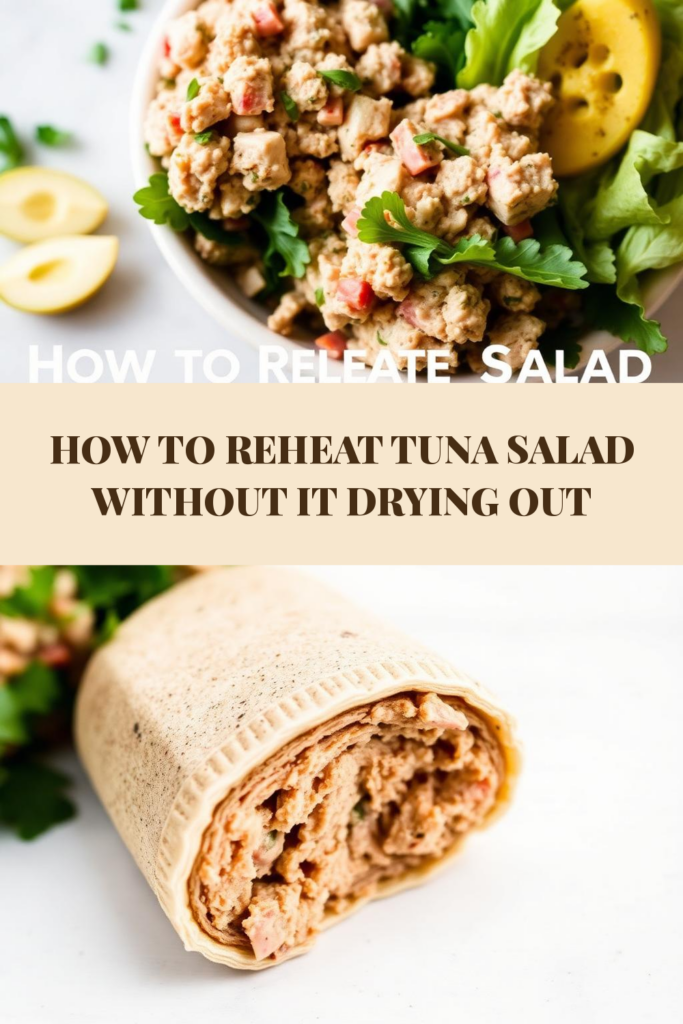
Reheat tuna salad gently in a skillet over medium-low heat for 3–4 minutes, stirring often, until it reaches 165°F (74°C) throughout. This works for tuna salad made with mayonnaise, yogurt, or a vinaigrette, and it takes about 5 minutes total. If the salad is very wet, drain off excess liquid before reheating to avoid a watery result.
Before You Start: What Reheats Well and What Doesn’t
Tuna salad is a mix of cooked tuna and a binder (mayonnaise, yogurt, or dressing) plus optional vegetables, herbs, or hard-boiled eggs. The binder is what changes how it reheats.
- Mayonnaise-based: Reheats fine if done gently; high heat can cause the mayo to separate and turn oily. Stir constantly and keep the heat low.
- Yogurt-based: Yogurt can curdle if overheated. Reheat over low heat and stop as soon as it’s hot; a slight graininess is normal.
- Vinaigrette-based: These reheat well and are less prone to separating. They may become more liquid as the oil warms.
- With hard-boiled eggs: Eggs can become rubbery when reheated. Remove them before reheating and add them back after, or accept a firmer texture.
- With raw vegetables (celery, onion, pickles): These will soften and lose crunch. Reheat only if you don’t mind that change; otherwise, pick them out first.
How to Reheat Tuna Salad in a Skillet (Recommended)
This method gives the most even heat and lets you control the temperature. Use a nonstick or well-seasoned skillet to prevent sticking.
- Place the tuna salad in a cold skillet. If the salad is very thick, add 1–2 teaspoons of water, milk, or extra dressing to loosen it.
- Set the burner to medium-low. If you have an instant-read thermometer, you can check the temperature as you go.
- Stir constantly with a spatula, scraping the bottom and folding the salad over itself. This prevents hot spots and keeps the binder from breaking.
- Heat for 3–4 minutes, or until the salad is steaming and reaches 165°F (74°C) throughout. Check with a food thermometer in the center.
- Serve immediately. Do not let it sit at room temperature for more than 2 hours.
If you’re reheating a large batch (more than 2 cups), increase the time to 5–6 minutes and stir more frequently. You can also use a double boiler: place the salad in a heatproof bowl over simmering water and stir for 5–7 minutes – this is the gentlest method and least likely to separate the mayo.
Can You Reheat Tuna Salad in the Microwave?
Yes, but it’s easy to overdo it. The microwave heats unevenly, and mayonnaise-based salads can bubble and separate. Use a low power setting and short intervals.
- Place the tuna salad in a microwave-safe bowl. Cover loosely with a microwave-safe lid or damp paper towel to trap steam.
- Set the microwave to 50% power (or ‘medium’). Heat for 30 seconds.
- Stir the salad well, then heat for another 20–30 seconds. Check the temperature – it should be 165°F (74°C) in the center.
- If not hot enough, continue in 15-second bursts, stirring each time. Total time is usually 1–2 minutes for a single serving.
Microwaving will make the salad hotter on the edges and cooler in the middle, so stirring is essential. Let it stand for 30 seconds after heating to let the heat distribute.
How to Reheat Tuna Salad in the Oven or Air Fryer
These methods work best for larger portions or when you want a slightly crisped top. They take longer, so they’re not ideal for a quick lunch.
Oven
- Preheat the oven to 350°F (175°C).
- Spread the tuna salad in an even layer in an oven-safe dish. Cover with foil to keep moisture in.
- Bake for 10–15 minutes, or until the center reads 165°F (74°C) on a thermometer. Stir halfway through to heat evenly.
- Remove the foil for the last 2–3 minutes if you want a slightly browned top, but watch it – mayo can separate if overbaked.
Air Fryer
- Preheat the air fryer to 300°F (150°C).
- Place the tuna salad in an air-fryer-safe dish or on a piece of parchment. Do not overcrowd – leave space for air to circulate.
- Heat for 4–5 minutes, stirring once halfway. Check the temperature – it should be 165°F (74°C).
- Times vary by model; if it’s not hot enough, add 1-minute increments.
How to Check the Result and Fix Common Problems
The only reliable way to know if reheated tuna salad is safe is to use a food thermometer. Insert it into the thickest part of the salad and wait 10 seconds. The reading must be 165°F (74°C) – this is the USDA FSIS safe minimum for reheated leftovers.
| Symptom | Cause | Fix |
|---|---|---|
| Oily or greasy texture | Mayo or dressing separated from high heat | Stir in 1–2 teaspoons of fresh mayo or a splash of lemon juice to re-emulsify. It won’t be perfect, but it will taste better. |
| Watery or runny | Excess liquid from vegetables or dressing | Drain off liquid before reheating, or after reheating, spoon off the liquid and stir in a little more binder. |
| Dry and crumbly | Overheated or reheated too long | Stir in a spoonful of mayo, yogurt, or a little milk to moisten. Serve immediately. |
| Curdled yogurt | Yogurt overheated | It’s safe to eat but the texture is grainy. Stir in a teaspoon of fresh yogurt to smooth it slightly. |
Can You Reheat Tuna Salad More Than Once?
Reheat only the amount you plan to eat. Every time you reheat and cool tuna salad, it spends more time in the temperature danger zone (40°F–140°F / 4°C–60°C), where bacteria multiply. Reheating twice is not recommended because the quality drops and the safety risk increases. If you have leftovers after reheating, throw them away – do not refrigerate and reheat again.
To avoid waste, reheat small portions. If you know you’ll want leftovers, store the tuna salad in separate containers and reheat each one only once.
Storing Tuna Salad Before Reheating
Proper storage keeps tuna salad safe to reheat later. Perishable dishes with mayonnaise, dairy, or eggs must not sit at room temperature for more than 2 hours (1 hour if the room is above 90°F / 32°C).
- Refrigerate tuna salad in an airtight container within 2 hours of making it.
- It keeps for 3–4 days in the refrigerator. After that, discard it.
- You can freeze tuna salad, but the texture will change – mayonnaise and yogurt separate when frozen and thawed, and vegetables become mushy. If you freeze it, thaw overnight in the refrigerator and stir well before reheating. Use within 1 month for best quality.
- Never leave reheated tuna salad at room temperature for more than 2 hours. Refrigerate any uneaten portion immediately, but remember that reheating more than once is not recommended.
If you’re reheating tuna salad that was made with raw vegetables like celery or onions, expect them to lose their crunch. That’s normal. The safest and best-tasting approach is to reheat gently, check the temperature, and eat it right away.
Related
- Tuna Casserole with Mushroom Soup Recipe
- Calories in Tuna Casserole with Mushroom Soup
- Apple Cider Vinaigrette Salad Dressing Recipe
Safe minimum internal temperatures follow USDA FSIS; raw-fish guidance follows the U.S. FDA. See our food safety notes.
Spotted an error? Tell us and we will correct it (corrections policy).