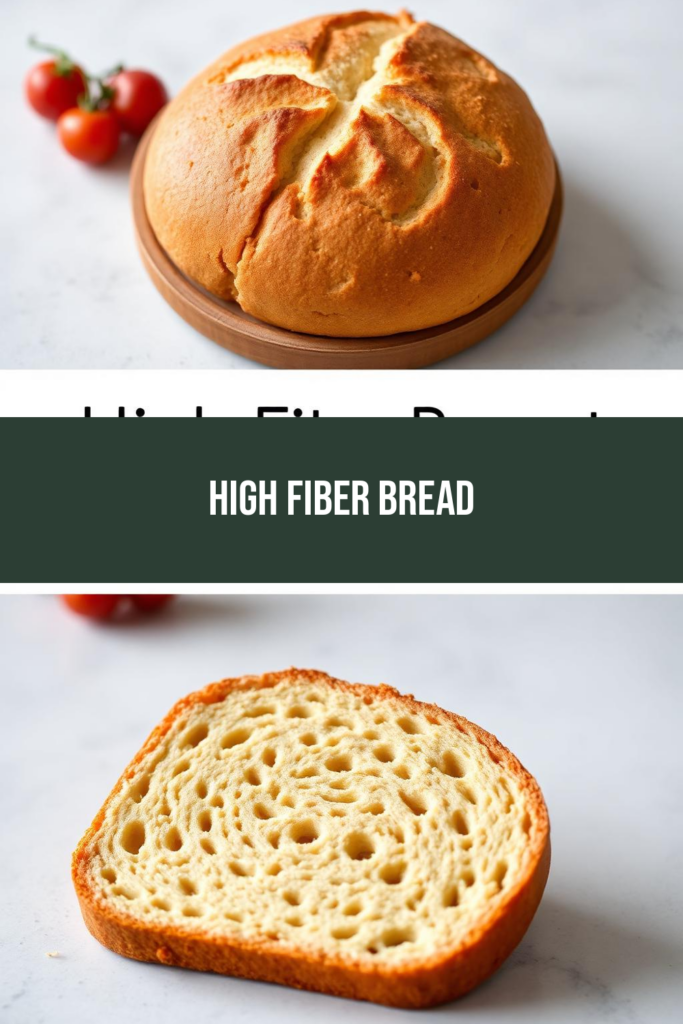
This high-fiber bread is a dense, hearty loaf built on wheat bran, whole wheat flour, and ground flaxseed, which together provide about 6 grams of fiber per slice. It has a nutty, slightly sweet flavor and a firm crumb that holds up well to toasting, making it a good everyday bread for sandwiches, breakfast toast, or a side with soup.
Ingredients
- 1 cup (240 ml) warm water (110°F/43°C)
- 2 tablespoons (30 g) honey or maple syrup
- 2 teaspoons (8 g) active dry yeast (one packet)
- 1 cup (240 ml) plain yogurt, at room temperature (or buttermilk)
- 2 cups (250 g) whole wheat flour
- 1 cup (120 g) wheat bran
- 1/2 cup (60 g) ground flaxseed (flax meal)
- 1 teaspoon (5 g) salt
- 1 tablespoon (15 ml) olive oil, plus more for the bowl
- 1/4 cup (30 g) rolled oats, for topping (optional)
Instructions
- In a small bowl, combine the warm water, honey, and yeast. Let stand for 5–10 minutes until frothy. If it doesn’t foam, the yeast may be dead; start over with fresh yeast.
- In a large bowl, whisk together the whole wheat flour, wheat bran, ground flaxseed, and salt. Make a well in the center.
- Add the yeast mixture, yogurt, and olive oil to the well. Stir with a wooden spoon until a shaggy dough forms.
- Turn the dough out onto a lightly floured surface. Knead for 8–10 minutes, until smooth and elastic. The dough will be slightly sticky; add flour 1 tablespoon at a time if needed, but keep it soft.
- Place the dough in a lightly oiled bowl, cover with a damp towel, and let rise in a warm place (about 75°F/24°C) for 1 to 1 1/2 hours, until doubled in size.
- Punch down the dough. Shape it into a loaf and place it in a greased 9×5-inch (23×13 cm) loaf pan. Cover and let rise again for 30–45 minutes, until it rises just above the pan rim.
- Preheat the oven to 375°F (190°C). If using, brush the top with a little water and sprinkle with oats.
- Bake for 40–45 minutes, until the internal temperature reads 190°F (88°C) and the loaf sounds hollow when tapped. If the top browns too quickly, tent with foil after 25 minutes.
- Cool in the pan for 10 minutes, then transfer to a wire rack. Cool completely before slicing, about 1 hour.
Why Is My Bread Too Dense?
Dense bread usually comes from too little rise or too much flour. The bran and flax absorb a lot of water, so the dough should be soft and slightly tacky, not stiff. If it feels dry, add warm water 1 tablespoon at a time during kneading. Also check that your yeast is fresh and that the rise happens in a warm spot—if your kitchen is cool, let it rise longer, up to 2 hours for the first rise.
Another cause is over-kneading: after 10 minutes, the gluten can tighten and the loaf won’t rise as well. Stop as soon as the dough is smooth and springs back when poked.
Can I Add Seeds or Nuts?
Yes. Add 1/2 cup (70 g) of sunflower seeds, pumpkin seeds, or chopped walnuts along with the dry ingredients in step 2. Seeds add crunch and a little more fiber, but they also absorb moisture, so you may need an extra 1–2 tablespoons of water. The bread will be a bit more crumbly; slice it thicker.
What Can I Substitute for Wheat Bran or Flaxseed?
If you don’t have wheat bran, use oat bran or an extra 1/2 cup (60 g) of whole wheat flour. The bread will be slightly less dense and a little less fibrous. For flaxseed, use an equal amount of wheat germ or additional wheat bran. Each swap changes the texture: oat bran makes it softer, wheat germ adds a nutty flavor, and extra flour makes it chewier.
How Long Does High-Fiber Bread Keep?
Store the cooled loaf in a bread box or paper bag at room temperature for up to 3 days. For longer storage, wrap it tightly in plastic wrap and freeze for up to 3 months. Thaw at room temperature, then reheat slices in a toaster or oven at 350°F (175°C) for 5 minutes. Do not refrigerate, as it speeds up staling.
What Goes Well With This Bread?
This bread’s hearty texture pairs well with savory toppings: smashed avocado and a poached egg, hummus and roasted vegetables, or turkey and Swiss cheese. It also toasts well with butter and jam for breakfast. Because it’s dense, it holds up to hearty soups and stews.
Can I Make This Bread in a Bread Machine?
Yes. Add the water, honey, yogurt, and oil to the bread machine pan, then add the dry ingredients and yeast on top (yeast last). Select the whole wheat cycle and medium crust. Check the dough after 10 minutes of kneading; it should form a smooth ball. If it’s too dry, add water 1 tablespoon at a time; if too wet, add flour 1 tablespoon at a time. Baking times vary by machine, so rely on the machine’s cycle.
Is This Bread Gluten-Free?
No, because it contains whole wheat flour. For a gluten-free version, replace the whole wheat flour with a gluten-free all-purpose flour blend that contains xanthan gum, and use certified gluten-free oat bran instead of wheat bran. The bread will be more crumbly, so slice it when fully cool and handle gently. Check all labels for gluten if needed.
Why Does My Bread Crumble When Slicing?
Crumbly bread usually means it was sliced too warm or the dough was too dry. Always cool completely for at least 1 hour before slicing. If it still crumbles, your dough may have had too much flour—next time, reduce the flour by 2 tablespoons and add a little more water. Use a serrated knife and saw gently without pressing down.
Related
- Paleo Flax Muffins: Almond-Free, Grain-Free Recipe
- Is Tapioca Flour Gluten-Free? What to Know
- Is Tapioca Starch Paleo? The Direct Answer
Safe minimum internal temperatures follow USDA FSIS; raw-fish guidance follows the U.S. FDA. See our food safety notes.
Spotted an error? Tell us and we will correct it (corrections policy).