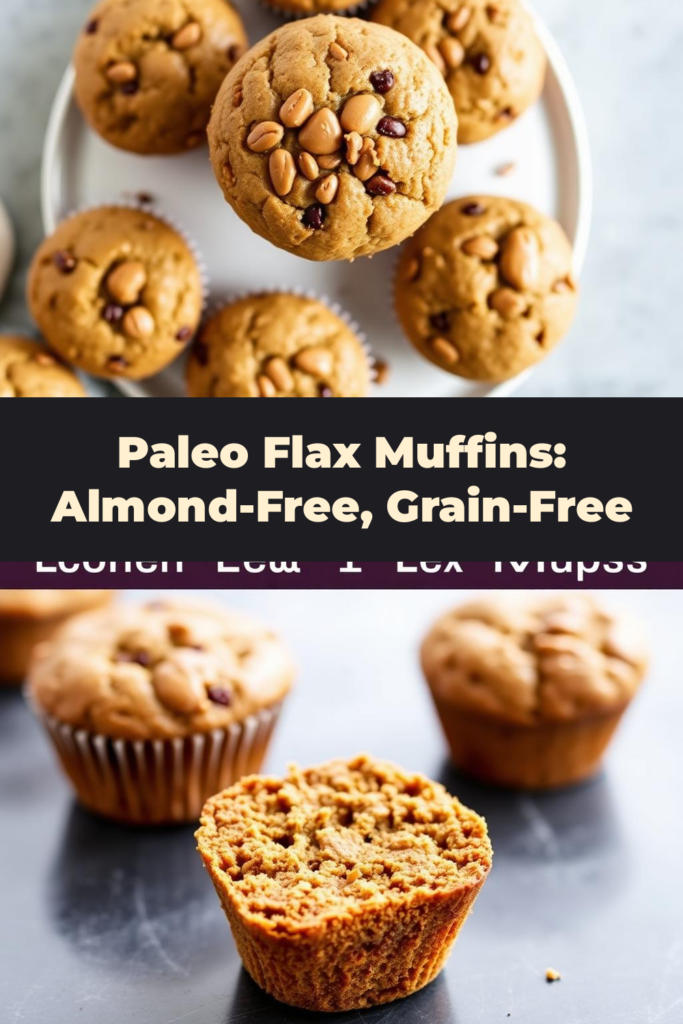
These paleo flax muffins are sturdy, nutty, and slightly sweet, made with ground flaxseed as the base instead of almond flour. They hold together well for a grab-and-go breakfast or snack, and they bake in about 25 minutes. The key is letting the batter rest so the flax absorbs moisture, which keeps the crumb tender rather than dense.
Ingredients
- 2 cups (240 g) ground flaxseed (flax meal)
- 1/2 cup (60 g) coconut flour
- 1 tsp baking soda
- 1/2 tsp salt
- 1 tsp ground cinnamon (optional)
- 4 large eggs, at room temperature
- 1/2 cup (120 ml) melted coconut oil or avocado oil
- 1/2 cup (170 g) honey or maple syrup (see note)
- 1/4 cup (60 ml) unsweetened almond milk or water
- 1 tsp vanilla extract
- 1/2 cup (60 g) chopped walnuts or pecans (optional)
Note: If using honey, the muffins will be slightly denser; maple syrup makes them a touch lighter. For a less sweet muffin, reduce to 1/3 cup (115 g).
Instructions
- Preheat oven to 350°F (175°C). Line a 12-cup muffin tin with paper liners or grease with coconut oil.
- In a large bowl, whisk together the ground flaxseed, coconut flour, baking soda, salt, and cinnamon (if using).
- In a separate bowl, beat the eggs. Add the melted coconut oil, honey or maple syrup, almond milk, and vanilla; whisk until smooth.
- Pour the wet ingredients into the dry and stir until just combined. Fold in the nuts if using.
- Let the batter rest for 10 minutes. It will thicken as the flax absorbs liquid.
- Spoon the batter into the prepared muffin cups, filling each about 3/4 full. The batter will be thick; use a spoon or ice cream scoop.
- Bake for 22–25 minutes, until a toothpick inserted in the center comes out clean and the tops are golden brown.
- Cool in the pan for 5 minutes, then transfer to a wire rack to cool completely.
Why Resting the Batter Matters
Ground flaxseed soaks up liquid slowly. If you bake immediately, the muffins can be dry and crumbly because the flax hasn’t had time to hydrate. The 10-minute rest allows the flax to form a gel-like structure that binds the batter, giving a moist, tender crumb. For even better results, you can rest the batter up to 30 minutes; just add a tablespoon more milk if it becomes too stiff.
Substitutions: What to Swap and What Changes
- Ground flaxseed: Use golden or brown flax meal; both work. Do not substitute whole flax seeds—they won’t absorb liquid the same way.
- Coconut flour: Very absorbent; do not replace with more flax or almond flour without adjusting liquids. If you need nut-free and coconut-free, try using 1/2 cup (60 g) tapioca starch plus 1/4 cup (30 g) more flax, but expect a softer, less sturdy muffin.
- Eggs: For an egg-free version, use 4 flax eggs (4 tbsp ground flax + 12 tbsp water, rested 5 minutes) but reduce the milk to 2 tbsp (30 ml); the muffins will be denser and more crumbly.
- Oil: Melted butter (not paleo) or ghee works in equal measure; coconut oil gives a slight coconut flavor. Avocado oil is neutral.
- Sweetener: Honey and maple syrup are both liquid; if using granulated coconut sugar, add 1/4 cup (60 ml) extra milk because it doesn’t add moisture.
- Milk: Any unsweetened milk works; water is fine too. Full-fat canned coconut milk makes a richer muffin.
Make-Ahead Timeline for Paleo Flax Muffins
These muffins are best made fresh, but you can prep the dry mix ahead. Combine the flax, coconut flour, baking soda, salt, and cinnamon in a jar; store at room temperature for up to 2 weeks. When ready to bake, add the wet ingredients and proceed. Baked muffins keep well, so you can also bake a batch on Sunday for the week.
Storing and Reheating Flax Muffins
Store baked muffins in an airtight container at room temperature for up to 3 days, or refrigerate for up to 5 days. For longer storage, wrap individually in plastic wrap and freeze for up to 3 months. To reheat, microwave a muffin for 20–30 seconds, or warm in a 350°F (175°C) oven for 5–7 minutes. Do not leave muffins out at room temperature for more than 2 hours, especially if they contain eggs and dairy-free milk.
Serving and Pairing Ideas
Serve these muffins warm with a pat of butter or a drizzle of honey. They pair well with scrambled eggs and fruit for breakfast, or with a cup of coffee or tea as a snack. For a dessert-like treat, split one and top with a spoonful of coconut whipped cream and fresh berries. They also make a good lunchbox addition—pack them with a small container of nut butter for dipping.
Why These Muffins Are Different from Almond Flour Muffins
Almond flour muffins are soft and delicate, but they can be heavy and prone to sinking. Flax muffins are more robust, with a slightly chewy texture and a nutty, earthy flavor. They also brown faster because flax is naturally dark. The coconut flour helps lighten the crumb and adds a subtle sweetness. If you’re used to almond flour, expect a denser, more rustic muffin that holds its shape well.
Can You Make These Muffins Nut-Free?
Yes, the base recipe is nut-free if you omit the walnuts and use water or coconut milk instead of almond milk. Ground flaxseed and coconut flour are both seed- and nut-derived, but they are not tree nuts. However, if you have a severe nut allergy, check your flax and coconut flour labels for cross-contamination warnings, as they may be processed in facilities that handle nuts.
What If Your Muffins Turn Out Dry or Crumbly?
Dry muffins usually mean the batter was overmixed or baked too long. Mix just until the flour is moistened, and check for doneness at 22 minutes. If they are still crumbly after cooling, it may be because the flax wasn’t rested long enough or the coconut flour absorbed too much liquid. Next time, add an extra tablespoon of milk to the batter and rest for 15 minutes. You can salvage crumbly muffins by crumbling them over yogurt or using them as a topping for a fruit crisp.
Safe minimum internal temperatures follow USDA FSIS; raw-fish guidance follows the U.S. FDA. See our food safety notes.
Spotted an error? Tell us and we will correct it (corrections policy).