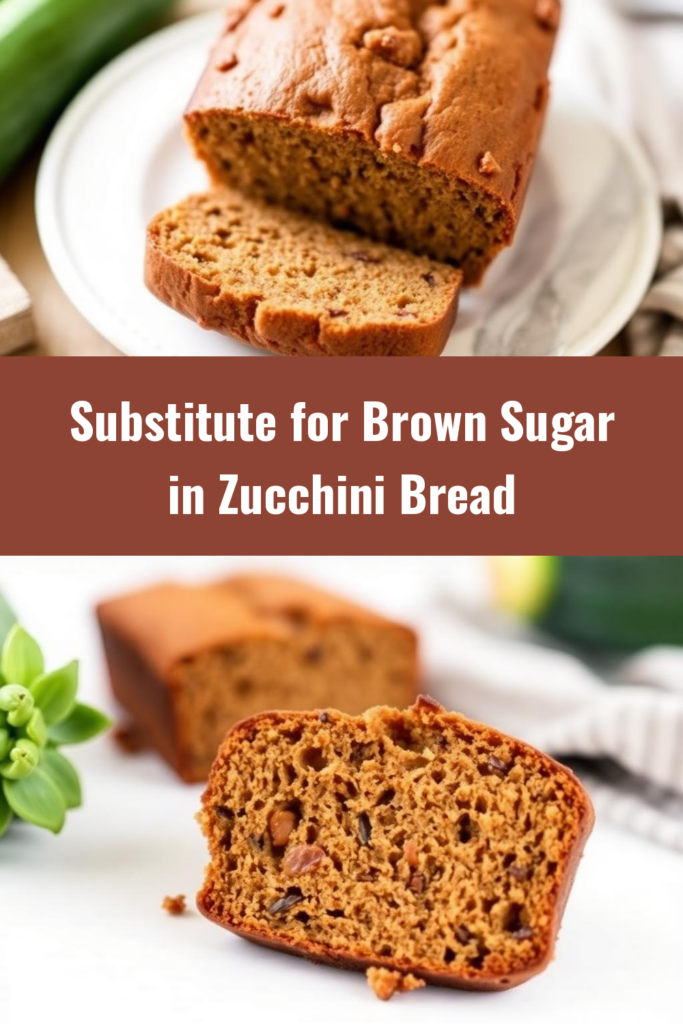
Substituting brown sugar in zucchini bread is straightforward: use granulated white sugar with molasses, or swap in coconut sugar, maple syrup, or honey. Each swap changes moisture, sweetness, and browning, so the right choice depends on what you have and the texture you want. This guide covers the best ratios, how to adjust the batter, and what to avoid.
Best Swap: White Sugar Plus Molasses
The closest substitute for 1 cup (200 g) packed brown sugar is 1 cup (200 g) granulated white sugar plus 1 to 2 tablespoons (15–30 ml) molasses. For light brown sugar use 1 tablespoon (15 ml) molasses; for dark brown sugar use 2 tablespoons (30 ml). Mix the molasses into the sugar until it looks like damp sand before adding to the batter. This swap keeps the same sweetness and moisture, and the molasses adds the same caramel notes. If you don’t have molasses, use 1 cup (200 g) white sugar plus 1 tablespoon (15 ml) honey or maple syrup—though the flavor will be slightly different.
Other Substitutes and What Changes
| Substitute (for 1 cup / 200 g brown sugar) | Ratio | What changes |
|---|---|---|
| Coconut sugar | 1 cup (200 g) coconut sugar | Less sweet, more caramel-like; slightly drier crumb. Add 2 tablespoons (30 ml) extra liquid (milk or water). |
| Maple syrup | 3/4 cup (180 ml) maple syrup, reduce liquid by 3 tablespoons (45 ml) | More moisture, thinner batter; bake 5–8 minutes longer. Maple flavor comes through. |
| Honey | 3/4 cup (180 ml) honey, reduce liquid by 3 tablespoons (45 ml) | Similar to maple syrup; honey is sweeter, so reduce sugar elsewhere if needed. Do not use for babies under 1 year. |
| White sugar only | 1 cup (200 g) white sugar | Less moist, less caramel flavor; bread will be paler. Add 1 tablespoon (15 ml) molasses if you have it. |
For a sugar-free version, use 1 cup (200 g) monk fruit sweetener that measures like brown sugar (check the label). It will not caramelize the same way, and the bread may be slightly less moist. Add 2 tablespoons (30 ml) plain yogurt or milk to compensate.
Ingredients
- 1 1/2 cups (190 g) all-purpose flour
- 1 teaspoon baking soda
- 1/2 teaspoon baking powder
- 1/2 teaspoon salt
- 1 teaspoon ground cinnamon
- 1/2 teaspoon ground nutmeg (optional)
- 1 cup (200 g) packed light brown sugar (or substitute from above)
- 2 large eggs, at room temperature
- 1/2 cup (120 ml) vegetable oil (or melted coconut oil)
- 1/3 cup (80 ml) plain yogurt or sour cream
- 1 teaspoon vanilla extract
- 1 1/2 cups (about 180 g) grated zucchini, squeezed dry
Instructions
- Preheat oven to 350°F (175°C). Grease a 9×5-inch (23×13 cm) loaf pan or line with parchment paper.
- In a medium bowl, whisk flour, baking soda, baking powder, salt, cinnamon, and nutmeg.
- In a large bowl, whisk brown sugar (or substitute), eggs, oil, yogurt, and vanilla until smooth.
- Fold in the grated zucchini.
- Add dry ingredients to wet; stir just until no streaks of flour remain. Do not overmix.
- Pour batter into prepared pan. Bake for 55–65 minutes, until a toothpick inserted in the center comes out clean or with a few moist crumbs. If the top browns too quickly, tent loosely with foil after 40 minutes.
- Cool in the pan on a rack for 15 minutes, then remove and cool completely before slicing.
Mistakes That Ruin the Texture
The most common mistake is not squeezing the zucchini dry. Grated zucchini releases water during baking; if you skip the squeeze, the bread becomes soggy and sinks in the middle. After grating, place the zucchini in a clean kitchen towel and wring out as much liquid as possible—you should have about 1 cup (about 180 g) after squeezing.
Overmixing is the second mistake. Stir until the flour disappears; overmixing develops gluten and makes the bread tough. Also, do not open the oven door for the first 40 minutes—a sudden temperature drop can make the center collapse.
If you used maple syrup or honey, the batter is thinner and the bread may take longer to bake. Check at 60 minutes and add 5-minute increments. If the top is dark but the center is still wet, reduce oven to 325°F (165°C) for the last 15 minutes.
Storing and Freezing
Store zucchini bread in an airtight container at room temperature for up to 3 days. For longer storage, wrap the cooled loaf tightly in plastic wrap and then foil; freeze for up to 3 months. Thaw overnight in the refrigerator or at room temperature for a few hours. If using a liquid sweetener (maple or honey), the bread may stay moist longer but also spoil faster—refrigerate after 2 days.
Do not leave the bread out for more than 2 hours if it contains eggs and dairy; after that, refrigerate. Slices can be toasted to refresh them.
Adjusting for Different Substitutes
When using liquid sweeteners, reduce the yogurt by 3 tablespoons (45 ml) to balance the extra moisture. For coconut sugar, add 2 tablespoons (30 ml) milk or water to the batter. For white sugar only, add 1 tablespoon (15 ml) molasses or honey to mimic brown sugar’s moisture—otherwise the bread will be drier and paler.
For a gluten-free version, replace the all-purpose flour with a 1:1 gluten-free flour blend that contains xanthan gum; the texture will be slightly more crumbly. For a dairy-free version, use dairy-free yogurt or applesauce instead of yogurt, and oil instead of butter. Check labels for allergens.
Related
- Sugar Free Poke Cake Recipe
- Cheese Hash Brown Casserole with Sour Cream
- Milky Pudding With Heated Sugar (Crème Brûlée)
Safe minimum internal temperatures follow USDA FSIS; raw-fish guidance follows the U.S. FDA. See our food safety notes.
Spotted an error? Tell us and we will correct it (corrections policy).