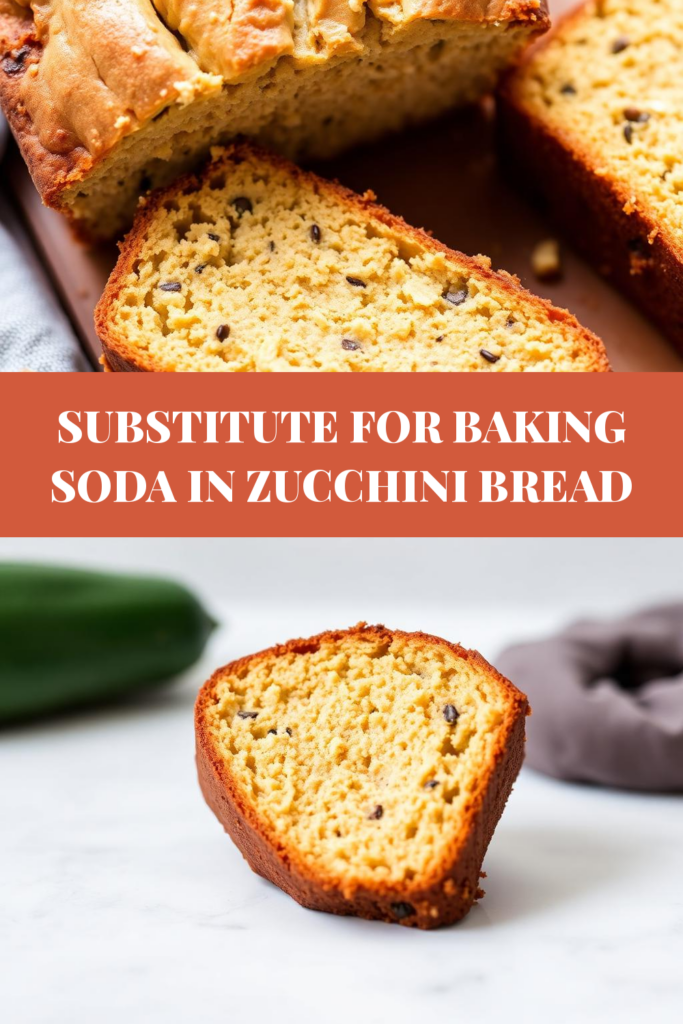
Time: 15 min prep · 55–65 min bake · Serves: 1 loaf (12 slices) · The key step: swap 1 tsp baking soda for 3 tsp baking powder and add 1 tbsp lemon juice or vinegar to the wet ingredients. This quick bread stays moist and tender, with a mild tang that suits the zucchini’s neutral flavor.
What Can I Use Instead of Baking Soda?
Baking soda is an alkaline leavener that needs an acid to react. In zucchini bread, the usual acids are buttermilk, yogurt, or brown sugar. If you don’t have baking soda, the simplest swap is baking powder—it already contains both an acid and a base, so it works on its own. Use 3 teaspoons (1 tablespoon) of baking powder for every 1 teaspoon of baking soda. Because baking powder is less concentrated, you may need a touch more acid to keep the crumb tender; add 1 tablespoon of lemon juice or white vinegar to the wet ingredients.
Ingredients
- 1.5 cups (190 g) all-purpose flour
- 1 tsp ground cinnamon
- 1/2 tsp ground nutmeg (optional)
- 1/2 tsp salt
- 3 tsp baking powder (instead of 1 tsp baking soda)
- 1 cup (200 g) granulated sugar
- 2 large eggs, room temperature
- 1/2 cup (120 ml) neutral oil (canola or vegetable)
- 1/2 cup (120 g) plain yogurt or buttermilk (see note)
- 1 tbsp lemon juice or white vinegar (added acid)
- 1.5 cups (about 200 g) grated zucchini, squeezed dry
- 1 tsp vanilla extract
Note: If using buttermilk, you can skip the extra lemon juice; buttermilk is already acidic. If using plain yogurt, keep the lemon juice.
Instructions
- Preheat oven to 350°F (175°C). Grease a 9×5-inch (23×13 cm) loaf pan or line with parchment paper.
- In a medium bowl, whisk together flour, cinnamon, nutmeg, salt, and baking powder. Set aside.
- In a large bowl, whisk sugar, eggs, oil, yogurt (or buttermilk), lemon juice, and vanilla until smooth.
- Fold in grated zucchini until evenly distributed.
- Add dry ingredients to wet mixture. Stir with a spatula just until no dry streaks remain—do not overmix.
- Pour batter into prepared pan. Bake for 55–65 minutes, until a toothpick inserted in the center comes out clean or with a few moist crumbs. If the top browns too fast, tent with foil after 40 minutes.
- Cool in pan on a wire rack for 15 minutes, then remove from pan and cool completely before slicing.
Does the Swap Change the Taste or Texture?
Yes, slightly. Baking soda produces a more open, airy crumb and a deeper browning because it raises pH. Baking powder is double-acting (reacts when mixed and again in the oven), so the bread will rise fine but may be a bit denser and paler. The added lemon juice or vinegar gives a faint tang, which most people don’t notice once the bread is toasted or slathered with butter. If you prefer no tang, use 1/4 teaspoon of cream of tartar plus 1/2 teaspoon of baking soda?—but that still requires baking soda, so stick with baking powder.
Can I Use Self-Rising Flour Instead?
Yes, but adjust the recipe. Self-rising flour contains baking powder and salt. Replace the all-purpose flour and baking powder with 1.5 cups (190 g) self-rising flour, and reduce the salt to 1/4 teaspoon. Omit the baking powder entirely. The extra acid (lemon juice or vinegar) is still fine to include; it will help tenderize the crumb.
What If I Have No Baking Powder Either?
You can make a homemade baking powder substitute: mix 2 parts cream of tartar with 1 part baking soda. For this recipe, use 2 teaspoons cream of tartar plus 1 teaspoon baking soda (instead of the 3 tsp baking powder). That combination provides the acid and base needed. If you lack both baking soda and cream of tartar, the bread will be dense and flat—not recommended. In that case, consider a yeast-based quick bread or a no-leaven zucchini bread (which is more like a dense tea cake).
How Long Does Zucchini Bread Keep?
Store cooled bread wrapped in plastic or in an airtight container at room temperature for up to 3 days. Refrigerate for up to 1 week (tightly wrapped) if your kitchen is warm or humid. Freeze for up to 3 months: wrap in plastic, then foil, and thaw overnight in the fridge. Reheat slices in a toaster or microwave for 15–20 seconds.
Can I Make It Ahead or Freeze the Batter?
Yes. The batter can be made and refrigerated for up to 24 hours before baking—just pour it into the pan and bake straight from the fridge, adding 5–10 minutes to the bake time. To freeze baked bread, cool completely, wrap well, and freeze as above. To freeze the batter, pour into a freezer-safe pan, cover, and freeze for up to 3 months; thaw overnight in the fridge before baking.
Variations: Add-Ins and Gluten-Free
Add-Ins
Fold in 1/2 cup (60 g) chopped walnuts or pecans, 1/2 cup (85 g) chocolate chips, or 1/2 cup (80 g) raisins. Add with the zucchini.
Gluten-Free
Replace all-purpose flour with a 1:1 gluten-free baking flour blend (one that contains xanthan gum). Bake at the same temperature, but check at 50 minutes—gluten-free loaves sometimes bake faster. Do not overmix; the batter will be slightly grittier.
Zucchini Bread for Large Batches and Kids
Double the recipe to make two loaves. Use a 9×5-inch (23×13 cm) pan for each; bake both on the same rack, rotating halfway. Baking time stays the same. For mini loaves (3×5-inch / 8×13 cm), bake for 35–40 minutes. For muffins, use a 12-cup muffin tin, fill cups 2/3 full, and bake at 375°F (190°C) for 18–22 minutes. Kids can help grate zucchini (use a box grater) and stir the dry ingredients—just supervise the oven.
What to Serve with Zucchini Bread
Serve slices warm with butter or cream cheese. It pairs well with coffee or tea. For a savory twist, add 1/2 cup (50 g) grated cheddar and 1/4 cup (25 g) grated Parmesan, and reduce sugar to 1/2 cup (100 g)—skip the cinnamon and nutmeg. This version is good alongside soups or salads.
Why Did My Bread Sink in the Middle?
A sunken center usually means the batter was overmixed (developing too much gluten) or the leavener was expired. Check that your baking powder is fresh—test by stirring 1/2 tsp into 1/4 cup hot water; it should bubble vigorously. Also, ensure the zucchini is squeezed dry; excess moisture can weigh down the crumb. If using a glass pan, reduce oven temperature by 25°F (15°C) because glass heats faster.
Related
- Bread Loaf Designs: Shaping, Scoring, and Baking
- Microwave Cake with Soda: 5-Minute Mug Cake
- Bread Loaf Traduction: French-English Baking Terms
Safe minimum internal temperatures follow USDA FSIS; raw-fish guidance follows the U.S. FDA. See our food safety notes.
Spotted an error? Tell us and we will correct it (corrections policy).