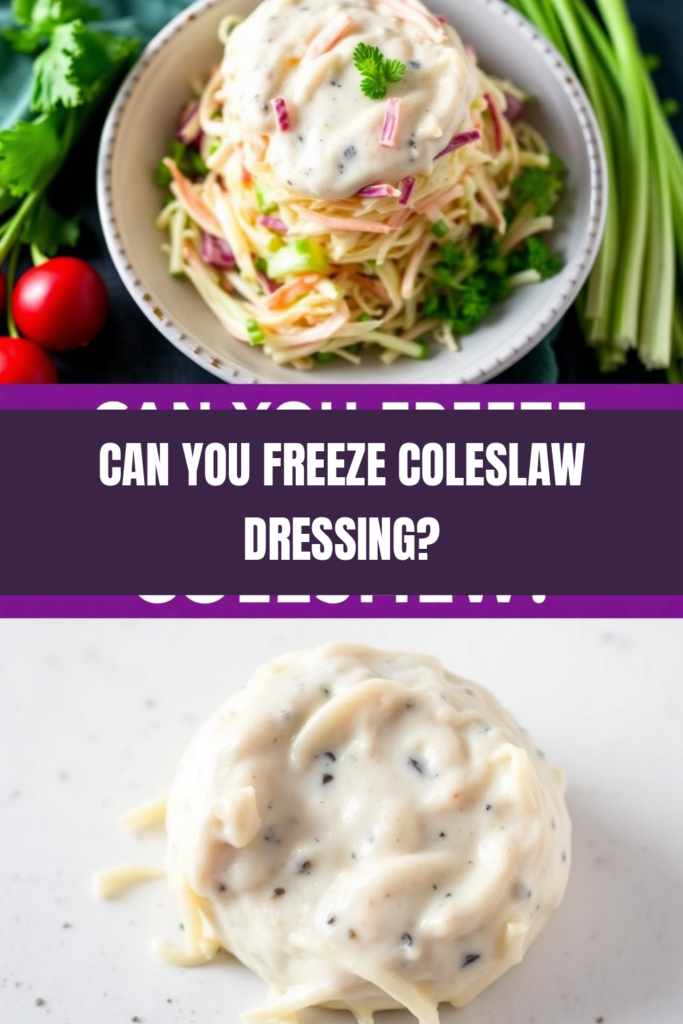
Yes, you can freeze coleslaw dressing. Most creamy coleslaw dressings—those made with mayonnaise, buttermilk, or sour cream—freeze well for up to 3 months, though the texture may change slightly upon thawing. For example, a simple mayonnaise-and-vinegar dressing freezes fine, but a dressing with fresh herbs or buttermilk may separate; whisking after thawing usually brings it back together.
What Happens When You Freeze Coleslaw Dressing?
Freezing affects the emulsion (the stable mix of oil and water) in creamy dressings. Mayonnaise-based dressings can separate, leaving a watery layer on top and a thicker, curdled-looking layer below. This is normal and not a sign of spoilage. The fat in the mayonnaise and the water in the vinegar or buttermilk freeze at different rates, breaking the emulsion. After thawing, vigorous whisking or shaking in a sealed jar usually re-emulsifies the dressing. Dressings with a higher oil content (like those with extra olive oil) tend to separate more than those with a higher vinegar or sugar content.
How Long Can You Freeze Coleslaw Dressing?
Properly stored, frozen coleslaw dressing keeps for 2 to 3 months. After that, the flavor may dull and the texture may become grainy. Always label the container with the date you froze it. For best quality, use within 1 month—the sooner you use it, the fresher the taste. Do not freeze a dressing that has already been mixed into coleslaw; the cabbage releases water and becomes soggy, and the dressing loses its creamy texture.
How to Freeze Coleslaw Dressing (Step-by-Step)
Follow these steps to freeze dressing successfully:
- Cool it: If the dressing was just made and is warm (e.g., a cooked dressing), let it cool completely to room temperature before freezing.
- Choose a container: Use an airtight freezer-safe container, a heavy-duty freezer bag, or a glass jar with at least 1 inch (2.5 cm) of headspace (leave room for expansion). For small portions, use ice cube trays—freeze, then pop out the cubes and store them in a bag.
- Portion it: Freeze in the amounts you typically use. For example, freeze 1 cup (240 ml) portions for a family coleslaw, or 2-tablespoon (30 ml) cubes for single servings.
- Seal and label: Remove as much air as possible from bags or containers. Write the date and contents on the label.
- Freeze: Place in the coldest part of the freezer (back, not the door). Freeze for up to 3 months.
How to Thaw and Use Frozen Coleslaw Dressing
Thaw the dressing in the refrigerator overnight—never at room temperature, as the dairy or eggs in the dressing can spoil. For a 1-cup (240 ml) portion, plan on 8–12 hours. Once thawed, stir or shake vigorously to recombine. If it still looks separated, whisk in 1–2 teaspoons of warm water or a splash of vinegar to help bring it back together. Use the thawed dressing within 3–4 days. Do not refreeze thawed dressing.
Signs That Frozen Dressing Has Gone Bad
After thawing, check for these signs of spoilage:
- Off smell (sour, rancid, or fermented)
- Mold on the surface or in the container
- Unusual color (gray, pink, or dark spots)
- Texture that stays curdled even after vigorous whisking
If any of these appear, discard the dressing. Do not taste it to check—when in doubt, throw it out.
Does Freezing Change the Taste?
Freezing can dull the brightness of vinegar and lemon juice, and herbs like dill or parsley may lose their punch. To compensate, after thawing you can add a small splash of fresh vinegar or lemon juice, and a pinch of salt or sugar to restore balance. If the dressing contains fresh garlic or onion, freezing may intensify their flavor—sometimes for the worse. For dressings with raw garlic, consider adding the garlic after thawing instead of before freezing.
What About Vinaigrette-Style Coleslaw Dressings?
Oil-and-vinegar dressings (with no dairy or eggs) freeze very well. They may separate, but a good shake brings them back. These can be frozen for up to 6 months. Creamy dressings, however, are best used within 3 months. If you have a homemade dressing with buttermilk, note that buttermilk can separate and become grainy; whisking usually fixes it, but the texture may be slightly thinner.
Can You Freeze Coleslaw Dressing with Mayonnaise?
Yes, but the mayonnaise will separate. Commercial mayonnaise is an emulsion of oil, egg yolk, and vinegar; freezing breaks the emulsion. After thawing, you may see clear liquid on top and a thick, lumpy layer below. Whisking vigorously for 30–60 seconds usually restores a smooth texture. If it doesn’t, you can blend it briefly in a blender or food processor. The dressing will be safe to eat as long as it was made with pasteurized eggs (most commercial mayonnaise is). Homemade mayonnaise with raw eggs should be frozen only if you used pasteurized eggs; otherwise, it’s safer to refrigerate and use within 4 days.
Takeaway: Freeze It, But Expect to Whisk
Freezing coleslaw dressing is a practical way to save leftovers or make ahead. The key steps: freeze in airtight containers with headspace, thaw in the fridge, and whisk well before using. Use within 3 months for best quality, and always check for signs of spoilage after thawing. If you’re planning to serve coleslaw at a picnic or potluck, freezing the dressing ahead saves time—just thaw it the night before, give it a good stir, and toss with fresh cabbage.
Related
- How to Make Apple Cider Vinaigrette Dressing
- Cider Vinaigrette Dressing for Salads
- Apple Cider Vinaigrette Salad Dressing Recipe
Safe minimum internal temperatures follow USDA FSIS; raw-fish guidance follows the U.S. FDA. See our food safety notes.
Spotted an error? Tell us and we will correct it (corrections policy).