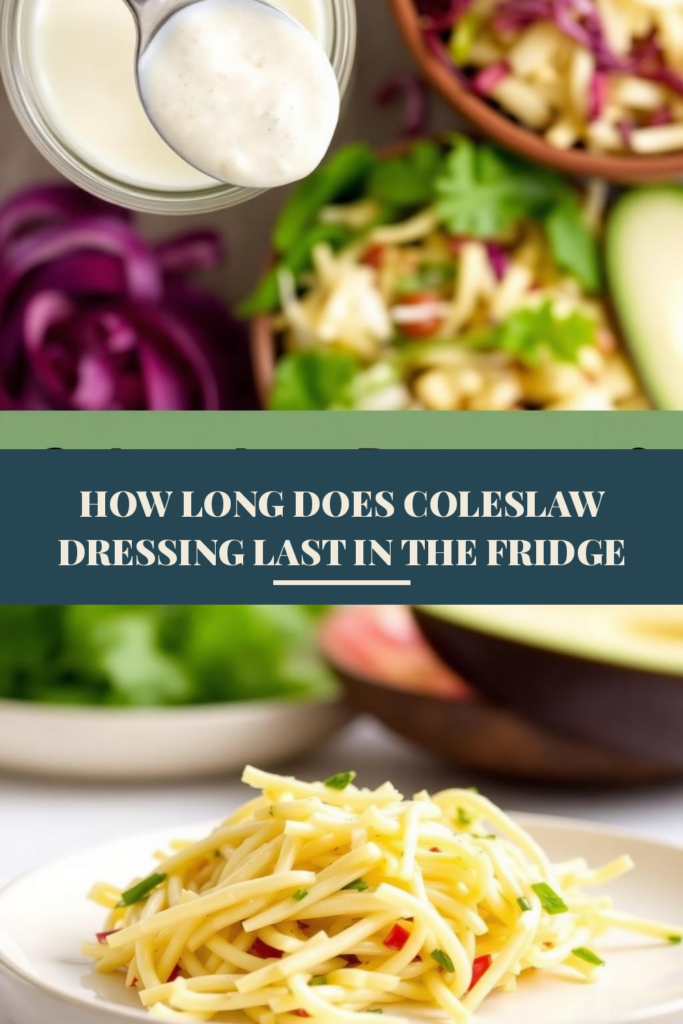
Homemade coleslaw dressing lasts 3–4 days in the fridge when stored in an airtight container; commercial dressings last 1–2 months past the printed date if unopened, and 1–2 weeks after opening. The most common mistake is assuming the dressing keeps as long as the cabbage does—it doesn’t, because the dressing’s dairy and eggs spoil faster than the vegetables.
Store-Bought vs. Homemade: Different Timelines
Store-bought coleslaw dressing (like a bottled creamy or vinaigrette style) contains preservatives and is pasteurized, so it lasts longer. Once opened, refrigerate it and use within 1–2 weeks, even if the label says otherwise—check the bottle’s “best by” date and follow the “once opened” instructions. An unopened bottle can sit in the pantry for 1–2 months past the printed date, but for best quality, use it within that window.
Homemade dressing has no preservatives, so its shelf life depends entirely on its ingredients:
| Base | Refrigerator Life | Signs of Spoilage |
|---|---|---|
| Mayonnaise-based (with vinegar, sugar, salt) | 3–4 days | Off smell, separation, mold |
| Yogurt or buttermilk-based | 2–3 days | Thinning, sour smell, watery layer |
| Vinaigrette (oil, vinegar, no dairy) | 5–7 days | Cloudiness, rancid oil smell |
| With fresh garlic or herbs | 4 days max (botulism risk if garlic in oil) | Any off odor, gas bubbles |
Why 3–4 Days Is the Safe Limit
Most homemade coleslaw dressings are mayonnaise-based. Mayonnaise contains egg yolks, which are perishable. The USDA recommends refrigerating egg-based salads (like coleslaw with dressing) for no more than 3–4 days. Even if the dressing has vinegar or lemon juice, which slow bacterial growth, they don’t stop it completely. After 4 days, the risk of spoilage bacteria (like Listeria or Salmonella) increases, even if the dressing still looks and smells fine.
The same rule applies to the dressed coleslaw itself. If you mix the dressing with cabbage, the dressing’s life doesn’t extend—it shortens because the cabbage releases water and introduces surface bacteria. So a bowl of dressed coleslaw is also 3–4 days, max.
Exceptions: When It Lasts Longer or Shorter
Longer: A vinaigrette-style dressing (oil, vinegar, mustard, no dairy or eggs) can last 5–7 days because vinegar is acidic and oil is stable. However, if you add fresh garlic or shallots to it, the shelf life drops to 4 days—garlic in oil can support Clostridium botulinum growth if left at room temperature, so always refrigerate and use within 4 days.
Shorter: Dressings with fresh herbs, yogurt, or buttermilk spoil faster because those ingredients are more delicate. Yogurt-based dressings often separate or turn sour after 2–3 days. Also, if you’ve used a spoon that touched your mouth to dip into the dressing, you’ve introduced bacteria—that can cut the life to 1–2 days.
How to Tell If It’s Spoiled (and What to Do)
Before using any dressing, check for these signs:
- Smell: A sour, rancid, or “off” odor—not the usual tangy vinegar smell.
- Texture: Excessive separation that doesn’t re-emulsify after shaking, or a slimy, watery layer.
- Mold: Any fuzzy spots on the surface or around the lid.
- Color: Yellowish or brownish tint in a creamy dressing.
If any of these appear, throw it out. Don’t taste it to check—bacteria that cause spoilage may not be visible or smellable in small amounts. When in doubt, discard. The cost of a new batch is far less than a foodborne illness.
Storing It Right to Get the Full 3–4 Days
To maximize shelf life:
- Store in a clean, airtight glass or plastic container with a tight lid. Glass is best because it doesn’t absorb odors.
- Keep it in the coldest part of the fridge (usually the back, not the door). The door’s temperature fluctuates when opened.
- Use a clean spoon every time you dip into it. Never return a used spoon to the container.
- If you’ve dressed the coleslaw, keep it covered and refrigerated. Don’t leave it out for more than 2 hours total (1 hour if the room is above 90°F/32°C).
- For longer storage, freeze the dressing (if it’s mayonnaise-based) in an airtight container for up to 3 months. Thaw in the fridge overnight; it may separate, so whisk it well before using. Note that freezing changes the texture—it’s best for cooked dishes, not for fresh coleslaw.
What to Do With Leftover Dressing
If you have dressing left after 3 days, don’t toss it if it’s still fresh—use it up quickly. Try it as a dip for raw vegetables, a spread on sandwiches, or a base for a chicken salad (if you cook the chicken to 165°F/74°C). But if you’re not going to use it within a day, freeze it in small portions (like ice cube trays) and label with the date. Thawed dressing is fine for baking or marinades, but not for salads where texture matters.
For a fresh batch, make only what you need. A standard recipe for 4 cups of shredded cabbage uses about 1/2 cup (120 ml) of dressing. If you’re making dressing for a crowd, double the recipe and store the extra in the fridge—it will still last the same 3–4 days.
Common Misconception: “It’s Fine Because It Has Vinegar”
Many people believe vinegar or lemon juice “preserves” the dressing indefinitely. That’s not true. Vinegar lowers pH, which slows bacterial growth, but it doesn’t stop it, especially when dairy and eggs are present. The USDA’s 3–4 day rule for egg-based salads applies regardless of vinegar content. Only commercial dressings with added preservatives (like potassium sorbate) can last longer, and even those have a limit once opened.
Coleslaw Dressing for Large Batches and Picnics
If you’re making a big batch for a barbecue or potluck, keep the dressing separate from the cabbage until serving. Dress the coleslaw just before serving—this keeps the cabbage crisp and the dressing fresh. Any leftover dressed coleslaw must be refrigerated within 2 hours and used within 3–4 days. For a picnic, pack the dressing in a cooler with ice packs; don’t let it sit in the sun. If you’re unsure how long it’s been out, throw it away.
If you have a specific question not answered here, check the bottle label for store-bought dressing, or for homemade, remember the rule: when in doubt, throw it out. A fresh batch takes 5 minutes to whisk together, so there’s no reason to risk eating spoiled dressing.
Related
- How Long Does Pasta Salad Last in the Freezer?
- How Long Does Egg Salad Last in the Freezer?
- How Long Do Hard Boiled Eggs Last in the Freezer
Safe minimum internal temperatures follow USDA FSIS; raw-fish guidance follows the U.S. FDA. See our food safety notes.
Spotted an error? Tell us and we will correct it (corrections policy).