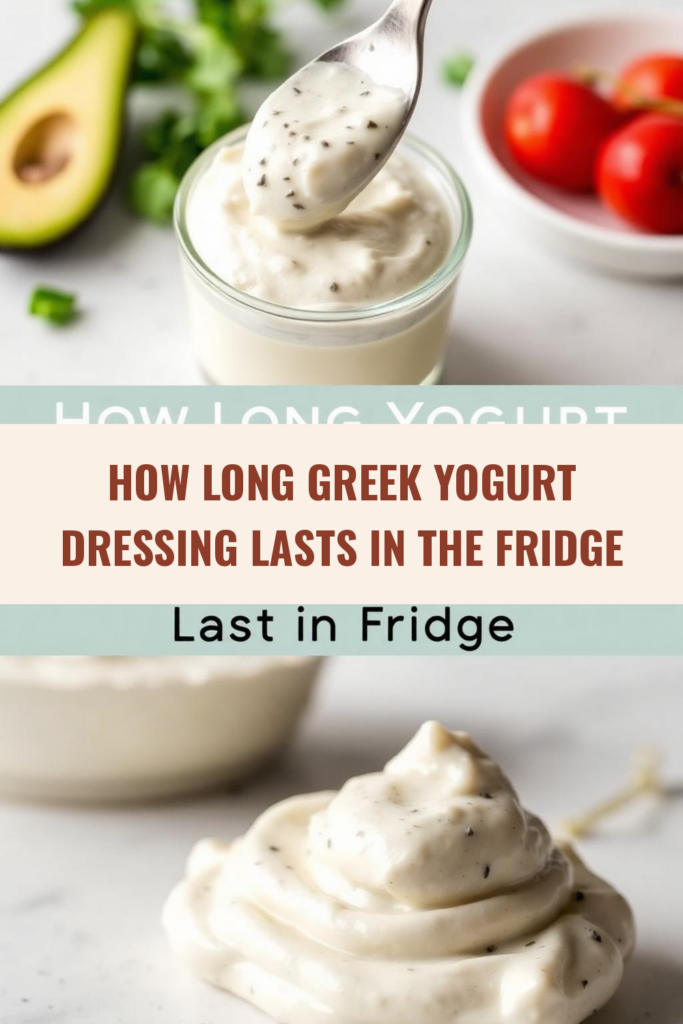
Greek yogurt dressing lasts 5 to 7 days in the fridge when stored in an airtight container. The yogurt base is perishable and the same refrigeration rules apply as for the yogurt itself, so use the 7-day mark as the cutoff even if it still smells fine.
Why 5 to 7 Days Is the Safe Window
Commercial Greek yogurt is pasteurized and typically has a “best by” date of 2 to 3 weeks unopened. Once you open the container, the yogurt is good for about 5 to 7 days. A dressing made from that yogurt inherits the same timeline because the yogurt is the most perishable ingredient. If you add fresh herbs, garlic, or lemon juice, those do not extend the shelf life; they may shorten it slightly, so keep the 5-day end in mind for dressings with those add-ins.
The 5 to 7 day range assumes the dressing was refrigerated within 2 hours of making it and that you always use a clean spoon to scoop it out. If the dressing sat out on a counter for a picnic or dinner, count that time as part of its life; 2 hours at room temperature is the limit before bacteria multiply to unsafe levels.
Signs the Dressing Has Gone Bad
Do not rely on the date alone. Check for these signs before using dressing that is near the 7-day mark:
- Mold: Any fuzzy spots, green, black, or white, mean the whole batch is spoiled. Discard it.
- Off smell: Greek yogurt has a tangy, clean scent. If it smells sour in a different way, like vinegar that has turned, or smells yeasty, throw it out.
- Texture change: Slight separation is normal; stir it back together. But if the liquid is watery and the solids are slimy or curdled beyond stirring, it is past its prime.
- Color change: Yellowing or browning that is not from added spices means spoilage.
When in doubt, discard. A spoiled yogurt dressing can cause food poisoning, and the cost of a new batch is less than a sick day.
How to Store It to Get the Full 7 Days
Use a glass or plastic container with a tight-fitting lid. A mason jar works well because you can shake it to recombine the dressing. Fill the container to the top to minimize air exposure; oxygen speeds up spoilage. If you have less dressing than container space, press a piece of plastic wrap directly onto the surface before closing the lid.
Keep the dressing in the main body of the refrigerator, not in the door. The door experiences temperature swings every time it opens, which can shorten shelf life by a day or two. The back of a middle shelf at 40°F (4°C) or below is ideal. Check your fridge temperature with an appliance thermometer; many home fridges run warmer than the dial suggests.
Never leave the dressing out on the counter to warm up before serving. Cold dressing straight from the fridge is fine on salads. If you want it less cold, spoon out only what you need and let that portion sit out for 10 minutes, then return the main container to the fridge immediately.
Freezing Greek Yogurt Dressing: It Works, but Changes Texture
You can freeze Greek yogurt dressing for up to 3 months, but the texture will change. Greek yogurt contains water; when frozen, the water forms ice crystals that break the protein structure. After thawing, the dressing becomes grainy and watery. It will still be safe to eat if thawed in the refrigerator, but it will not have the same creamy consistency.
To freeze, pour the dressing into a freezer-safe container, leaving 1/2 inch (1.3 cm) of headroom for expansion. Label with the date. Thaw overnight in the fridge, then whisk vigorously or shake in a jar. If the texture is too grainy for a salad dressing, use it as a marinade or stir it into cooked dishes like rice or soup, where the texture does not matter. Do not refreeze after thawing.
Worked Example: A Batch Made on Monday
Suppose you make a batch of Greek yogurt dressing on Monday at 10 a.m. You refrigerate it immediately. The safe window ends on Saturday at 10 a.m., which is 5 days, or Monday at 10 a.m. the following week for 7 days. If you used fresh garlic or dill, plan to use it by Saturday. If the dressing is plain yogurt with lemon and salt, you can push to Monday, but check for mold and smell first.
A common mistake is tasting the dressing to check if it is still good. Tasting a small amount will not make you sick if it is slightly off, but it is not a reliable test. Spoilage bacteria do not always change the flavor before they reach harmful levels. The date and the visual/smell checks are the only reliable indicators.
Does the Type of Yogurt Change the Shelf Life?
Full-fat, low-fat, and nonfat Greek yogurt all have the same 5 to 7 day refrigerator life once opened. Fat content does not affect spoilage rate. What matters is whether the yogurt was pasteurized; all commercial Greek yogurt is, so that is not a concern. If you make your own yogurt from raw milk, the dressing will last only 3 to 5 days because the yogurt itself has a shorter life.
Flavored Greek yogurt (honey, vanilla, fruit) also follows the same timeline, but the added sugar can feed yeast and mold slightly faster. Keep flavored-yogurt dressings to 5 days to be safe. The same rule applies to dressings that include fruit puree or honey.
What to Do with Leftover Dressing After 5 Days
If you are at day 5 and still have half a jar, use it within the next 2 days or freeze it. Good ways to use it up quickly:
- As a sandwich spread instead of mayonnaise.
- Mixed into cooked pasta or potato salad.
- As a dip for raw vegetables.
- Thinned with a splash of milk or water to make a pourable dressing for a grain bowl.
Do not mix old dressing into a new batch of fresh dressing. That contaminates the fresh batch and shortens its life to the age of the old dressing. Instead, finish the old batch first, then make a new one.
The 5 to 7 day rule is the same for homemade ranch, Caesar, or tzatziki-style dressings made with Greek yogurt. Any dressing that lists Greek yogurt as a primary ingredient follows this timeline. If the dressing also contains raw egg (like a homemade Caesar), the egg reduces the safe window to 2 to 3 days, and you should use pasteurized eggs and refrigerate immediately.
Related
- How Long Does Pasta Salad Last in the Freezer?
- How Long Does Egg Salad Last in the Freezer?
- How Long Do Hard Boiled Eggs Last in the Freezer
Safe minimum internal temperatures follow USDA FSIS; raw-fish guidance follows the U.S. FDA. See our food safety notes.
Spotted an error? Tell us and we will correct it (corrections policy).