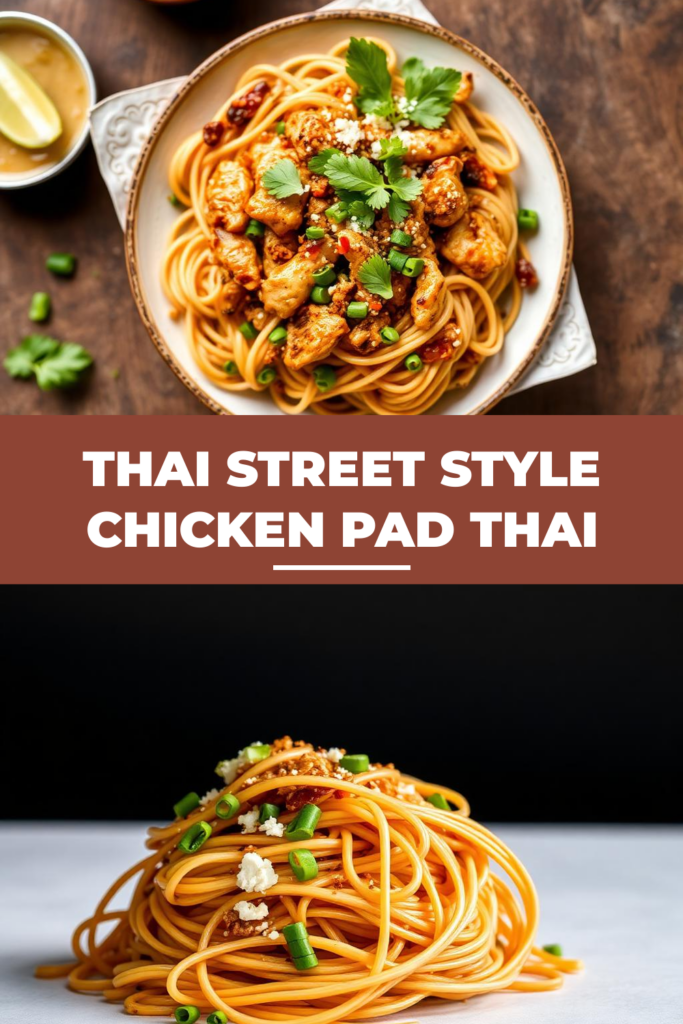
This is a homemade version of the street-style chicken pad thai you get from carts in Thailand: chewy rice noodles, a sweet-sour-savory sauce, and a tangle of chicken, egg, and crunchy peanuts. It’s a fast weeknight dinner once the ingredients are measured, and the sauce is what separates it from plain stir-fried noodles. The key is working quickly over high heat with everything ready before you start.
Ingredients
This recipe uses dried flat rice noodles (often labeled pad thai or banh pho). If you can only find wide rice noodles, break them in half before soaking.
- 8 oz (225 g) dried flat rice noodles (about 1/4 inch / 6 mm wide)
- 1 lb (450 g) boneless, skinless chicken breast or thighs, sliced into thin strips
- 3 tbsp (45 ml) tamarind concentrate (or 1/4 cup / 60 ml tamarind paste mixed with 2 tbsp water)
- 3 tbsp (45 ml) fish sauce
- 3 tbsp (45 g) palm sugar or brown sugar, packed
- 1 tbsp (15 ml) rice vinegar
- 1 tsp (5 ml) chili flakes or 1–2 fresh Thai chilies, minced (adjust to taste)
- 2 tbsp (30 ml) vegetable oil, divided
- 2 cloves garlic, minced
- 2 large eggs, lightly beaten
- 4 cups (120 g) bean sprouts, divided
- 5–6 green onions, cut into 2-inch (5 cm) pieces
- 1/2 cup (60 g) roasted peanuts, roughly chopped
- 1 lime, cut into wedges
- Optional: 1/4 cup (10 g) cilantro leaves, for garnish
Soak the Noodles, Not the Sauce
The single technique that makes this work is soaking the rice noodles in room-temperature water, not boiling them. Boiled noodles turn mushy and clump in the wok. Soak the noodles in cold or lukewarm water for 30–45 minutes until they are pliable but still firm. They will finish cooking in the pan. If you’re short on time, soak in hot tap water for 15–20 minutes, but check frequently—they should be bendy but not soft.
Mix the Sauce Before You Turn On the Heat
Stir-frying goes fast, so have the sauce measured and combined in a small bowl. In a small bowl, whisk together the tamarind concentrate, fish sauce, palm sugar, rice vinegar, and chili flakes. Stir until the sugar dissolves. Taste a tiny drop—it should be sour, salty, and sweet. Adjust with more sugar if too sour, more fish sauce if not salty enough. Set aside.
Instructions
- Soak the rice noodles in room-temperature water for 30–45 minutes, until pliable but still firm. Drain well and set aside.
- While the noodles soak, prepare the sauce and have all ingredients within reach.
- Heat a large wok or 12-inch (30 cm) skillet over high heat until a drop of water sizzles immediately. Add 1 tbsp (15 ml) oil and swirl to coat.
- Add the chicken in a single layer. Let it sear without stirring for 1 minute, then stir-fry for 2–3 minutes, until the chicken is cooked through. The safe minimum internal temperature for chicken is 165°F (74°C) per USDA FSIS. Transfer to a plate.
- Add the remaining 1 tbsp (15 ml) oil to the wok. Add the garlic and stir-fry for 15 seconds until fragrant.
- Push the garlic to one side and pour the beaten eggs into the center. Let them set for 30 seconds, then scramble with a spatula until just cooked but still moist.
- Add the drained noodles and the sauce. Toss everything together with tongs, lifting and turning, for 2–3 minutes, until the noodles are coated and have absorbed most of the sauce. They should be tender but still chewy.
- Return the chicken to the wok. Add half the bean sprouts and all the green onions. Toss for another 1–2 minutes, until the sprouts are slightly wilted but still crunchy.
- Remove from heat. Divide among four plates. Top each with the remaining bean sprouts, peanuts, and cilantro if using. Serve immediately with lime wedges on the side.
What Ruins Pad Thai: Overcooked Noodles and a Dry Wok
Two mistakes cause most failures. First, overcooking the noodles before they hit the wok—they turn to paste. Soak them, don’t boil them, and keep them slightly underdone. Second, a wok that isn’t hot enough. If the pan is not screaming hot, the sauce will steam instead of glaze, and the noodles will stick. Heat the wok until it just starts to smoke, then add oil. Also, don’t crowd the pan; if you double the recipe, cook in two batches.
Swaps That Work, and What Changes
- No tamarind? Use 2 tbsp (30 ml) lime juice plus 1 tbsp (15 ml) water. The sauce will be brighter and less fruity, but still balanced.
- No fish sauce? Use 3 tbsp (45 ml) soy sauce plus 1 tsp (5 ml) anchovy paste or a pinch of salt. The flavor will be less funky but still savory.
- Palm sugar vs. brown sugar: Brown sugar works 1:1. Palm sugar has a deeper, molasses-like note; brown sugar is fine.
- Chicken: Shrimp, tofu, or pork all work. If using shrimp, cook until pink and opaque, about 2–3 minutes per side.
- Vegetarian: Use soy sauce or mushroom sauce instead of fish sauce, and add extra tofu or mushrooms.
Storage and Reheating
Pad thai is best eaten immediately, but leftovers keep in an airtight container in the refrigerator for up to 3 days. Reheat in a hot wok or skillet with a splash of water to loosen the sauce, or in the microwave in 30-second bursts. The bean sprouts will lose their crunch, so add fresh ones when reheating if you have them. Do not freeze—the noodles become mushy.
Safe minimum internal temperatures follow USDA FSIS; raw-fish guidance follows the U.S. FDA. See our food safety notes.
Spotted an error? Tell us and we will correct it (corrections policy).