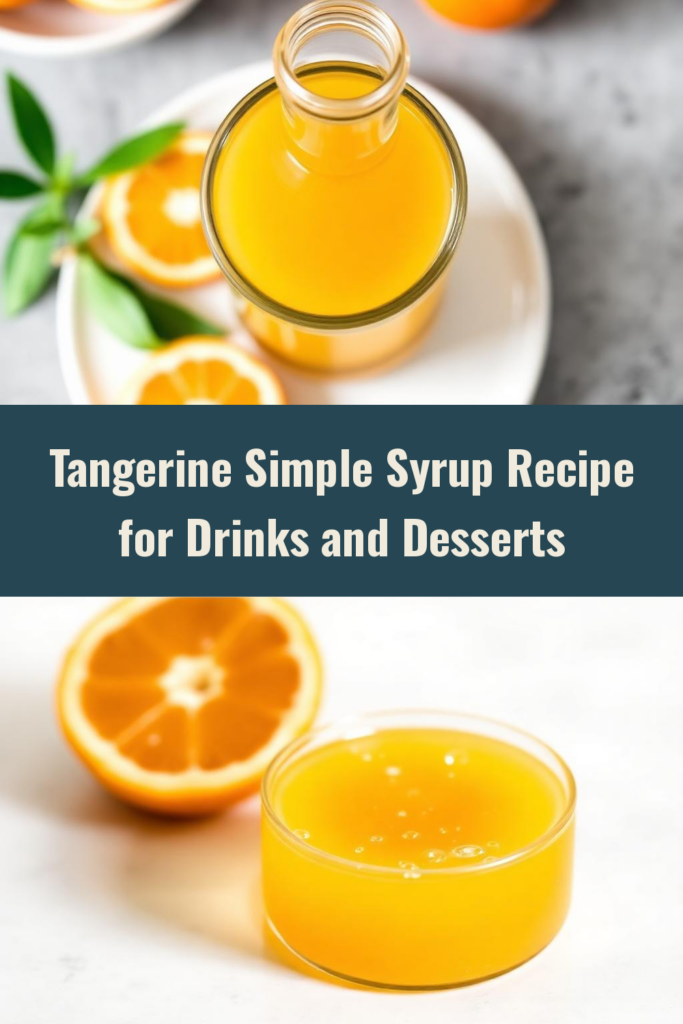
Time: 20 minutes · Makes: about 1.5 cups (360 ml) · The key step: simmer the zest, not the pith, to get bright tangerine flavor without bitterness. This syrup is a quick stovetop infusion of tangerine zest, juice, and sugar, used to sweeten cocktails, lemonade, iced tea, or to brush over cakes. It keeps for weeks in the fridge and takes less than half an hour from start to finish.
Zest First, Juice Second: Getting the Flavor Right
The oil in tangerine peel carries most of the fruit’s aroma, so you want the zest, not the juice, to do the heavy lifting. Use a vegetable peeler or a fine grater to remove only the orange outer layer. The white pith underneath is bitter, and simmering it will make the syrup taste harsh. If you use a grater, you get smaller pieces that infuse faster; if you use a peeler, you get strips that are easy to strain out later. Either works, but the strips are simpler to remove.
Juice adds acidity and a second layer of tangerine flavor, but it also makes the syrup thinner and more perishable. This recipe uses both zest and juice for a balanced result. If you want a clearer syrup with a longer shelf life, use only zest and water, and skip the juice.
Ingredients for Tangerine Simple Syrup
- 1 cup (200 g) granulated sugar
- 1 cup (240 ml) water
- Zest of 3 medium tangerines (about 2 tablespoons, strips or grated)
- 1/2 cup (120 ml) fresh tangerine juice (from 2–3 tangerines)
Use regular white sugar for the cleanest flavor. Brown sugar or honey will change the taste and color; if you swap, use the same volume and expect a deeper, less citrus-forward syrup.
Make the Syrup in 20 Minutes
- Combine the sugar and water in a small saucepan. Bring to a simmer over medium heat, stirring occasionally, until the sugar dissolves completely, about 2–3 minutes.
- Add the tangerine zest and juice. Bring back to a gentle simmer and cook for 5 minutes, uncovered. Do not boil hard; a gentle simmer keeps the zest from turning bitter.
- Remove the pan from heat and let the syrup steep for 10 minutes. The longer it steeps, the stronger the tangerine flavor becomes.
- Strain the syrup through a fine-mesh sieve into a glass jar or bottle. Press on the zest to extract all the liquid. Discard the solids.
- Let the syrup cool to room temperature, then cover and refrigerate. It will thicken slightly as it cools.
What Ruins Tangerine Syrup: Bitterness, Cloudiness, and Spoilage
The most common mistake is including too much pith. When zesting, stop as soon as you see white. If you accidentally get pith, trim it off before simmering. Another mistake is boiling the syrup too hard or too long, which concentrates bitter compounds from the zest and caramelizes the sugar, giving an off flavor. Keep the heat low and the time short.
Cloudiness is not a flaw; it comes from the juice and is normal. If you want a crystal-clear syrup, use only zest and water, and skip the juice. The syrup will still have tangerine aroma but less acidity.
Spoilage happens when the syrup is left at room temperature or stored too long. Because it contains juice, it is more perishable than plain simple syrup. Always refrigerate it and use within 2 weeks. If you see mold, cloudiness that was not there before, or an off smell, discard it.
Storing and Using Tangerine Syrup
Refrigerator: Store in a sealed glass jar for up to 2 weeks. The syrup will keep longer if you omit the juice (up to 1 month), but the flavor will be less bright.
Freezer: Pour the syrup into an ice cube tray and freeze. Once solid, transfer the cubes to a freezer bag. Frozen syrup keeps for up to 3 months. Thaw cubes in the fridge or add them directly to cold drinks.
Make-ahead timeline: The syrup can be made up to 2 weeks ahead and kept refrigerated. It is ready to use immediately after cooling, so you can make it the same day.
Serving and Pairing Ideas
Use tangerine syrup to sweeten and flavor drinks and desserts:
- Cocktails: Add 1/2 to 1 ounce (15–30 ml) to a gin and tonic, vodka soda, or bourbon smash. For a non-alcoholic version, mix with sparkling water and a squeeze of lime.
- Iced tea or lemonade: Stir 1–2 tablespoons (15–30 ml) into a glass of unsweetened iced tea or lemonade for a citrus lift.
- Cake or pancakes: Brush the syrup over a warm sponge cake or drizzle over pancakes, waffles, or yogurt.
- Sparkling water: Combine 2 tablespoons (30 ml) syrup with 1 cup (240 ml) cold sparkling water for a quick soda.
For a cocktail, the syrup is for adults of legal drinking age; drink responsibly. If you use raw egg white in a cocktail, use pasteurized eggs to reduce risk for pregnant, elderly, or immune-compromised guests.
Adjusting Sweetness and Flavor
This recipe makes a medium-sweet syrup (1:1 sugar-to-liquid ratio). For a thicker, sweeter syrup, use 2 cups (400 g) sugar to 1 cup (240 ml) water and reduce the juice to 1/4 cup (60 ml). For a lighter syrup, use 3/4 cup (150 g) sugar. The steeping time also affects flavor: 10 minutes gives a mild tangerine note; 20 minutes gives a stronger one. If you want a more intense flavor without extra bitterness, add the zest of one more tangerine after straining and let it steep in the hot syrup for another 10 minutes, then strain again.
Can I Use Orange or Other Citrus?
Yes. Replace the tangerine zest and juice with the same amounts of orange, clementine, or a mix of citrus. Orange will be slightly less floral and more familiar; clementine is close to tangerine but a bit sweeter. Grapefruit will be more bitter; if you use it, reduce the zest to 1 tablespoon and add 1 tablespoon more juice.
For a lemon version, use lemon zest and juice; the syrup will be more tart and less sweet, so you may want to add an extra 2 tablespoons of sugar.
How to Check If the Syrup Is Done
The syrup is ready when the sugar has dissolved and the mixture has simmered for 5 minutes. It will be slightly thinner than maple syrup when hot and will thicken a little as it cools. To test the consistency, dip a spoon in the hot syrup and let it cool for a few seconds; it should coat the spoon lightly. If it is too thin, simmer for another 2–3 minutes; if too thick, stir in a tablespoon of water.
Food Safety and Storage Limits
Because this syrup contains juice and water, it is a perishable product. Refrigerate it within 2 hours of making. Use within 2 weeks. Do not leave it at room temperature for more than 2 hours (1 hour if the room is above 90°F/32°C). If you see any signs of fermentation (bubbling, off smell) or mold, discard it. Do not taste to check safety. Freezing is a safe way to extend storage to 3 months.
Ingredients
- 1 cup (200 g) granulated sugar
- 1 cup (240 ml) water
- Zest of 3 medium tangerines (about 2 tablespoons, strips or grated)
- 1/2 cup (120 ml) fresh tangerine juice (from 2–3 tangerines)
Instructions
- Combine the sugar and water in a small saucepan. Bring to a simmer over medium heat, stirring occasionally, until the sugar dissolves completely, about 2–3 minutes.
- Add the tangerine zest and juice. Bring back to a gentle simmer and cook for 5 minutes, uncovered. Do not boil hard.
- Remove from heat and let steep for 10 minutes.
- Strain through a fine-mesh sieve into a glass jar or bottle. Press on the zest to extract all liquid. Discard solids.
- Cool to room temperature, then cover and refrigerate. Use within 2 weeks.
Related
- Vegan Lentil Dip: Creamy, Savory, Ready in 40 Minutes
- Paddle Board Camping Setup: Gear List & Packing Steps
- Paddle Board Camping: How to Pack and Plan
Safe minimum internal temperatures follow USDA FSIS; raw-fish guidance follows the U.S. FDA. See our food safety notes.
Spotted an error? Tell us and we will correct it (corrections policy).