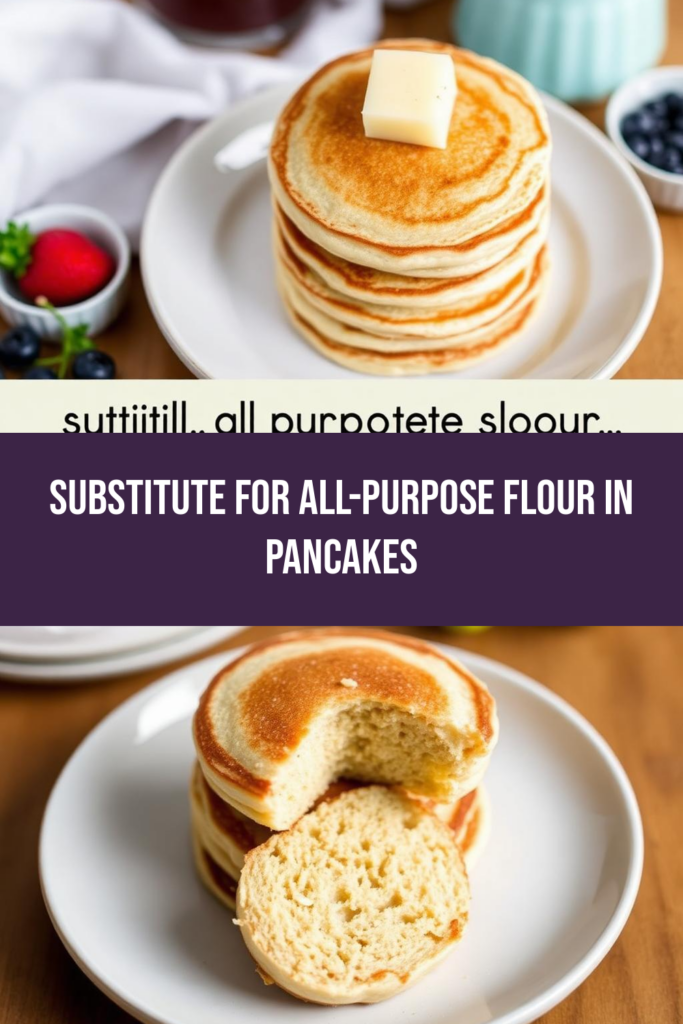
For light, tender pancakes, all-purpose flour provides structure and a neutral flavor. When you swap it out, the goal is to keep the batter thick enough to hold air while still cooking through to a golden, cooked center. The best substitute depends on what you have and what texture you want, from whole wheat to gluten-free blends.
Choose the Substitute by the Texture You Want
Each flour changes the pancake’s crumb, color, and flavor. The table below shows common swaps and what to expect. For the simplest swap, use a 1:1 ratio by weight; if measuring by volume, adjust liquid as noted.
| Substitute | Ratio (by volume) | What changes |
|---|---|---|
| Whole wheat flour | 1 cup AP = 1 cup whole wheat, plus 1–2 tbsp extra milk | Denser, nuttier, more moisture needed |
| Spelt flour | 1 cup AP = 1 cup spelt | Slightly sweet, lighter crumb; may need less liquid |
| Oat flour (store-bought or ground from rolled oats) | 1 cup AP = 1 cup oat flour, plus 1–2 tbsp extra milk | Soft, slightly chewy; absorbs liquid slowly |
| Gluten-free all-purpose blend (with xanthan gum) | 1 cup AP = 1 cup GF blend | Use as directed; may need extra liquid or a binder like an extra egg |
| Rice flour (white) | 1 cup AP = 1 cup rice flour, plus 2 tbsp extra milk | Crisp edges, tender but less structure; can be gritty if not fine |
| Buckwheat flour | 1 cup AP = 1 cup buckwheat, plus 2 tbsp extra milk | Earthy, darker, more fragile; best mixed with another flour |
If you are using a 1:1 gluten-free blend that already contains xanthan gum, follow the package’s liquid advice. For single-flour substitutes like rice or buckwheat, adding an extra egg (or a tablespoon of oil) helps hold the pancake together.
Measure the Substitute and Adjust the Batter
Start with your usual pancake recipe, but replace the flour by weight if possible. For volume, spoon the substitute flour into the cup and level it off—do not scoop, which packs it. After mixing, check the batter’s consistency: it should be thick enough to mound on a spoon but still pour slowly. If it is too thick, add milk 1 tablespoon at a time; if too thin, add 1 tablespoon of the substitute flour at a time.
Whole wheat and oat flours absorb more liquid, so you may need 2–4 tablespoons extra milk per cup of flour. Gluten-free blends often need a short rest (5–10 minutes) to hydrate, which prevents a gritty texture. Rice flour can make the batter thinner, so add less liquid initially.
Make the Pancakes With Your Chosen Flour
This base recipe works with any substitute above. The key is to not overmix—lumps are fine—and to let the batter rest for 5 minutes if using whole wheat, oat, or gluten-free flour.
Ingredients
- 1 cup (120 g) substitute flour (choose from table above)
- 1 tbsp (12 g) granulated sugar (optional, for browning)
- 2 tsp (8 g) baking powder
- 1/4 tsp (1.5 g) salt
- 1 large egg (50 g, out of shell)
- 1 cup (240 ml) milk (dairy or non-dairy)
- 2 tbsp (30 g) unsalted butter, melted, or neutral oil
- 1/2 tsp vanilla extract (optional)
Instructions
- In a medium bowl, whisk the flour, sugar, baking powder, and salt until combined.
- In a small bowl, beat the egg, then add the milk, melted butter, and vanilla. Stir to combine.
- Pour the wet ingredients into the dry. Stir with a spoon until just moistened—some lumps are okay. If using whole wheat, oat, or gluten-free flour, let the batter rest for 5 minutes.
- Check consistency: add milk 1 tablespoon at a time if too thick, or flour 1 tablespoon at a time if too thin.
- Heat a griddle or large nonstick skillet over medium heat (about 350°F/175°C). Grease lightly with butter or oil.
- Pour 1/4 cup (60 ml) batter per pancake. Cook until bubbles form on the surface and edges look set, about 2–3 minutes.
- Flip and cook until the second side is golden brown and the center springs back when pressed, about 1–2 minutes more. If you are unsure, break one open to check the center is cooked through.
- Repeat with remaining batter, adjusting heat if pancakes brown too quickly.
This recipe makes about 6 pancakes (4-inch/10 cm each). If you use a gluten-free blend without xanthan gum, add 1/4 tsp xanthan gum to the dry ingredients to help structure.
Store Leftover Pancakes and Batter
Cooked pancakes keep in the refrigerator for up to 3 days. Stack them with a piece of parchment paper between each, then wrap in plastic or place in an airtight container. Reheat in a toaster, microwave, or in a dry skillet over medium heat until hot.
Uncooked batter can be refrigerated for up to 1 day, but it may thin as the leavener reacts. Stir in a little extra flour if needed. You can also freeze cooked pancakes: place them in a single layer on a baking sheet, freeze until firm (about 1 hour), then transfer to a freezer bag. They keep for up to 2 months. Reheat from frozen in a toaster or microwave.
Do not leave batter or cooked pancakes at room temperature for more than 2 hours. If you added buttermilk or dairy, the batter will keep shorter—use within 12 hours.
Adjust for Common Pancake Variations
If your original recipe calls for buttermilk, replace it with the same amount of milk plus 1 tablespoon lemon juice or white vinegar, and let it sit for 5 minutes. For dairy-free, use almond, oat, or soy milk and a neutral oil instead of butter. For egg-free, use a flax egg (1 tbsp ground flaxseed + 3 tbsp water, left to thicken 5 minutes) or a commercial egg replacer; note that gluten-free flours may need the extra structure from a real egg.
If you want to add blueberries, chocolate chips, or nuts, fold them into the batter after the rest period. They will sink if the batter is too thin; add an extra 1–2 tablespoons of your substitute flour if needed.
Related
- Coconut Flour Bread Recipe with Yeast
- Pumpkin Bread With Coconut Flour Recipe
- Coconut Flour Chicken Dinner Recipe
Safe minimum internal temperatures follow USDA FSIS; raw-fish guidance follows the U.S. FDA. See our food safety notes.
Spotted an error? Tell us and we will correct it (corrections policy).