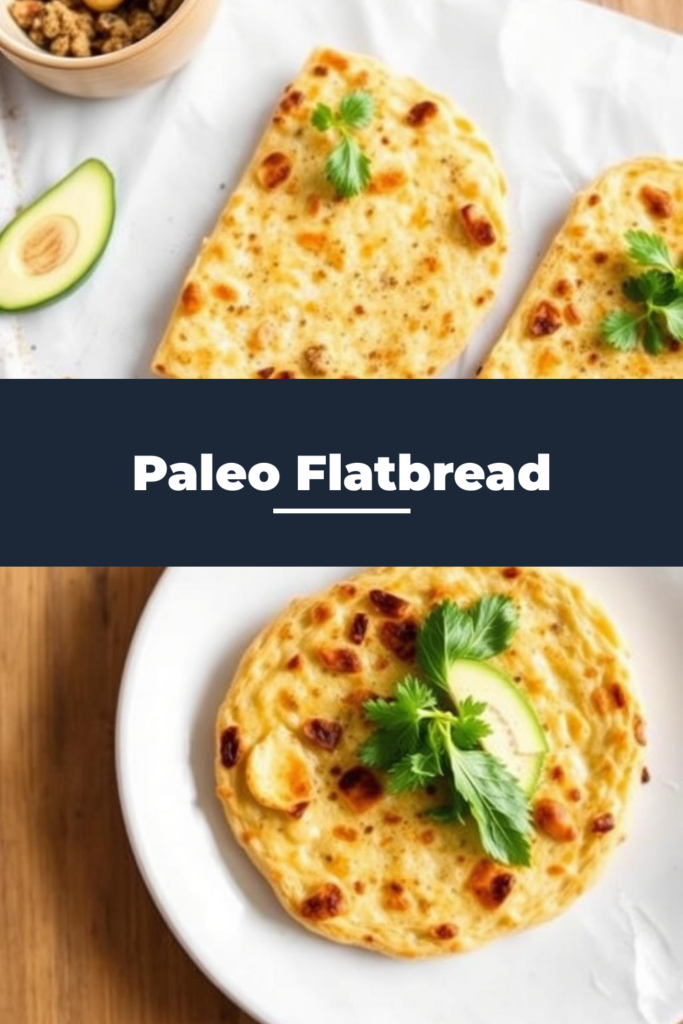
Time: 30 min · Serves: 4 · The key step: let the batter rest 5 minutes before cooking so the almond flour hydrates and the flatbread holds together.
This paleo flatbread is a soft, pliable bread made with almond flour, tapioca starch, eggs, and olive oil. It has a mild nutty flavor and a tender, slightly chewy texture, perfect for wrapping, dipping, or using as a pizza base. It suits weeknight dinners, lunchboxes, and anytime you need a grain-free bread.
Ingredients
- 1 ½ cups (168 g) blanched almond flour (not almond meal)
- ¼ cup (32 g) tapioca starch (also called tapioca flour)
- ½ teaspoon salt
- 2 large eggs, at room temperature
- 2 tablespoons (30 ml) olive oil, plus more for the pan
- ¼ cup (60 ml) water, at room temperature
Instructions
- In a medium bowl, whisk together the almond flour, tapioca starch, and salt.
- Add the eggs, olive oil, and water. Stir with a spatula until a smooth, thick batter forms. Let the batter rest for 5 minutes; it will thicken slightly as the almond flour absorbs liquid.
- Heat a large nonstick skillet (10–12 in / 25–30 cm) over medium heat. Lightly brush the pan with olive oil.
- Pour ¼ cup (60 ml) of batter into the center of the pan. Use the back of a spoon or an offset spatula to spread it into a circle about 6 inches (15 cm) in diameter and ¼ inch (6 mm) thick.
- Cook for 2–3 minutes, until the edges look set and small bubbles appear on the surface. The bottom should be golden brown. Flip with a spatula and cook for another 1–2 minutes, until the second side is golden and cooked through.
- Transfer to a plate and cover loosely with a clean kitchen towel to keep warm. Repeat with the remaining batter, brushing the pan with a little oil between batches. You should get 4 flatbreads.
Mistakes That Cause Cracking or Crumbling
Flatbreads that crack when folded or crumble when picked up come from one of three issues.
Batter too thin
If the batter is too thin, it spreads too much and the flatbread becomes fragile. The batter should be thick enough to hold its shape when spooned. If your batter seems runny, add 1 tablespoon (8 g) more almond flour and let it rest another 2 minutes.
Skipping the rest
The 5-minute rest lets the almond flour absorb the liquid. Without it, the batter is too loose and the flatbreads break apart during flipping. Do not skip this step.
Overcooking
Overcooking dries out the flatbread, making it stiff and prone to cracking. Cook just until golden on each side, not longer. If your pan runs hot, reduce the heat to medium-low.
Serving and Storing
Serve warm with soups, stews, or salads. Use as a wrap for grilled chicken, roasted vegetables, or hummus. For a pizza base, pre-bake the flatbread for 5 minutes at 375°F (190°C) before adding toppings.
Store cooled flatbreads in an airtight container or zip-top bag at room temperature for up to 2 days. For longer storage, freeze for up to 3 months. To reheat, warm in a dry skillet over medium heat for 30 seconds per side, or in a toaster oven at 350°F (175°C) for 3–4 minutes. Do not microwave, as it makes them rubbery.
If you plan to keep them longer than 2 days, refrigerate for up to 4 days, but note that refrigeration can make them slightly drier. Reheat as above.
Swaps and Variations
For a nut-free version, replace the almond flour with 1 ½ cups (168 g) sunflower seed flour. The flatbreads will be darker in color and have a slightly earthy taste. Do not use coconut flour as a substitute; it absorbs too much liquid and will not produce a pliable flatbread.
For a dairy-free version, this recipe is already dairy-free. For a lower-carb version, you can reduce the tapioca starch to 2 tablespoons (16 g), but the flatbreads will be less pliable and more prone to cracking.
Add ½ teaspoon garlic powder or dried herbs (such as oregano or rosemary) to the dry ingredients for a savory flatbread. This does not change the cooking time.
Why This Flatbread Works
Almond flour provides structure and a tender crumb, while tapioca starch adds elasticity and helps the flatbread bend without breaking. Eggs bind the ingredients, and olive oil adds richness and moisture. The result is a flatbread that is sturdy enough to hold fillings but soft enough to enjoy on its own.
Common Questions
Can I make the batter ahead of time?
Yes, you can mix the batter up to 24 hours in advance. Store it covered in the refrigerator. Let it come to room temperature for 10 minutes before cooking, and stir well. The batter will thicken overnight; add 1–2 tablespoons (15–30 ml) of water if needed to reach the original consistency.
Why does my flatbread stick to the pan?
Make sure the pan is well oiled before each batch. Use a nonstick skillet, and brush with oil even if the pan is nonstick. If the flatbread sticks, the pan may not be hot enough; wait until the oil shimmers before adding the batter.
Can I use this recipe for tortillas?
Yes, these flatbreads work well as tortillas for tacos or burritos. They are slightly thicker than corn tortillas but hold up well to fillings. For smaller tortillas, use 2 tablespoons (30 ml) of batter per flatbread and cook for 1–2 minutes per side.
Related
- 15 Paleo Dinner Ideas for Easy Weeknights
- 10 Quick Paleo Emergency Meal Ideas
- Is Tapioca Flour Gluten-Free? What to Know
Safe minimum internal temperatures follow USDA FSIS; raw-fish guidance follows the U.S. FDA. See our food safety notes.
Spotted an error? Tell us and we will correct it (corrections policy).