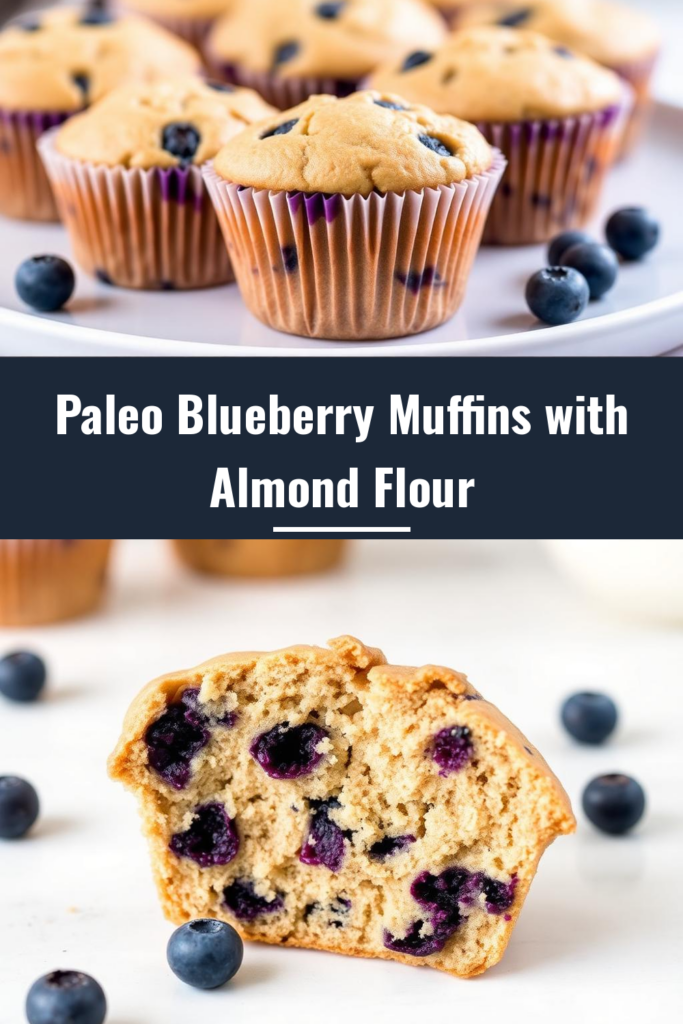
Almond flour gives these muffins a tender, moist crumb and a mild, nutty flavor that pairs well with juicy blueberries. They are sweetened with maple syrup and bound with eggs and coconut oil, making them a grain-free choice for breakfast or a snack. The recipe relies on a 2:1 ratio of almond flour to eggs to create structure without gluten.
Ingredients
- 3 cups (300 g) super-fine almond flour
- 1/2 teaspoon baking soda
- 1/4 teaspoon salt
- 3 large eggs, at room temperature
- 1/3 cup (80 ml) maple syrup
- 1/4 cup (60 ml) melted coconut oil or avocado oil
- 1 teaspoon vanilla extract
- 1 tablespoon (15 ml) lemon juice (optional, brightens flavor)
- 1 1/2 cups (225 g) fresh or frozen blueberries (if frozen, do not thaw)
Instructions
- Preheat the oven to 350°F (175°C). Line a 12-cup muffin pan with paper liners.
- In a large bowl, whisk together the almond flour, baking soda, and salt.
- In a medium bowl, beat the eggs, maple syrup, melted coconut oil, vanilla, and lemon juice until smooth.
- Pour the wet ingredients into the dry ingredients and stir until just combined. The batter will be thick.
- Gently fold in the blueberries. If using frozen berries, toss them with 1 tablespoon of almond flour before folding to reduce sinking.
- Divide the batter evenly among the muffin cups, filling each about 3/4 full.
- Bake for 22–27 minutes, until the tops are golden and a toothpick inserted in the center comes out clean (a few moist crumbs are okay).
- Let the muffins cool in the pan for 10 minutes, then transfer to a wire rack to cool completely.
Why Almond Flour Muffins Turn Out Dry or Dense
Almond flour behaves differently from wheat flour because it lacks gluten and absorbs moisture unevenly. The most common problem is a dry, crumbly muffin, which happens when the batter is overmixed or the oven is too hot. Overmixing develops the natural oils in the almonds and can make the crumb tough. Bake at 350°F (175°C) and stop mixing as soon as the flour is moistened.
A dense, gummy center usually means the muffins were underbaked or the batter sat too long before baking. The baking soda reacts quickly with the acidic maple syrup and lemon juice, so get the muffins into the oven immediately after mixing. If your almond flour is coarse (not super-fine), the texture will be grittier; grind it briefly in a food processor or sift it.
If the muffins collapse in the middle, the batter may have too much liquid. Measure the almond flour by spooning it into the cup and leveling off—do not scoop directly from the bag, which compacts it. Also, ensure the eggs are at room temperature to emulsify properly.
Substitutions and Variations
Here are common swaps and how they change the result:
- Sweetener: Replace maple syrup with 1/2 cup (170 g) honey. Honey is sweeter, so reduce to 1/3 cup (115 g) if you prefer less sweetness. Honey also browns faster, so check the muffins at 20 minutes.
- Oil: Use melted butter (not paleo) or a neutral oil like avocado oil. Butter adds richness; coconut oil gives a slight coconut flavor.
- Eggs: For an egg-free version, use 3 flax eggs (3 tablespoons ground flaxseed mixed with 9 tablespoons water, rested 5 minutes). The muffins will be denser and less tender.
- Blueberries: Swap for raspberries, chopped strawberries, or diced peaches. Reduce the amount to 1 cup (150 g) if using very juicy fruit to avoid a soggy crumb.
- Add-ins: Fold in 1/2 cup (60 g) chopped pecans or walnuts, or 1 teaspoon lemon zest for extra flavor.
How to Store and Freeze These Muffins
Store the muffins in an airtight container at room temperature for up to 3 days. They are best within 24 hours but remain moist for a day or two. For longer storage, refrigerate for up to 1 week, but note that refrigeration can dry them out—reheat in a microwave for 10–15 seconds or in a 300°F (150°C) oven for 5 minutes.
To freeze, place the cooled muffins in a single layer in a freezer-safe bag or container, pressing out excess air. Freeze for up to 3 months. Thaw at room temperature for about 30 minutes, or reheat directly from frozen in a 350°F (175°C) oven for 8–10 minutes.
If you plan to make a batch ahead for a busy week, freeze them the same day they are baked—the texture holds up better than refrigerating.
Why Did My Muffins Sink or Spread?
Sinking is usually caused by too much liquid or not enough structure. Check that you used exactly 3 cups of almond flour and 3 eggs; if the batter looks runny, add 2 tablespoons more almond flour. Also, make sure your baking soda is fresh—test it by dropping a pinch into vinegar; it should bubble vigorously.
Spreading into flat, wide muffins happens when the batter is too thin. This can occur if the coconut oil was still warm when added, thinning the batter. Let the melted oil cool to room temperature before mixing. Additionally, using frozen blueberries without tossing them in flour can release extra moisture and cause spreading.
If your muffins stick to the liners, that is common with almond flour because it is high in fat. Use parchment liners or grease the pan well with coconut oil. For best release, let the muffins cool completely before peeling the liners.
Related
- Paleo Almond Flour Cookies: 12 Recipes
- Paleo Flax Muffins: Almond-Free, Grain-Free Recipe
- Coconut Flour Bread Recipe with Yeast
Safe minimum internal temperatures follow USDA FSIS; raw-fish guidance follows the U.S. FDA. See our food safety notes.
Spotted an error? Tell us and we will correct it (corrections policy).