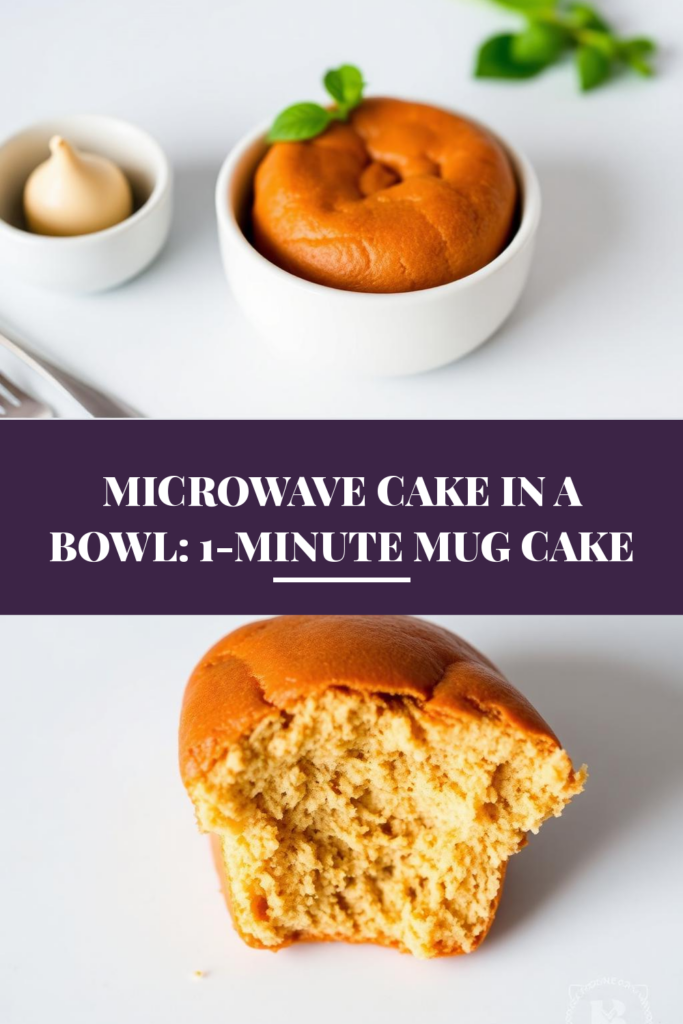
Time: 2 minutes to mix, 1–2 minutes to cook · Serves: 1 · The key step: cook in 30-second bursts, checking after each, until the top is just set but still moist. A microwave cake in a bowl is a single-serving vanilla or chocolate cake made entirely in a mug or small bowl, ready in about 3 minutes. It has a tender, slightly spongy crumb and is best eaten warm, straight from the bowl.
Ingredients
- 4 tbsp (30 g) all-purpose flour
- 3 tbsp (40 g) granulated sugar
- 2 tbsp (15 g) unsweetened cocoa powder (for chocolate version) or 1/4 tsp vanilla extract (for vanilla version)
- 1/4 tsp baking powder
- 1/8 tsp salt
- 3 tbsp (45 ml) milk (any kind)
- 2 tbsp (30 ml) neutral oil (canola, vegetable, or melted butter)
- 1/4 tsp vanilla extract (if making chocolate, add anyway)
- 1 tbsp (15 g) chocolate chips or nuts (optional)
Instructions
- In a microwave-safe mug or small bowl (about 12 oz / 350 ml capacity), whisk together the flour, sugar, cocoa (if using), baking powder, and salt with a fork until no lumps remain.
- Add the milk, oil, and vanilla (if using). Stir with the fork until a smooth batter forms. If adding chocolate chips or nuts, fold them in now.
- Scrape down the sides of the mug with a spatula so the batter is evenly distributed.
- Microwave on high for 30 seconds. Check the cake: it should be risen and just set on top, but still slightly moist in the center. If not done, microwave in 15-second bursts, checking each time, up to 2 minutes total for a 1000-watt microwave. The cake is done when the top springs back lightly when touched and a toothpick inserted in the center comes out with a few moist crumbs (not wet batter).
- Let the cake cool in the mug for 1–2 minutes before eating. It will continue to set as it cools.
Why It Can Come Out Too Dry, Too Runny, or Too Dense
Three common problems and their fixes:
- Too dry: Overcooking is the usual cause. The cake keeps cooking from residual heat after the microwave stops. Remove it when the center is still slightly moist. Also, using too much flour or too little liquid will dry it out. Stick to the exact measurements.
- Too runny: Undercooking or too much liquid. If the center is still liquid after 2 minutes, your microwave may be low wattage (under 800W). Cook in 15-second bursts up to 3 minutes total. Also check that you used the correct amount of milk—extra milk makes a pudding, not a cake.
- Too dense: Overmixing develops gluten, making the cake tough. Stir only until the flour is moistened, about 10–15 strokes. Also, check that your baking powder is fresh—if it’s older than 6 months, it may not leaven properly.
Scaling for Half and Double Batches
| Batch | Flour | Sugar | Baking powder | Milk | Oil | Cook time (1000W) |
|---|---|---|---|---|---|---|
| Half (serves 1/2) | 2 tbsp (15 g) | 1.5 tbsp (20 g) | 1/8 tsp | 1.5 tbsp (22 ml) | 1 tbsp (15 ml) | 45–60 sec |
| Single (serves 1) | 4 tbsp (30 g) | 3 tbsp (40 g) | 1/4 tsp | 3 tbsp (45 ml) | 2 tbsp (30 ml) | 1–2 min |
| Double (serves 2) | 1/2 cup (60 g) | 6 tbsp (80 g) | 1/2 tsp | 6 tbsp (90 ml) | 4 tbsp (60 ml) | 2–3 min |
For a double batch, use two separate mugs rather than one large bowl—a single large bowl will cook unevenly and take much longer. For a half batch, use a small mug and reduce the cook time by about half.
How to Check for Doneness Without Overcooking
The microwave continues to cook the cake for about 30 seconds after you stop it. So, pull the cake out when the top looks set but the center still has a slight shine or a tiny wet spot. A toothpick inserted in the center should come out with a few moist crumbs, not clean and not wet batter. If you wait until the toothpick is completely clean, the cake will be dry. If you are unsure, err on the side of undercooking—you can always add 10 more seconds, but you cannot undo a dry cake.
Storage and Reheating
This cake is best eaten immediately, within 10 minutes of cooking. If you have leftovers (unlikely for one serving), wrap the mug in plastic wrap and refrigerate for up to 2 days. To reheat, microwave on medium (50% power) for 20–30 seconds until warm. Do not freeze—the texture becomes rubbery. If you made a double batch and have one uneaten, store the second mug covered in the fridge and reheat as above.
Variations That Change the Texture
- Add 1 tbsp (15 g) peanut butter to the batter with the wet ingredients. This adds richness and makes the cake slightly denser and more fudgy. Cook time stays the same.
- Use 2 tbsp (15 g) almond flour in place of 2 tbsp of the all-purpose flour. This makes the cake more tender and crumbly, but it will be more delicate. Reduce milk to 2.5 tbsp (37 ml) to avoid a runny center.
- Swap milk for buttermilk or yogurt (use 3 tbsp / 45 g). This adds tang and makes the cake slightly more moist and tender. No other changes needed.
- For a vegan version, use plant milk and replace the oil with melted coconut oil (same amount). The cake will be slightly firmer when cool.
Why the Bowl Size and Shape Matter
Use a mug or bowl that holds at least 12 oz (350 ml). A smaller mug will overflow as the cake rises. A wide, shallow bowl will cook faster and more evenly than a tall, narrow mug, because the batter is spread thinner. If using a wide bowl, start checking for doneness at 45 seconds instead of 30. If using a tall mug, expect the center to take longer—up to 2.5 minutes—and check in 15-second bursts after the first minute.
What to Do With Leftover Batter
If you mixed more than one serving, you can store the dry ingredients (flour, sugar, cocoa, baking powder, salt) in a small jar or zip-top bag for up to 3 months. When ready to cook, add the wet ingredients and follow the same steps. Do not store the mixed wet batter—the baking powder will lose its lift within an hour, and the cake will be dense.
Raw Flour Warning
This recipe uses raw flour, which is not safe to eat uncooked. The cake is fully cooked in the microwave, so it is safe to eat. Do not taste the raw batter. If you want to make a no-bake version, heat-treat the flour first: spread it on a baking sheet and bake at 160°F (71°C) for 5–7 minutes, then let cool before mixing. Pregnant people, young children, older adults, and anyone with a weakened immune system should avoid raw flour and raw eggs in any recipe.