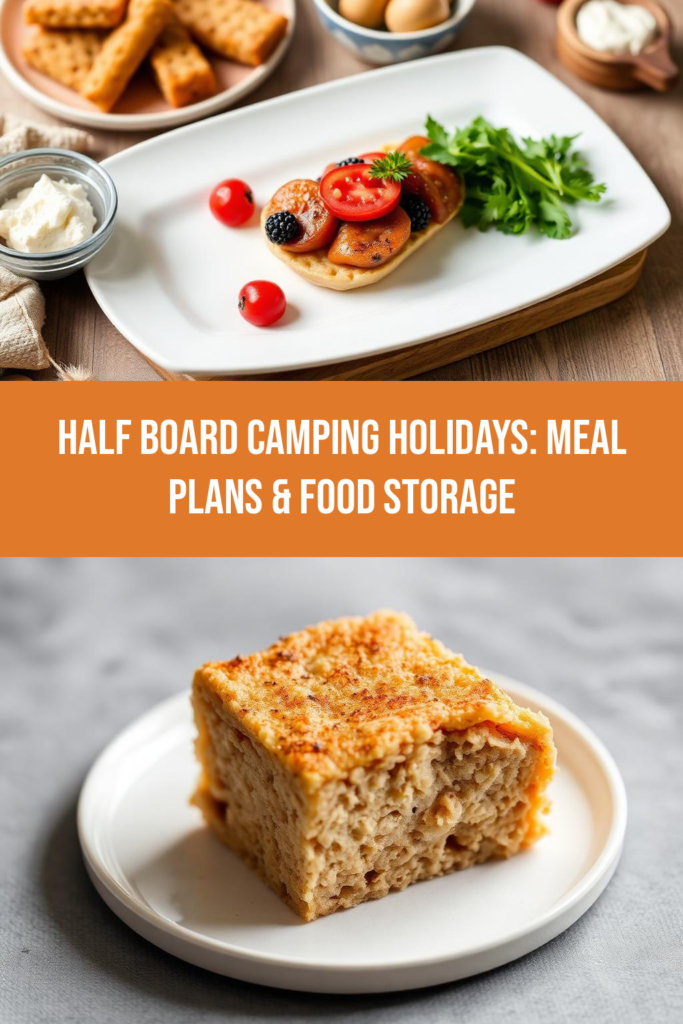
Half board camping holidays mean your accommodation provides breakfast and evening meal, leaving you to handle lunch and snacks. This page covers what half board typically includes, how to plan the meals you do need, and how to store food safely at a campsite.
What Half Board Includes
Half board usually covers breakfast and dinner at the campsite restaurant or dining hall. Lunch and any snacks are your responsibility. Some sites include drinks with meals, others charge extra; check your booking details. If you have dietary restrictions, contact the site before arrival to confirm they can accommodate you.
Meals You Need to Cover
With half board, you need to plan for lunch, snacks, and drinks each day. For a 7-day trip, that’s 7 lunches, plus daily snacks and drinks. If you have children, add their snacks and any early morning or late evening hunger needs.
Lunch Ideas That Need No Cooking
Choose items that stay safe without refrigeration for a few hours, or use a cool box. Here are practical options:
- Bread rolls with hard cheese (like cheddar) and sliced ham or salami – keep cold until eaten.
- Peanut butter or jam sandwiches – no refrigeration needed.
- Hummus with carrot sticks and pita bread – refrigerate until lunchtime.
- Tuna salad (canned tuna, mayo, celery) – keep cold, use within 2 hours of assembling.
- Hard-boiled eggs (cook until yolk and white are firm) – keep cold, eat within 2 hours if not refrigerated.
- Fresh fruit, nuts, and granola bars – no refrigeration.
Food Storage at Camp
Perishable foods (dairy, meat, eggs, cooked rice, mayonnaise) must be kept at or below 40°F (4°C). Use a cool box with ice packs or blocks. Keep the cool box in the shade, open it as little as possible, and replenish ice daily. Never leave perishables out for more than 2 hours (1 hour if above 90°F/32°C). Discard any food that reaches room temperature for that long.
Cool Box Packing Order
Pack your cool box in layers to keep food cold longest:
- Place a frozen ice pack at the bottom.
- Add a layer of frozen items (like frozen water bottles) that you’ll use later.
- Put raw meat or fish in sealed containers at the bottom, so juices cannot drip on other food.
- Add dairy, cooked foods, and ready-to-eat items above.
- Top with another ice pack.
- Fill empty spaces with crumpled paper or towels to reduce air circulation.
Safe Internal Temperatures
If you cook any meat, poultry, or fish at camp, use a food thermometer. USDA FSIS safe minimum internal temperatures: poultry 165°F (74°C); ground meat and sausage 160°F (71°C); whole cuts of beef, pork, veal, lamb 145°F (63°C) with a 3-minute rest; fish 145°F (63°C). Check the thickest part, away from bone.
Planning a 7-Day Half Board Menu
Here is a sample lunch and snack plan for a week. Adjust quantities to your group size.
| Day | Lunch | Snack |
|---|---|---|
| 1 | Cheese and ham rolls | Apple |
| 2 | Hummus with pita and carrots | Granola bar |
| 3 | Tuna salad in a wrap | Orange |
| 4 | Peanut butter and banana sandwich | Mixed nuts |
| 5 | Hard-boiled eggs and bread | Yogurt (keep cold) |
| 6 | Chicken and cucumber rolls (use leftover cooked chicken) | Pretzels |
| 7 | Cheese and tomato panini (if you have a grill) | Banana |
For drinks, carry water bottles and refill from safe sources. If you buy bottled drinks, keep them out of direct sun.
Scaling for Group Size
If you are camping with a group, adjust quantities. For lunch rolls, plan 2 rolls per adult, 1 per child. For fruit, 1 medium piece per person per day. For snacks, about 1-2 per person per day. Use this table for a quick guide:
| People | Rolls per lunch | Fruit per day | Snack bars per day |
|---|---|---|---|
| 1 | 2 | 1 | 1 |
| 2 | 4 | 2 | 2 |
| 4 | 8 | 4 | 4 |
| 6 | 12 | 6 | 6 |
Equipment That Helps
You do not need much for half board camping, but a few items make lunch easier:
- Insulated cool box (12-24 quart / 11-23 L for a family of 4 for a day).
- Ice packs (2-3 per cool box).
- Food thermometer for any cooking.
- Cutting board and sharp knife.
- Reusable containers for leftovers.
- Carabiner or bungee to secure the cool box lid.
If you do not have a cool box, use a thick insulated bag and freeze water bottles to act as ice. Replace ice daily.
Storing Leftovers Safely
If you have leftovers from dinner at the campsite restaurant, refrigerate them within 2 hours (1 hour if above 90°F/32°C). Use a cool box with ice. Most cooked dishes keep 3-4 days refrigerated. Reheat leftovers to 165°F (74°C) before eating. Do not leave leftovers in a car or tent; use the cool box.
Common Questions
Can I cook my own meals even if I have half board? Yes, but you pay for meals you do not use. Some sites allow you to skip a meal if you tell them in advance; check with reception.
What if I have dietary allergies? Contact the site before arrival. Most restaurants can adapt, but confirm in writing if needed.
How do I keep food cold without electricity? Use a cool box with ice packs. Freeze water bottles and use them as ice; they also give cold drinking water as they melt. Replenish ice daily from a shop or site freezer if available.
Can I bring my own food into the restaurant? Usually not, but you can keep snacks in your room or tent for later.
Safety Notes
Raw flour and raw eggs: if you make sandwiches with raw flour products (like uncooked dough) or raw eggs (like homemade mayo), heat-treat flour to 160°F (71°C) and use pasteurised eggs. Pregnant people, young children, older adults, and those with weakened immune systems should avoid raw eggs and raw flour. Keep such foods refrigerated.
Perishable food left out for more than 2 hours (1 hour above 90°F/32°C) should be discarded. Never taste food to check if it is safe.
Ingredients
- 2 slices bread or 1 roll
- 1 oz (30 g) cheese (cheddar, gouda)
- 1 oz (30 g) sliced ham or turkey
- 1 tsp (5 ml) mustard or mayo (optional)
- 1 piece fruit (apple, banana, or orange)
- 1 handful (about 1 oz / 30 g) nuts or granola bar
Instructions
- Assemble the sandwich or roll with cheese, ham, and mustard or mayo.
- Pack the sandwich in a container or wrap in foil.
- Wash the fruit and pack it whole or sliced.
- Place all items in a cool box with ice packs if perishable.
- Eat within 2 hours of packing, or keep refrigerated until lunch.
How to Tell It’s Done
For a no-cook lunch, there is no doneness cue. Just assemble and eat. If you add cooked chicken or eggs, ensure they were cooked to safe temperatures before packing.
Storage
Keep the assembled sandwich refrigerated at 40°F (4°C) or below. Use within 24 hours. Do not leave at room temperature for more than 2 hours. If you add mayonnaise, keep it cold and eat within 2 hours of assembly.
Variations
Use tuna salad (canned tuna, mayo, celery) instead of ham. For a vegetarian option, use hummus and roasted vegetables. For a vegan version, use vegan cheese and plant-based deli slices.
Related
Safe minimum internal temperatures follow USDA FSIS; raw-fish guidance follows the U.S. FDA. See our food safety notes.
Spotted an error? Tell us and we will correct it (corrections policy).