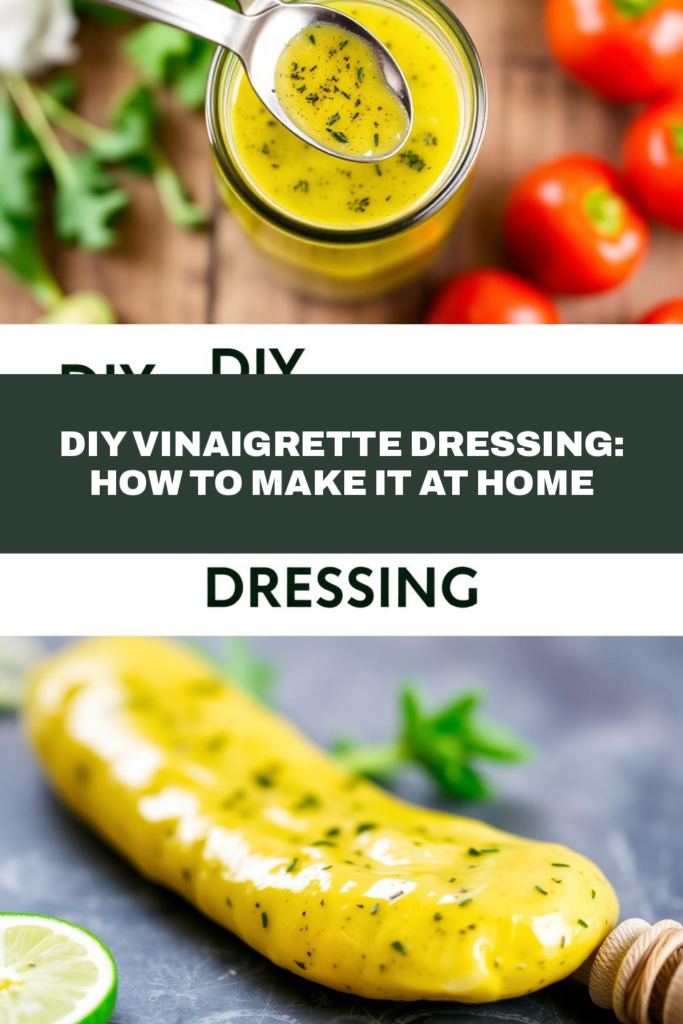
A DIY vinaigrette is a sharp, tangy dressing you can whisk together in minutes, and it beats most bottled versions because you control the acid-to-oil balance and the seasonings. This method gives you a stable emulsion that coats salad leaves evenly, and it works for any salad you already make. You will need a jar with a lid or a small bowl and whisk, and the whole process takes about 5 minutes.
Ingredients
- 3 tbsp (45 ml) red wine vinegar or white wine vinegar
- 1 tsp (5 ml) Dijon mustard
- 1/2 tsp (2.5 ml) honey or maple syrup (optional)
- 1 small garlic clove, minced (about 1/2 tsp / 2.5 ml)
- 1/4 tsp (1.25 ml) fine salt
- 1/8 tsp (0.6 ml) black pepper
- 1/2 cup (120 ml) extra-virgin olive oil or neutral oil like canola
Instructions
- In a small bowl or a jar with a tight-fitting lid, combine the vinegar, mustard, honey (if using), garlic, salt, and pepper. Whisk or shake until the salt dissolves and the mustard is fully blended.
- While whisking constantly (or with the lid on and shaking), add the oil in a slow, steady stream. If using a jar, add the oil, close the lid, and shake vigorously for 20–30 seconds until the dressing looks creamy and slightly thickened.
- Taste the dressing on a piece of lettuce, not straight from the spoon, and adjust with a pinch more salt or a drop more vinegar if needed.
- Use immediately, or refrigerate in a sealed container for up to 1 week. Shake or whisk again before using because the emulsion will separate as it sits.
Pick Your Acid and Oil Ratio
The classic vinaigrette ratio is 3 parts oil to 1 part acid. That means for every 3 tablespoons of oil, use 1 tablespoon of vinegar or lemon juice. The recipe above uses 1/2 cup (8 tablespoons) oil and 3 tablespoons vinegar, which is slightly more acidic—good for sturdy greens like kale or for salads with sweet fruit. For a milder dressing, reduce the vinegar to 2 tablespoons.
Acid choices: red wine vinegar (sharp, good with tomatoes), white wine vinegar (clean, all-purpose), sherry vinegar (nutty, pairs with roasted vegetables), apple cider vinegar (fruity, good with slaws), or fresh lemon juice (bright, use 1:1 with oil for a lighter dressing).
Oil choices: extra-virgin olive oil gives a peppery, grassy flavor; neutral oil like canola or grapeseed lets the acid and herbs stand out. You can also use half olive oil and half neutral oil to soften the olive flavor.
Adjust the Flavor and Texture
Make it creamy
Add 1–2 teaspoons of mayonnaise or Greek yogurt along with the mustard. This stabilizes the emulsion and makes the dressing cling to leaves. Add it in step 1 with the vinegar.
Add herbs and aromatics
Stir in 1–2 tablespoons of finely chopped fresh herbs like parsley, chives, tarragon, or dill after the oil is incorporated. For a shallot version, replace the garlic with 1 teaspoon of minced shallot. If you use fresh garlic, let the dressing sit for 10 minutes before serving so the garlic flavor mellows.
Sweeten it
Honey or maple syrup balances the acid. Start with 1/2 teaspoon and add more to taste. For a fruitier dressing, use 1 tablespoon of orange juice or pomegranate molasses instead of part of the vinegar.
Store and Keep It Safe
Store vinaigrette in a sealed glass jar or bottle in the refrigerator for up to 1 week. Because it contains fresh garlic, it must be refrigerated, never left at room temperature. The oil will solidify when cold—that is normal; bring it to room temperature for 10–15 minutes and shake well before using. If you added fresh herbs, use within 3–4 days. Discard any dressing that develops an off smell or mold.
If you want to make a larger batch, the same ratio works: 3/4 cup (180 ml) oil to 1/4 cup (60 ml) vinegar, plus 1 teaspoon mustard and salt and pepper to taste. Adjust the seasoning up slightly, but keep the acid-to-oil ratio the same.
Use It on the Right Salads
This vinaigrette suits green salads with crisp lettuce, sliced tomatoes, cucumbers, or avocado. It also works as a marinade for chicken or fish—use it within 2 hours and discard any marinade that touched raw meat. For a grain bowl, toss cooked quinoa or farro with the dressing while the grains are still warm so they absorb the flavor.
If you are making a salad ahead, dress it just before serving to keep the greens from wilting. For a work lunch, pack the dressing in a small separate container and add it at lunchtime.
Related
- How to Make Apple Cider Vinaigrette Dressing
- Cider Vinaigrette Dressing for Salads
- Apple Cider Vinaigrette Salad Dressing Recipe
Safe minimum internal temperatures follow USDA FSIS; raw-fish guidance follows the U.S. FDA. See our food safety notes.
Spotted an error? Tell us and we will correct it (corrections policy).