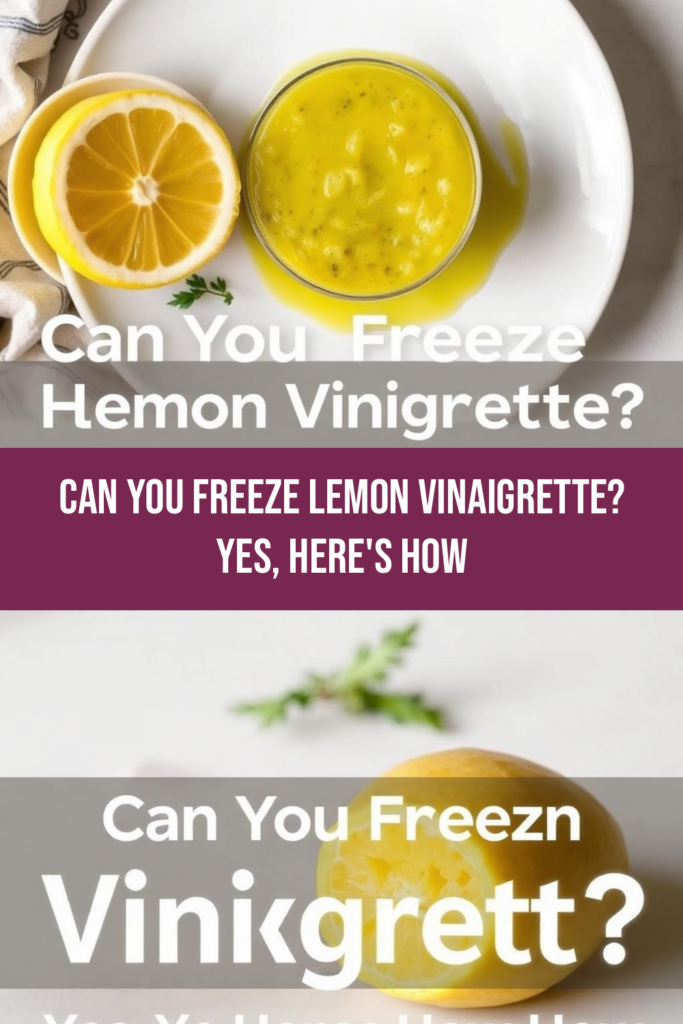
Many home cooks assume a lemon vinaigrette will separate or lose its flavor in the freezer. The accurate answer is yes, you can freeze lemon vinaigrette for up to 3 months with only a minor texture change that is easily fixed. Freezing is a practical way to preserve a batch when you have extra dressing or want to prep ahead for salads and marinades.
Quick answer: Freeze lemon vinaigrette in an airtight container for up to 3 months. Thaw in the fridge overnight, then shake or whisk to re-emulsify. If it separates, that’s normal—just blend or shake again.
Freezing Changes Texture, Not Flavor
The main concern with freezing vinaigrette is separation. Oil and water-based liquids (vinegar, lemon juice) naturally separate when frozen because the ice crystals break the emulsion. This does not affect safety or taste, but the dressing will look cloudy or have a layer of oil on top after thawing.
To restore the smooth texture, shake the jar vigorously for 30 seconds or whisk it in a bowl. For a more stable result, use a blender or immersion blender for 10–15 seconds after thawing. The flavor of lemon, garlic, and herbs stays intact for up to 3 months; after that, the lemon may fade and the oil can develop a slightly stale taste.
Best Containers and Freezer Methods
Choose containers that leave headroom for expansion—liquid expands about 9% when frozen. Glass jars with straight sides work if you leave at least 1 inch (2.5 cm) of space and use freezer-safe lids. Plastic freezer bags are the most space-efficient: fill, squeeze out air, and lay flat to freeze.
For single servings, freeze in ice cube trays. Each standard cube holds about 2 tablespoons (30 ml). Once frozen, pop the cubes into a zip-top bag and store for up to 3 months. This lets you thaw only what you need for one salad.
Thawing and Re-Emulsifying Step by Step
- Transfer the frozen vinaigrette to the refrigerator and thaw overnight. A 1-cup (240 ml) container takes 8–12 hours; ice cubes thaw in about 2 hours.
- After thawing, shake the container with the lid on for 30 seconds, or whisk in a bowl for 1 minute.
- If the dressing still looks separated, blend it for 10–15 seconds with an immersion blender or regular blender.
- Taste and adjust: freezing can dull acidity, so add a squeeze of fresh lemon juice or a pinch of salt to brighten it.
Do not thaw at room temperature for more than 2 hours (1 hour if above 90°F/32°C). Perishable ingredients like garlic or shallots in the vinaigrette mean the thawed dressing should be used within 3–4 days and kept refrigerated.
Freezer Shelf Life and Quality Table
| Component | Freezer Shelf Life | Quality After Thawing |
|---|---|---|
| Oil + lemon juice + vinegar (basic) | 3 months | Good; shake well |
| With fresh herbs (parsley, basil) | 1–2 months | Herbs may darken; flavor fades |
| With garlic or shallots | 1 month | Flavor intensifies; safe if refrigerated after thaw |
| With dairy (yogurt, buttermilk) | Not recommended | Separates and curdles; freeze only if you accept texture change |
For dairy-based lemon dressings, freezing is not ideal because the emulsion breaks irreversibly. Instead, make a fresh batch or freeze only the oil-and-vinegar base and add dairy after thawing.
How to Freeze a Full Batch (Worked Example)
Suppose you made 2 cups (480 ml) of lemon vinaigrette. Divide it into four 1/2-cup (120 ml) freezer-safe containers or one large quart-size bag. Leave 1 inch (2.5 cm) headroom in each container. Label with the date and contents. Freeze for up to 3 months.
When you need dressing for a week of lunches, thaw one 1/2-cup container overnight. That yields about 8 tablespoons (120 ml), enough for 4–6 salads if you use 1–2 tablespoons per serving.
Lemon Vinaigrette for Marinades and Meal Prep
Frozen lemon vinaigrette works well as a marinade for chicken or fish. Thaw it in the fridge, then use it within 3–4 days. Because the acid in lemon juice helps tenderize, marinate chicken for no more than 2 hours to avoid a mushy texture.
For meal prep, freeze vinaigrette in individual 2-tablespoon (30 ml) cubes. Add a cube to a lunch container with greens and other toppings; it will thaw by lunchtime and dress the salad without extra dishes. Keep the salad refrigerated until serving.
Safety Rules for Frozen Vinaigrette
Always refrigerate thawed vinaigrette and use within 3–4 days. If the vinaigrette contains garlic or shallots in oil, the risk of botulism exists if left at room temperature—freeze promptly and thaw in the fridge, never on the counter. If you freeze a vinaigrette with raw eggs (e.g., a Caesar-style lemon dressing), use pasteurized eggs and note that freezing may affect the texture; consume within 3 days after thawing.
Never taste a thawed vinaigrette to check if it’s safe—if it has an off odor, mold, or has been left out too long, discard it. Freezing does not kill bacteria, so only freeze dressing that was made with clean utensils and refrigerated promptly.
Lemon Vinaigrette for Large Batches and Kids
For large batches, freeze in 1-cup (240 ml) portions so you can thaw exactly what you need. For kids’ lunches, freeze in 2-tablespoon (30 ml) cubes and pack one cube per lunch—it doubles as an ice pack and thaws by lunchtime. If your kids prefer a milder dressing, reduce the garlic or omit it; freezing intensifies garlic flavor, so use half the garlic you normally would.
If you often make vinaigrette from scratch, consider freezing just the lemon juice and vinegar mixture (without oil) in an ice cube tray. Then when you need dressing, thaw a cube and whisk in fresh oil and seasonings—this gives the freshest result.
Related
- Lemon Bread with Icing: One Bowl, 10 Minutes
- Lemon Bread with Cake Mix and Pudding
- Lemon Bread and Butter Pudding Recipe
Safe minimum internal temperatures follow USDA FSIS; raw-fish guidance follows the U.S. FDA. See our food safety notes.
Spotted an error? Tell us and we will correct it (corrections policy).