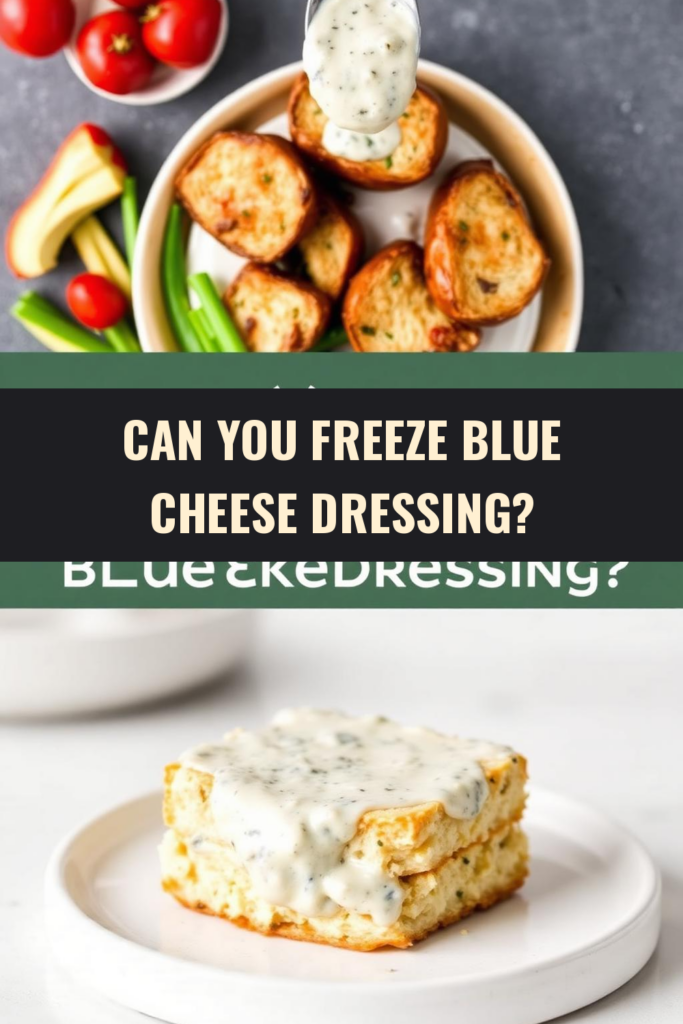
Yes, you can freeze blue cheese dressing, but it will change texture and may separate. The dressing will keep for up to 3 months in the freezer, but expect the creamy base to become grainy and the blue cheese chunks to soften. Freezing is best for cooked uses like dressings on salads after thawing, or for adding to dips and sauces.
What Happens When You Freeze Blue Cheese Dressing?
The main issue is separation. The emulsion of oil, water, and dairy breaks down during freezing and thawing. You will see liquid on top and a thicker, curdled-looking layer below. The flavor stays fine, but the smooth, creamy texture is lost. If you plan to use the dressing as a dip or straight on a salad, the texture change may be noticeable.
To minimize separation, stir the dressing well after thawing. You can also whisk in a little buttermilk or milk (1 to 2 teaspoons per 1/2 cup) to help bring back some creaminess, though it will not be exactly the same as fresh.
How Long Can You Freeze Blue Cheese Dressing?
For best quality, freeze blue cheese dressing for 1 to 3 months. After 3 months, the flavor may begin to dull and the texture degrades further. Always label the container with the date you froze it.
The dressing will be safe to eat indefinitely if kept at 0°F (-18°C) or below, but quality drops over time. Thawed dressing should be used within 3 to 4 days and never refrozen.
How to Freeze Blue Cheese Dressing (Step by Step)
- Portion it: Freeze in small amounts, such as 1/2 cup (120 ml) or 1 cup (240 ml) portions, so you only thaw what you need.
- Choose a container: Use an airtight freezer-safe container or a heavy-duty freezer bag. Leave about 1/2 inch (1.25 cm) of headspace because the dressing expands when frozen.
- Remove air: If using a bag, squeeze out as much air as possible before sealing. Air causes freezer burn and speeds up quality loss.
- Label and freeze: Write the date and contents on the container. Place it in the coldest part of the freezer, not in the door.
For a quick single serving, freeze in an ice cube tray (about 2 tablespoons each). Once frozen, pop the cubes into a freezer bag. Thaw only the cubes you need.
How to Thaw Blue Cheese Dressing
The best way is to thaw in the refrigerator overnight. This keeps the temperature safe and slows further texture changes. Do not thaw at room temperature, as the dairy can spoil.
If you are in a hurry, place the sealed container in a bowl of cold water for 30–60 minutes, changing the water halfway. Never use hot water or a microwave to thaw, as that will cook the dressing and ruin it.
After thawing, stir vigorously. If it looks curdled, whisk in a little milk or buttermilk (1 to 2 teaspoons per 1/2 cup) to smooth it out.
Does Freezing Kill Bacteria or Make It Safe?
Freezing does not kill bacteria; it only stops their growth. Once thawed, any bacteria that were present before freezing can become active again. So, freeze the dressing while it is still fresh—within its original use-by date and within 2 hours of opening if it has been at room temperature. Never freeze dressing that has been sitting out for more than 2 hours (1 hour if above 90°F/32°C).
After thawing, use it within 3–4 days and do not refreeze. If the dressing develops an off smell, a sour taste, or visible mold, discard it.
Can You Freeze Homemade Blue Cheese Dressing?
Yes, but homemade dressings often have a higher dairy content and may separate more than store-bought ones. If you make your own, freeze it within 2 days of making it. Use the same method: airtight container, leave headspace, label with date. Thaw in the fridge and whisk well. Expect a grainier texture; it is best used in recipes where the dressing is cooked or mixed into something, like a dip or a pasta salad.
What Are the Best Uses for Thawed Blue Cheese Dressing?
Thawed dressing works well in recipes where texture is less important:
- Mixed into a dip with sour cream or cream cheese
- Stirred into a pasta salad or potato salad
- Used as a marinade for chicken or steak (discard after marinating)
- Whisked into a vinaigrette for extra flavor
- Brushed on burgers or sandwiches
Avoid using thawed dressing as a straight dip for vegetables or chips if the texture bothers you—it will be thinner and less creamy.
Does the Type of Blue Cheese Dressing Matter?
Store-bought dressings with stabilizers (like xanthan gum) tend to freeze slightly better than homemade ones. Chunky dressings with large blue cheese pieces will have softer, less distinct chunks after thawing. Light or low-fat versions often freeze worse because they have less fat to maintain structure; they may become watery and separate more. If you have a choice, freeze a full-fat, creamy version for best results.
How to Tell If Thawed Blue Cheese Dressing Is Still Good
After thawing, check for these signs of spoilage:
- Off or sour smell (blue cheese already smells strong, but spoilage smells different—more like ammonia or rotten dairy)
- Mold on the surface or inside
- Excessive watery separation that does not reincorporate with stirring
- Change in color to a gray or yellow tint
If any of these are present, throw it out. Do not taste to check safety. When in doubt, discard.
Can You Refreeze Thawed Blue Cheese Dressing?
No. Refreezing causes further texture breakdown and increases the risk of bacterial growth. Once thawed, use within 3–4 days and do not put it back in the freezer. If you know you will not use it all, portion it before freezing so you only thaw what you need.
Quick Reference: Freezing Blue Cheese Dressing
| Question | Answer |
|---|---|
| Can you freeze it? | Yes |
| Freezer shelf life (best quality) | 1–3 months |
| Safe indefinitely at 0°F (-18°C)? | Yes, but quality declines |
| Thawing method | Refrigerator overnight |
| After thawing, use within | 3–4 days |
| Refreeze? | No |
For best results, freeze in small portions, thaw in the fridge, and use in cooked or mixed dishes where texture changes are less noticeable.
Related
- Red White and Blue Fourth of July Poke Cake
- 4th of July Cake Ideas for a Red, White, and Blue Dessert
- Fourth of July Birthday Cake: Red, White & Blue
Safe minimum internal temperatures follow USDA FSIS; raw-fish guidance follows the U.S. FDA. See our food safety notes.
Spotted an error? Tell us and we will correct it (corrections policy).