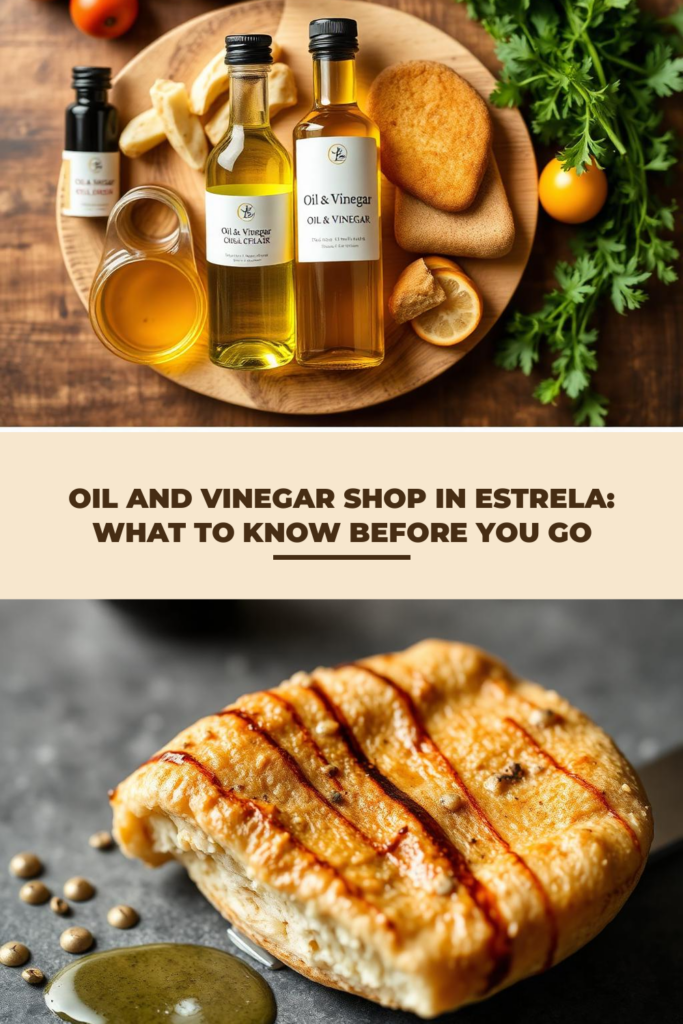
An oil and vinegar shop in Estrela is a specialty retailer where you can taste and buy extra-virgin olive oils and aged balsamic vinegars, often from small producers. These shops focus on freshness and flavor, letting you sample before you buy and refill your own bottles. The direct answer to your search is that such shops typically offer a range of oils (olive, avocado, walnut) and vinegars (balsamic, red wine, fruit-infused), plus a few pantry items like salts and pastas.
What Kind of Shop Is It and What Does It Sell?
These are small, independent stores, not chain supermarkets. They usually stock 20–40 different oils and 10–20 vinegars, with most products available for tasting. The core products are:
- Extra-virgin olive oils (EVOO) from various regions, often single-origin (e.g., from a specific grove or country).
- Flavored olive oils (lemon, garlic, chili, basil) — these are infused, not chemically flavored.
- Aged balsamic vinegars, ranging from young (2–3 years) to very old (12–25 years) with thicker texture and sweeter taste.
- Other vinegars: red wine, white wine, champagne, sherry, and fruit-infused (fig, pomegranate, raspberry).
- Occasionally: sea salts, spice blends, pasta, and dipping plates.
Most shops let you taste before buying. You can ask for a small pour on a piece of bread or a spoon. The staff usually explain the flavor profile and suggest uses.
How Do I Choose Between Oils and Vinegars?
Start with what you plan to cook or dress. For salads, a mild EVOO and a young balsamic work well. For finishing grilled meat, a robust EVOO and a thick aged balsamic are better. Here is a quick guide:
| Use | Oil | Vinegar |
|---|---|---|
| Salad dressing | Mild EVOO (e.g., from Tuscany or California) | Young balsamic (2–5 yr) or red wine vinegar |
| Dipping bread | Peppery EVOO (e.g., from Sicily or Greece) | Aged balsamic (8+ yr) for a sweet drizzle |
| Roasting vegetables | Robust EVOO (e.g., from Spain or Portugal) | Sherry or balsamic |
| Finishing soups or grilled meat | Fruity EVOO | Thick aged balsamic (12+ yr) |
Ask to taste two similar oils side by side. Notice bitterness (good in EVOO) and pepperiness at the back of the throat. For vinegars, taste for sweetness vs. acidity; older balsamic is syrupy and less sharp.
How Much Should I Buy and How Do I Store It?
Buy small amounts first. A 250 ml (about 8.5 fl oz) bottle is a good start for a single oil or vinegar. If you cook daily, 500 ml (about 17 fl oz) is reasonable. Most shops sell in these sizes, and some offer refills from large drums at a lower price per volume.
Store both oil and vinegar in a cool, dark place away from the stove or direct sunlight. Heat and light speed up oxidation and flavor loss. Keep the cap tight. Olive oil does not need refrigeration; it will turn cloudy and thick when cold, but returns to liquid at room temperature. Vinegars do not spoil, but their flavor can fade over time.
For olive oil, use within 6–12 months of purchase for best flavor. Check the harvest date on the label (not just the best-before date). A fresh harvest is usually within the current or previous year. For balsamic vinegar, it can be kept for years, but once opened, use within 1–2 years for best taste.
What Should I Look For on the Label?
For extra-virgin olive oil, look for:
- “Extra virgin” on the label — this is a legal grade meaning the oil is from the first cold pressing and has low acidity (below 0.8%).
- A harvest date or “best before” date that is recent (within 18 months of harvest).
- A dark glass bottle or tin to protect from light.
- Country of origin — single-origin oils are more traceable.
For balsamic vinegar, look for:
- “Aceto Balsamico di Modena” (PDO) — this is a protected name from Italy, but it is not the same as traditional aged balsamic.
- “Traditional Balsamic Vinegar of Modena” — this is the aged, expensive kind, aged at least 12 years.
- Ingredients: should be grape must and wine vinegar. If it lists caramel color or thickeners, it is a commercial grade.
If the label is not clear, ask the shop staff. They should know the producer and age.
Can I Taste Before Buying?
Yes, most independent oil and vinegar shops offer tastings. You can usually try any oil or vinegar. For oils, dip a piece of bread or a small spoon. For vinegars, a small sip or a drop on a spoon. Do not be shy; it is expected. If you are new, ask the staff to recommend a mild and a robust oil, and a young and an old balsamic, so you can compare.
Some shops also offer tasting flights, where you pay a small fee to try several oils and vinegars with bread. This is a good way to learn your preferences without buying full bottles.
What If I Cannot Find a Shop in Estrela?
If there is no dedicated oil and vinegar shop in Estrela, check nearby larger towns or cities. Many such shops are in tourist areas or upscale shopping districts. You can also search online for “olive oil tasting near me” or “gourmet food store” in the region. Alternatively, you can buy from online specialty retailers that ship directly from producers, but you will not be able to taste before buying. In that case, start with a small bottle of a well-known brand and a medium-aged balsamic.
If you find a shop, call ahead to confirm they are open and have tastings, as hours and services vary. Do not rely on a website that might be outdated.
How Do I Use These Oils and Vinegars at Home?
Basic uses:
- Salad dressing: 3 parts oil to 1 part vinegar, plus salt and pepper. Shake well.
- Dipping bread: pour a little oil onto a plate, add a few drops of aged balsamic, and swirl. Add salt and pepper if you like.
- Roasting: toss vegetables with oil and a splash of vinegar before roasting at 400°F (200°C) for 20–30 minutes.
- Finishing: drizzle a fruity oil over grilled fish or a thick balsamic over strawberries or vanilla ice cream.
For a simple vinaigrette that keeps in the fridge for up to 1 week: whisk 1/4 cup (60 ml) olive oil, 1 tablespoon (15 ml) balsamic vinegar, 1 teaspoon Dijon mustard, and a pinch of salt. Store in a jar with a lid.
How Long Do Opened Bottles Last?
Opened olive oil: use within 6 months for best flavor. It will not make you sick, but it will lose its peppery, fruity notes and may become rancid. Rancid oil smells like old nuts or crayons. If it smells off, discard it.
Opened balsamic vinegar: use within 1–2 years. It does not spoil, but flavor fades. If you see sediment or cloudiness, it is harmless; just shake before use.
Flavored oils (e.g., garlic, chili, herb-infused): these have a higher risk of botulism if they contain fresh garlic or herbs and are stored at room temperature. To be safe, keep them refrigerated and use within 4 days. If you buy a flavored oil from a shop, ask whether it contains fresh ingredients. If it does, refrigerate it immediately and use quickly. If it is made with dried herbs or garlic, it can be stored at room temperature, but check the label for storage instructions.
Never keep any oil with fresh garlic or herbs at room temperature for more than 2 hours. Refrigerate and use within 4 days.
What Are the Best Pairings for a Beginner?
If you are buying your first bottles, choose:
- A mild EVOO (e.g., from California or a light Greek oil) for salads and cooking.
- A medium-aged balsamic (5–8 years) for salads and marinades.
- If you enjoy dipping bread, add a robust EVOO (e.g., from Spain or southern Italy) and a thick aged balsamic (12+ years) for special occasions.
For a simple first meal, make a caprese salad: sliced tomatoes, fresh mozzarella, basil, a drizzle of mild EVOO, and a few drops of aged balsamic. That will show you the difference in quality compared to supermarket oils.
Are There Any Safety Concerns with These Products?
Olive oil and vinegar are safe for most people. However, if you have a tree nut allergy, be aware that some shops also sell walnut or hazelnut oils, and cross-contamination may occur. Ask the staff about allergy risks. Also, if you buy a flavored oil with fresh garlic or herbs, refrigerate and use within 4 days, as mentioned. For pregnant women, young children, older adults, and anyone with a weakened immune system, avoid raw garlic or herb infusions unless they are pasteurized or made with dried ingredients.
Do not attempt to can or preserve oils or vinegars at home. These are not suitable for water-bath canning. Keep them refrigerated or freeze in small portions if you make your own infusions.
How Do I Know If the Shop Is Good?
Look for signs of freshness: the shop should have a high turnover, so bottles are not dusty. Ask to see the harvest date on the oil. A good shop will be able to tell you the producer and the harvest year. Also, if the shop offers tastings, that is a good sign. If you walk in and no one offers a taste, you can ask. If they refuse, that may indicate lower quality or a lack of knowledge.
Price is not always a guide, but very cheap oil (under $10 per 500 ml) is unlikely to be high-quality extra virgin. Expect to pay more for single-origin or aged products. However, you do not need the most expensive bottle; a mid-priced, fresh oil is often better than an expensive one that has sat on a shelf for two years.
Can I Refill My Own Bottles?
Many independent shops offer refills from large stainless steel containers. This reduces packaging waste and often costs less per volume. If you bring a clean, dry glass bottle, the shop will weigh it, fill it, and weigh again. Make sure the bottle is thoroughly dry before filling, as water can cause mold. Some shops also sell their own bottles if you do not have one.
Refilling is best for oils you use quickly (within 2–3 months). For aged balsamic, it is less common, but some shops do offer it. Ask the staff about their refill policy.
What If I Want to Give a Gift?
Oil and vinegar shops often sell gift baskets or allow you to create your own. A common gift set is a bottle of EVOO and a bottle of aged balsamic, plus a dipping plate or a set of small tasting cups. You can also buy small 100 ml bottles for a sampler set. If you are unsure what to choose, ask the staff for a “beginner’s gift” — they will likely suggest a mild oil and a medium balsamic. For a more special gift, choose a 12-year-old balsamic and a robust oil.
How Should I Store Opened Bottles for Long-Term Use?
For oil, keep it in a cool, dark cabinet. If you live in a hot climate, you can refrigerate it, but then it will become cloudy and thick. That is fine; just let it come to room temperature before using. Do not store oil near the stove or in a sunny window. For vinegar, the same applies, but it is less sensitive to light. Both should be kept tightly sealed to prevent oxidation.
If you buy a large bottle (1 liter or more), consider decanting a small amount into a smaller bottle for daily use, and keep the rest sealed in the dark. This reduces exposure to air.
What Are the Most Common Mistakes When Buying?
Buying too much at once. Unless you cook with oil daily, a 500 ml bottle may go rancid before you finish it. Start with 250 ml. Another mistake is buying flavored oils with fresh garlic or herbs and storing them at room temperature, which is a botulism risk. Always refrigerate those and use within 4 days. Also, do not judge an oil by its color; color varies by olive variety and does not indicate quality. Finally, do not buy a bottle that has been sitting in a sunny window at the shop — ask for one from the back shelf.
How Do I Clean and Reuse My Bottles for Refills?
Wash the bottle with hot soapy water, rinse thoroughly, and let it dry completely upside down. Do not use a dishwasher if the bottle has a narrow neck; hand wash is better. Make sure there is no residual oil or vinegar that could contaminate the new product. If the bottle has a strong smell (e.g., from a previous vinegar), wash with a little baking soda and water, then rinse well. Dry completely before filling.
What Are the Best Ways to Test Oil Freshness at Home?
Pour a small amount into a glass and smell it. Fresh EVOO should smell grassy, fruity, or peppery. If it smells like old nuts, crayons, or play-dough, it is rancid. Taste a small sip; it should have a slight bitterness and a peppery finish that makes you cough a little. That pepperiness is a sign of good antioxidants. If it tastes flat or greasy, it is past its prime.
Are There Any Local Events or Tastings in Estrela?
You can check local event listings or the shop’s own bulletin board for tasting nights or pairing classes. Many shops host monthly events where you can sample several oils and vinegars with food pairings. Ask the staff when you visit. If not, you can always request a private tasting for a small group.
Related
- Lemon Bread With Oil: Moist Quick Bread Recipe
- Substitute for Oil in Zucchini Bread
- Apple Cider Vinegar Vinaigrette Recipe
Safe minimum internal temperatures follow USDA FSIS; raw-fish guidance follows the U.S. FDA. See our food safety notes.
Spotted an error? Tell us and we will correct it (corrections policy).