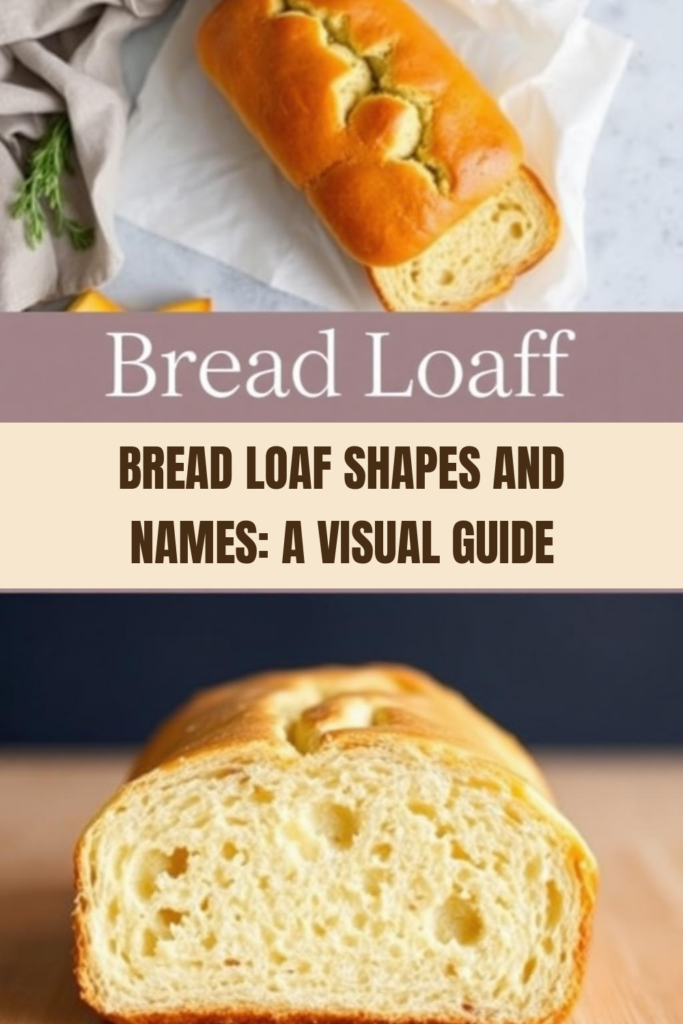
This guide covers the most common bread loaf shapes, their standard names, and how each shape affects crust, crumb, and slicing. Knowing the difference helps you choose the right shape for your dough and bake, and it directly affects how the bread proofs, bakes, and stores.
How Shape Changes Your Bread
The shape you form before proofing determines how the dough expands, where the crust forms, and how the loaf slices. A tight, tall shape gives a soft, tall crumb; a wide, flat shape gives more crust and a denser texture. The same dough can produce a boule, a batard, or a sandwich loaf, each with a distinct look and mouthfeel.
For a beginner, the easiest shape is the round boule because it requires no special pan and is forgiving of uneven shaping. The most common mistake is over-flouring the surface, which prevents the dough from sticking to itself and leads to a flat, misshapen loaf.
Standard Loaf Shapes and Their Names
| Shape | Typical Dimensions | Best For | Slicing |
|---|---|---|---|
| Boule (round) | 6–8 in (15–20 cm) diameter | Free-form, rustic loaves | Wedges or thick slices |
| Bâtard (oval) | 8–10 in (20–25 cm) long, 4–5 in (10–12 cm) wide | Sandwiches, toast | Even slices |
| Pain de campagne (round or oval) | Similar to boule or bâtard | Country-style bread | Thick or thin |
| Sandwich loaf (pullman) | 9x4x4 in (23x10x10 cm) pan | Uniform slices for toast | Perfect square slices |
| Baguette | 24–26 in (61–66 cm) long, 2 in (5 cm) diameter | French bread, sandwiches | Diagonal slices |
| Ciabatta (flat, rectangular) | 10–12 in (25–30 cm) long, 4–5 in (10–12 cm) wide | Panini, bruschetta | Ragged slices |
| Focaccia (flat, round or rectangular) | 1 in (2.5 cm) thick, 9–12 in (23–30 cm) diameter | Appetizers, sandwiches | Cut into squares or wedges |
Shaping Techniques That Work for Every Loaf
All free-form shapes start with a pre-shape: gently round the dough into a ball, let it rest 15–20 minutes, then do the final shape. This relaxes the gluten and makes the dough easier to handle without tearing.
- Boule: Place the dough on a lightly floured surface, pull the edges to the center, and pinch to seal. Flip it over and rotate it with cupped hands to create surface tension.
- Bâtard: Shape as a boule, then roll it gently back and forth to elongate into an oval. Taper the ends slightly.
- Sandwich loaf: Flatten the dough into a rectangle about 8×6 in (20×15 cm), roll it up tightly from the short end, and pinch the seam. Place seam-side down in a greased 9×4-in (23×10-cm) loaf pan.
- Baguette: Pre-shape into a rectangle, then fold the top third down and the bottom third up, sealing each fold. Roll gently to lengthen to 24 in (61 cm), tapering the ends.
- Ciabatta: Use a very wet dough (hydration 75–80%). Instead of shaping, fold the dough in the bowl, then turn it out onto a heavily floured surface and cut into rectangles without deflating.
Proofing Times and Temperatures
Proofing temperature and time vary with dough temperature and yeast amount. For a standard yeasted dough (2 tsp / 6 g instant yeast per 4 cups / 500 g flour), proof at room temperature (70–75°F / 21–24°C) for 60–90 minutes, until the dough has nearly doubled and springs back slowly when poked. For shaped loaves, proof again for 45–60 minutes, or until the dough has risen about 50% and holds a slight indentation.
If your kitchen is cooler, proof longer; if warmer, shorter. Over-proofed dough collapses in the oven and has a dense, sour crumb. Under-proofed dough tears and bakes with a tight, gummy interior.
Baking Times and Temperatures by Shape
Bake free-form loaves on a preheated baking stone or sheet pan. Use steam (a pan of boiling water on the bottom rack) for the first 10 minutes to develop a crisp crust. For pan loaves, no steam is needed.
- Preheat the oven to 450°F (232°C) for free-form loaves, or 375°F (190°C) for pan loaves. Place a rack in the middle.
- For boules and bâtards: bake at 450°F (232°C) for 15 minutes with steam, then reduce to 400°F (204°C) and bake 20–25 more minutes, until the crust is deep golden and the internal temperature reaches 200–210°F (93–99°C).
- For baguettes: bake at 450°F (232°C) for 12–15 minutes with steam, then 5–10 minutes without, until thin and crisp.
- For sandwich loaves: bake at 375°F (190°C) for 30–35 minutes, until golden and the loaf sounds hollow when tapped.
- For ciabatta and focaccia: bake at 425°F (218°C) for 20–25 minutes, until the bottom sounds hollow.
- Check doneness with an instant-read thermometer: bread is done at 200–210°F (93–99°C) in the center. Cool on a wire rack for at least 1 hour before slicing to set the crumb.
Mistakes That Ruin a Loaf’s Shape
- Over-flouring the work surface: This prevents the dough from gripping, so it slides and flattens. Use just enough flour to prevent sticking.
- Shaping too aggressively: Deflates the dough and tears the gluten, leading to a dense, uneven loaf. Handle gently and quickly.
- Skipping the pre-shape: Without the rest, the dough resists shaping and springs back, making it hard to get a tight surface.
- Proofing in a too-dry or too-warm spot: A crust forms on the surface, preventing proper expansion. Cover with a damp cloth or oiled plastic wrap.
- Not scoring the loaf: Without a slash, the dough bursts unpredictably. Use a sharp blade to cut 1/4-in (6-mm) deep slashes just before baking.
Storing and Freezing Shaped Loaves
Store fully cooled bread in a paper bag at room temperature for 1–2 days. For longer storage, wrap tightly in plastic wrap and freeze for up to 3 months. To refresh, thaw at room temperature and reheat in a 350°F (177°C) oven for 5–10 minutes until crusty.
Never refrigerate bread; it stales faster. If you plan to bake later, you can freeze shaped, unbaked loaves after the final proof: place them on a baking sheet, freeze until solid, then wrap in plastic and freeze for up to 1 month. Bake from frozen, adding 10–15 minutes to the baking time.
Substitutions and Equipment
If you don’t have a baking stone, use an inverted rimmed baking sheet preheated in the oven. For a couche (the canvas baguette proofing cloth), use a floured kitchen towel. A lame or razor blade works for scoring; a sharp knife is a fine substitute.
For a pullman pan, any 9×4-in (23×10-cm) loaf pan works, but the lid creates the square shape. If you don’t have a lid, the loaf will dome; that’s fine.
How to Check If Your Shape Worked
After baking, a well-shaped loaf should have a smooth, taut crust with even oven spring. The crumb should be uniform, with no large tunnels or dense bands. If the loaf is flat and wide, you likely over-proofed or under-shaped. If it’s lopsided, the seam may not have been sealed properly.
To test for doneness, the internal temperature is the most reliable cue: 200–210°F (93–99°C). The hollow sound when tapping the bottom is a secondary check, but temperature is safer.
If you’re new to shaping, start with a boule—it’s the most forgiving. Once you master the round, the bâtard and sandwich loaf become easier. Practice with a standard white bread dough (flour, water, yeast, salt) until you can shape without tearing.
Safe minimum internal temperatures follow USDA FSIS; raw-fish guidance follows the U.S. FDA. See our food safety notes.
Spotted an error? Tell us and we will correct it (corrections policy).