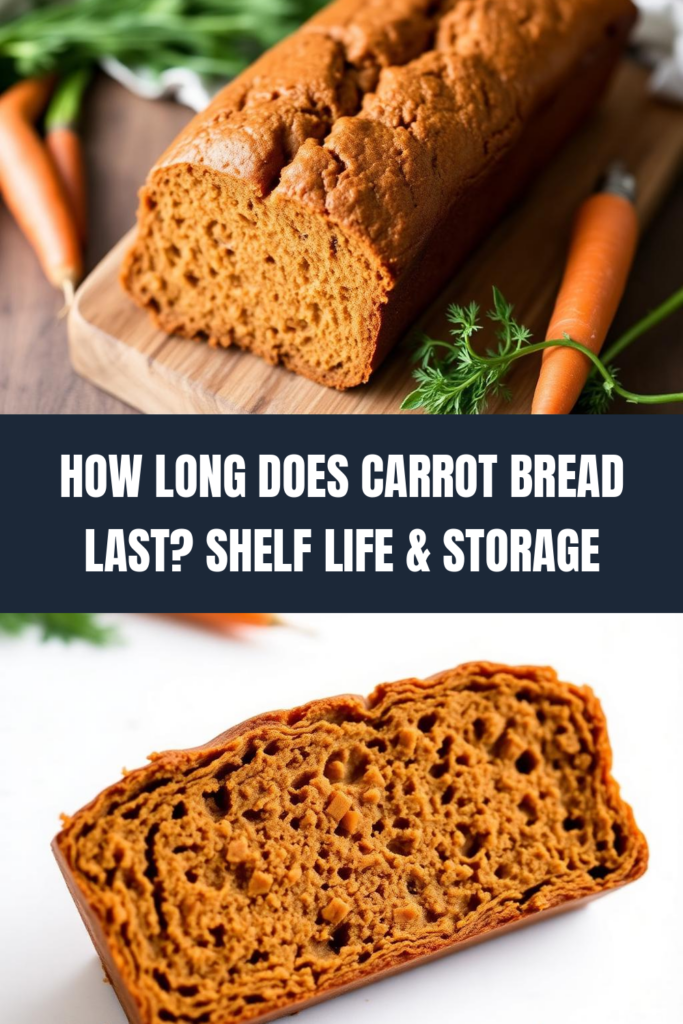
Carrot bread keeps at room temperature for 3 to 4 days, in the fridge for up to 1 week, and in the freezer for 2 to 3 months. The biggest mistake is storing it in the fridge right away—that dries it out faster. Keep it tightly wrapped at room temperature for the first few days unless your kitchen is very warm or humid.
How Long Does Carrot Bread Keep at Room Temperature?
Carrot bread stays fresh at room temperature for 3 to 4 days when stored properly. Wrap it tightly in plastic wrap or aluminum foil, or place it in an airtight container. Keep it in a cool, dry spot away from direct sunlight and heat sources like the stove or oven.
If your kitchen is above 80°F (27°C) or very humid, move it to the fridge after 2 days to prevent mold. The same rule applies if the bread has any moist filling like cream cheese frosting—that must be refrigerated within 2 hours.
Does Refrigerating Carrot Bread Make It Last Longer?
Yes, refrigeration extends the shelf life to up to 1 week, but it changes the texture. The cold air pulls moisture out of the crumb, making it stale and dry faster than at room temperature. To minimize this, wrap the bread tightly in plastic wrap, then add a layer of foil or place it in an airtight container.
If your carrot bread has cream cheese frosting, refrigeration is required—the frosting is perishable. Unfrosted bread can stay at room temperature for 3–4 days, but frosted bread should go in the fridge within 2 hours of frosting. Let it come to room temperature for about 30 minutes before serving to soften the crumb.
How Long Does Carrot Bread Last in the Freezer?
Carrot bread freezes well for 2 to 3 months without significant loss of quality. Wrap the cooled loaf or slices tightly in plastic wrap, then in aluminum foil, or use a freezer-safe zip-top bag. Squeeze out as much air as possible before sealing.
For easier thawing, freeze individual slices. To thaw, leave them at room temperature for 1–2 hours, or toast directly from frozen. If the bread has cream cheese frosting, freeze it unfrosted—frosting can become watery and separate when thawed. Add the frosting after thawing.
How Can You Tell If Carrot Bread Has Gone Bad?
Check for these signs before eating:
- Mold: Fuzzy spots in any color (green, white, black) mean it’s spoiled. Discard the entire loaf—mold roots can be invisible.
- Off smell: A sour, yeasty, or musty odor indicates spoilage.
- Texture changes: Excessive dryness or a slimy surface are warning signs.
- Frosting: If cream cheese frosting has separated, turned watery, or smells sour, throw the bread away.
Never taste bread to check if it’s safe—if in doubt, discard it. The 2-hour rule applies: any perishable filling or frosting must not sit out longer than 2 hours (1 hour if above 90°F/32°C).
Does the Type of Frosting Change Storage Time?
Yes. Plain carrot bread (no frosting) can stay at room temperature for 3–4 days. Cream cheese frosting is dairy-based and perishable, so the bread must be refrigerated within 2 hours of frosting. It will then keep for up to 1 week in the fridge.
If you use a buttercream frosting (butter, powdered sugar, milk), it also needs refrigeration after 2 hours. A simple glaze made with powdered sugar and milk or juice is less perishable but still best refrigerated if it contains dairy. For longest storage, freeze unfrosted bread and add frosting only when serving.
How Should You Store Carrot Bread to Keep It Fresh Longest?
Follow these steps for maximum shelf life:
- Cool completely before wrapping. Warm bread traps steam and encourages mold.
- Wrap tightly in plastic wrap or foil, or use an airtight container.
- Keep at room temperature for up to 4 days (unfrosted) in a cool, dry place.
- Refrigerate if frosted or if your kitchen is warm/humid—use within 1 week.
- Freeze for longer storage—up to 3 months. Slice first for easy thawing.
If you plan to freeze a whole loaf, wrap it in plastic wrap, then foil, and label with the date. Frozen bread thaws in about 2 hours at room temperature.
Can You Eat Carrot Bread Past the Recommended Time?
If it’s within a day or two past the 3–4 day mark and shows no signs of mold or off smell, it’s likely safe but may be dry. To revive stale bread, warm it in a 300°F (150°C) oven for 5–10 minutes, or toast slices. However, if any mold is visible, discard the whole loaf—mold spores can spread invisibly.
For frosted bread, do not eat it past 1 week in the fridge, even if it looks fine. The cream cheese may harbor bacteria that cause foodborne illness. When in doubt, throw it out.
Related
- How Long Does Pasta Salad Last in the Freezer?
- How Long Does Egg Salad Last in the Freezer?
- How Long Do Hard Boiled Eggs Last in the Freezer
Safe minimum internal temperatures follow USDA FSIS; raw-fish guidance follows the U.S. FDA. See our food safety notes.
Spotted an error? Tell us and we will correct it (corrections policy).