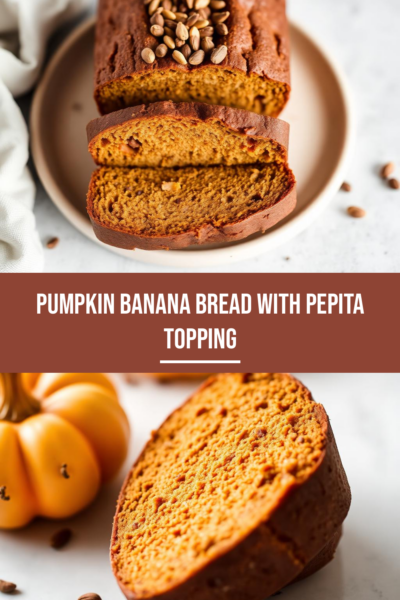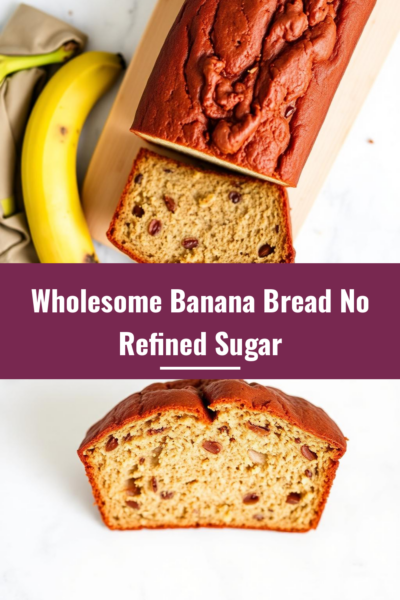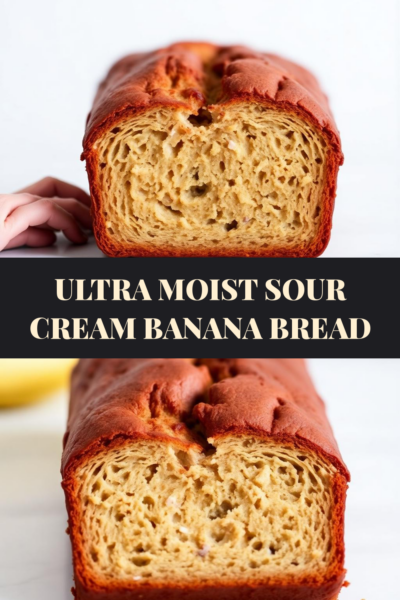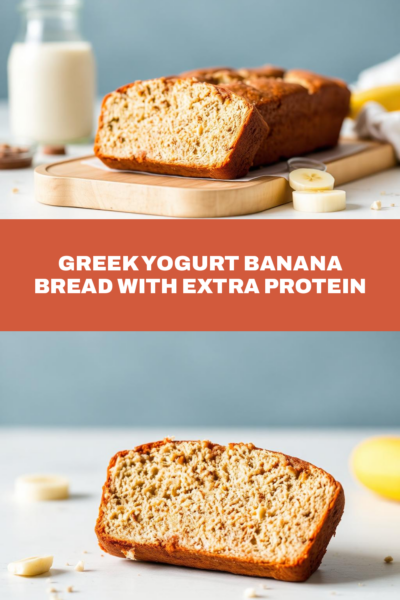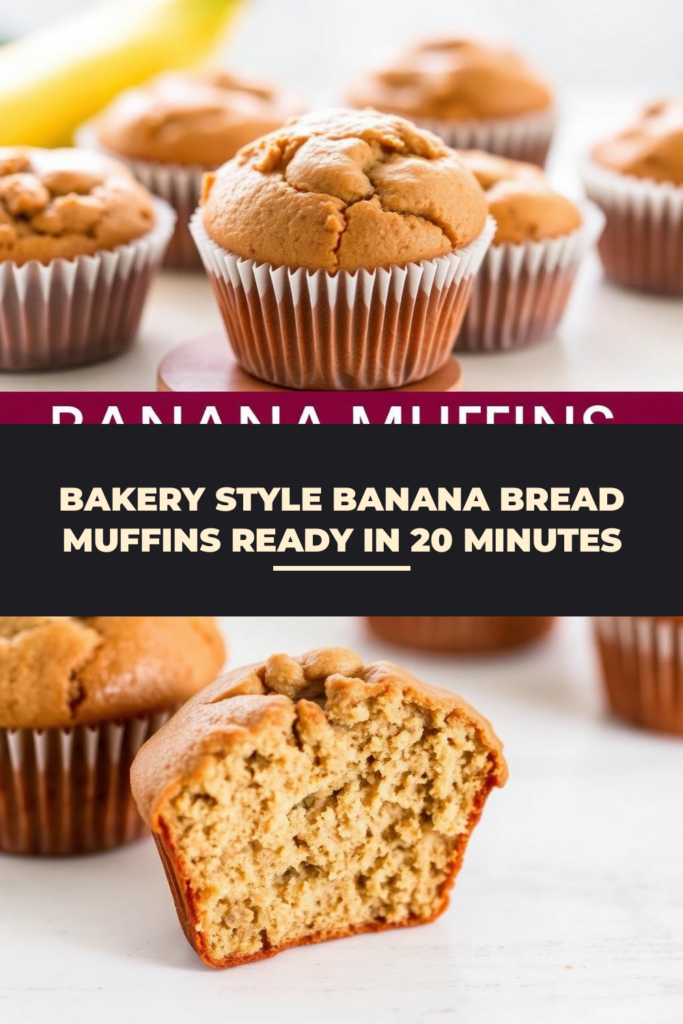
These banana bread muffins have a domed, golden top and a tender, moist crumb, just like from a bakery case. They come together in about 20 minutes of active work, making them a good choice for a weekend breakfast, a lunchbox treat, or a quick snack with coffee. Serve them warm with butter, or plain alongside a glass of milk.
Ingredients
- 1¾ cups (220 g) all-purpose flour
- 1 tsp baking soda
- ½ tsp baking powder
- ½ tsp salt
- ½ cup (1 stick / 113 g) unsalted butter, melted and slightly cooled
- ¾ cup (150 g) granulated sugar
- 2 large eggs, at room temperature
- 1½ cups (340 g) mashed ripe bananas (about 3 large bananas)
- ¼ cup (60 g) plain Greek yogurt or sour cream
- 1 tsp vanilla extract
Instructions
- Preheat the oven to 375°F (190°C). Line a 12-cup muffin tin with paper liners or grease the cups.
- In a medium bowl, whisk together the flour, baking soda, baking powder, and salt.
- In a large bowl, whisk the melted butter and sugar until combined. Add the eggs one at a time, whisking well after each. Stir in the mashed bananas, yogurt, and vanilla until smooth.
- Add the dry ingredients to the wet mixture and stir with a spatula just until no streaks of flour remain. Do not overmix; the batter will be slightly lumpy.
- Divide the batter evenly among the muffin cups, filling each about ¾ full. For bakery-style domed tops, fill the cups to the rim.
- Bake for 18–20 minutes, until the tops are golden and a toothpick inserted into the center comes out clean. If using a convection oven, check at 15 minutes.
- Let the muffins cool in the pan for 5 minutes, then transfer to a wire rack to cool completely.
Substitutions and Swaps
- Bananas: Use 1½ cups (340 g) mashed ripe bananas. If you have less, add unsweetened applesauce to make up the difference; the muffins will be slightly less sweet and a bit more tender.
- Yogurt: Plain Greek yogurt, sour cream, or buttermilk all work. Use the same amount; buttermilk will make the crumb slightly tangier.
- Butter: Replace with an equal amount of neutral oil (like canola or vegetable) for a moister crumb; the flavor will be less rich.
- Eggs: For an egg-free version, use 2 flax eggs (2 tbsp ground flaxseed mixed with 6 tbsp water, let sit 5 minutes). The muffins will be a bit denser.
- Gluten-free: Use a 1:1 gluten-free baking flour blend. The texture will be slightly more crumbly; add 1 tbsp extra flour if the batter seems too wet.
Equipment That Matters
A standard 12-cup muffin tin (2¾-inch / 7 cm cups) is ideal. If you use a jumbo tin (3½-inch / 9 cm cups), bake for 25–30 minutes and you’ll get about 6 muffins. A light-colored metal pan gives the most even browning; dark pans may brown the bottoms faster, so check at the lower end of the time. If you don’t have paper liners, grease the cups well with butter or cooking spray.
Storage and Make-Ahead
Store muffins in an airtight container at room temperature for up to 3 days. For longer storage, wrap individually in plastic wrap and freeze for up to 3 months; thaw at room temperature or reheat in a 300°F (150°C) oven for 5–8 minutes. Do not refrigerate, as that dries them out. If you want to make the batter ahead, it can be refrigerated for up to 24 hours, but the muffins may be slightly less tall; bake directly from the fridge, adding 2–3 minutes to the time.
Why These Are Bakery Style
Bakery muffins have a high, domed top and a moist, fine crumb. Three things achieve that: using melted butter instead of creamed butter (which makes a more tender crumb), filling the cups to the rim, and baking at a high initial temperature. If you prefer a lighter, cakier texture, cream the butter and sugar together for 2 minutes until fluffy before adding the eggs. That will produce a more open crumb but a slightly less domed top.
Common Problems and Fixes
Muffins are dense or gummy: Overmixing develops gluten, so stir only until the flour disappears. Also, make sure your bananas are very ripe (speckled brown) for maximum sweetness and moisture.
Muffins stick to liners: This happens with low-fat batters. Use paper liners that are not too thin, or grease the liners lightly with cooking spray before filling.
Muffins are too brown on top: If the tops are browning too quickly, loosely tent the pan with foil for the last 5 minutes of baking.
Muffins sink in the middle: This usually means the batter was underbaked or the oven wasn’t hot enough. Check your oven temperature with an oven thermometer and bake until a toothpick comes out clean.
Can I Add Mix-Ins?
Yes. Fold in 1 cup (170 g) of chocolate chips, chopped walnuts, or pecans after combining the wet and dry ingredients. For a streusel topping, mix ¼ cup (30 g) flour, ¼ cup (50 g) brown sugar, and 2 tbsp (28 g) cold butter until crumbly; sprinkle over the batter before baking. Add 2–3 minutes to the bake time if you add a heavy topping.
How to Check for Doneness
Insert a toothpick into the center of a muffin; it should come out with only a few moist crumbs, not wet batter. The internal temperature of the muffin should be at least 200°F (93°C) for a fully baked crumb, though the toothpick test is the standard cue. If you use an instant-read thermometer, aim for 200–205°F (93–96°C).
Safe minimum internal temperatures follow USDA FSIS; raw-fish guidance follows the U.S. FDA. See our food safety notes.
Spotted an error? Tell us and we will correct it (corrections policy).