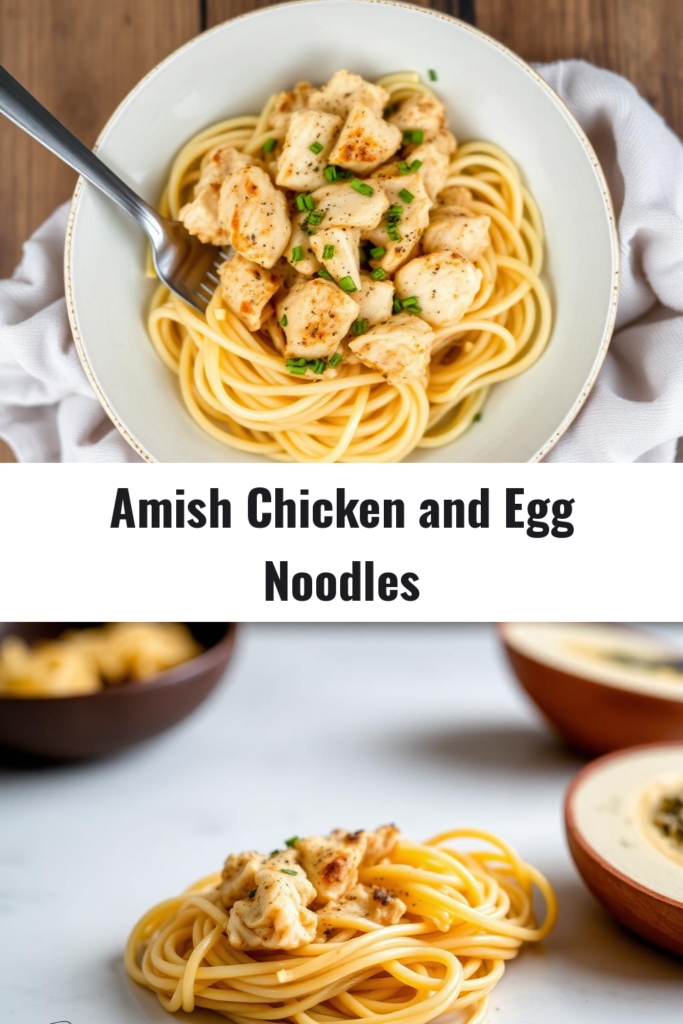
Time: 1 hr 15 min · Serves: 6 · The key step: Simmer the chicken low and slow, then reduce the broth until it coats a spoon before adding the noodles. This is a Pennsylvania Dutch-style one-pot meal: tender chicken pieces, wide egg noodles, and a rich, peppery broth thickened only by the noodle starch. It is a weeknight supper that needs just one pot and a cutting board.
Ingredients
- 2 lb (900 g) boneless, skinless chicken thighs, trimmed of excess fat
- 1 tbsp (15 ml) vegetable oil
- 1 medium yellow onion, diced (about 1 cup / 150 g)
- 2 celery ribs, diced (about 1 cup / 120 g)
- 2 medium carrots, peeled and diced (about 1 cup / 130 g)
- 2 cloves garlic, minced
- 6 cups (1.4 L) low-sodium chicken broth
- 1 tsp (2 g) dried thyme
- 1 bay leaf
- 1 tsp (5 g) salt, plus more to taste
- 1/2 tsp (1 g) black pepper, plus more to taste
- 12 oz (340 g) wide egg noodles
- 2 tbsp (30 g) unsalted butter, optional
- 2 tbsp (8 g) fresh parsley, chopped, for serving
Instructions
- Pat the chicken thighs dry with paper towels. Season both sides with a pinch of salt and pepper.
- Heat the oil in a large Dutch oven or heavy pot (at least 5 qt / 4.7 L) over medium-high heat. Working in batches if needed, add the chicken in a single layer and sear until golden brown, 4–5 minutes per side. Transfer the chicken to a plate. The chicken will not be cooked through yet.
- Reduce the heat to medium. Add the onion, celery, and carrots to the pot. Cook, stirring occasionally, until the vegetables soften, about 5 minutes. Add the garlic and cook for 1 minute more, until fragrant.
- Return the chicken to the pot. Add the broth, thyme, bay leaf, 1 tsp salt, and 1/2 tsp pepper. Bring to a boil, then reduce the heat to low, cover, and simmer gently for 25 minutes. The broth should barely bubble.
- Remove the chicken to a cutting board. When cool enough to handle, about 5 minutes, shred into bite-size pieces. Discard the bay leaf.
- Bring the broth to a boil over high heat. Add the egg noodles and cook, stirring occasionally, according to package directions (usually 8–10 minutes), until just tender. Do not drain.
- Reduce the heat to medium-low. Return the shredded chicken to the pot. Add the butter, if using, and stir until melted. Simmer for 2–3 minutes to meld the flavors. The broth will thicken slightly from the noodle starch. Taste and add more salt and pepper if needed.
- Ladle into bowls and top with parsley. The internal temperature of the chicken, checked with a food thermometer, must reach 165°F (74°C) (USDA FSIS safe minimum) before serving—during the simmer in step 4 it will easily exceed this.
Why the Broth Turns Out Too Thin or Too Thick
If the broth is too thin, the noodles were added to too much liquid or the pot was not simmered long enough after adding them. The fix: after the noodles are tender, simmer uncovered for 5–10 minutes longer, stirring often, until the broth reduces to your liking. If the broth is too thick—sticky or paste-like—you added too many noodles or cooked them too long. The fix: stir in warm broth or water, 1/4 cup (60 ml) at a time, until it loosens. The correct consistency is a light gravy that coats a spoon but still pours.
Why the Chicken Can Come Out Dry or Chewy
Dry chicken comes from overcooking the thighs in the initial sear or simmering them too long. The sear in step 2 is for browning, not cooking through—keep it to 4–5 minutes per side. The simmer in step 4 is gentle, not a rolling boil; boiling toughens the meat. Chewy chicken usually means the thighs were not trimmed of excess fat or were cut too large. Trim well, and if you use chicken breasts instead, reduce the simmer time to 15 minutes and check for doneness at 165°F (74°C) with a thermometer.
Scaling for Half or Double Batches
| Batch | Chicken | Broth | Noodles | Simmer time |
|---|---|---|---|---|
| Half (serves 3) | 1 lb (450 g) | 3 cups (710 ml) | 6 oz (170 g) | 20 minutes |
| Full (serves 6) | 2 lb (900 g) | 6 cups (1.4 L) | 12 oz (340 g) | 25 minutes |
| Double (serves 12) | 4 lb (1.8 kg) | 12 cups (2.8 L) | 24 oz (680 g) | 30 minutes |
Use a pot large enough: 3 qt (2.8 L) for half, 8 qt (7.6 L) for double. For a double batch, sear the chicken in two batches to avoid overcrowding, which steams instead of browning.
Substitutions That Change the Dish
Chicken breasts: Use 1 1/2 lb (680 g) boneless, skinless breasts. They cook faster and dry out more easily; simmer for 15 minutes in step 4, then shred. The broth will be slightly less rich because breasts have less fat.
Homemade egg noodles: If using fresh noodles, add them in step 6 and cook only 3–5 minutes, until they float and are tender. Fresh noodles absorb more broth, so add an extra 1/2 cup (120 ml) broth if you want a soupier result.
No celery: Use an extra carrot or a 1/2 cup (60 g) of diced fennel bulb. Fennel adds a mild anise note, while carrot adds sweetness.
Gluten-free noodles: Use a wide rice noodle or gluten-free egg noodle. These break down faster, so cook them separately, then add to the pot just before serving to keep the broth clear.
Storing and Reheating Leftovers
Refrigerate leftovers in an airtight container within 2 hours of cooking. The noodles will continue to absorb broth as they sit, so the dish will become thicker overnight. It keeps 3–4 days refrigerated. To reheat, add a splash of broth or water (about 2 tbsp / 30 ml per serving) and warm gently in a saucepan over medium-low heat, stirring often, until hot throughout—165°F (74°C) if you check with a thermometer. You can freeze the dish for up to 3 months, but the noodles will soften significantly; for best texture, freeze the chicken and broth without the noodles, then cook fresh noodles when reheating. Thaw frozen portions in the refrigerator overnight before reheating.
What to Do With the Extra Broth
If you have more broth than you want in the finished dish, strain it and refrigerate it separately. It keeps 3–4 days or freezes for 3 months. Use it to cook rice, thin out a soup, or as the base for a pot of chicken and dumplings. If you want a thicker, more stew-like dish, simmer the broth uncovered for 10–15 minutes before adding the noodles to concentrate the flavor.
Safe minimum internal temperatures follow USDA FSIS; raw-fish guidance follows the U.S. FDA. See our food safety notes.
Spotted an error? Tell us and we will correct it (corrections policy).