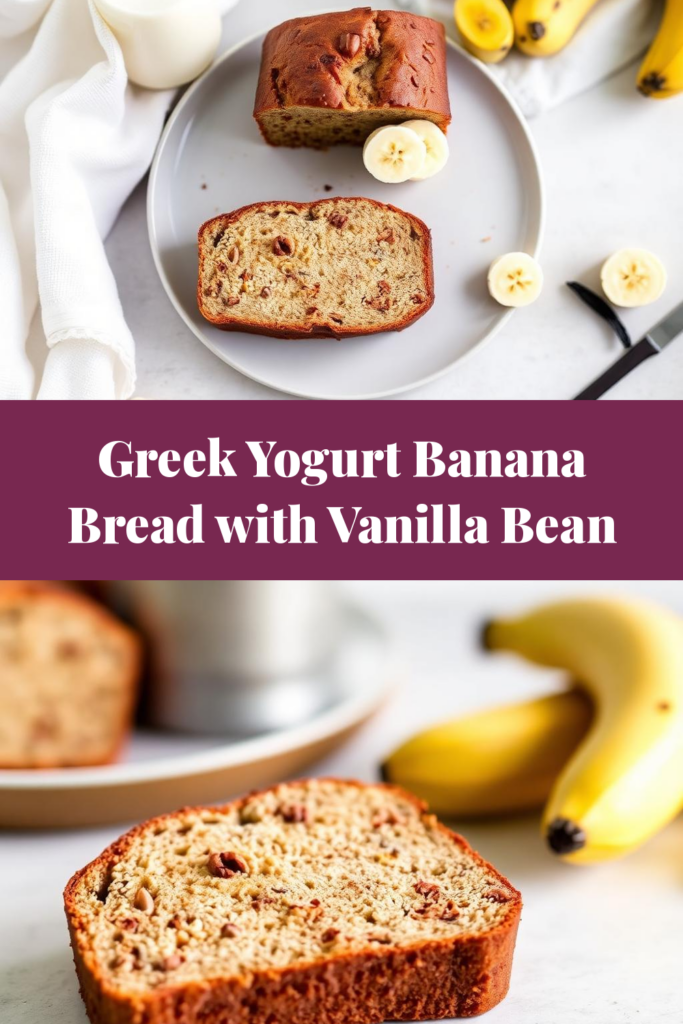
Time: 1 hr 20 min · Serves: 10 · The key step: Whisk the vanilla bean seeds into the yogurt before mixing dry ingredients, so the flavor disperses evenly.
This quick bread uses Greek yogurt for a tender, slightly tangy crumb and vanilla bean for a deep, aromatic sweetness. It’s a good choice for breakfast, brunch, or an afternoon snack, and it keeps well for several days.
Ingredients
- 1 ½ cups (190 g) all-purpose flour
- 1 tsp baking soda
- ½ tsp salt
- ½ cup (113 g) unsalted butter, softened
- ¾ cup (150 g) granulated sugar
- 2 large eggs, room temperature
- 1 cup (240 ml) plain Greek yogurt (full-fat or 2%)
- 1 vanilla bean (or 1 tbsp vanilla bean paste)
- 1 ½ cups (340 g) mashed ripe bananas (about 3 large)
Instructions
- Preheat oven to 350°F (175°C). Grease a 9×5-inch (23×13 cm) loaf pan and line with parchment paper, leaving overhang on two sides.
- Split the vanilla bean lengthwise and scrape out the seeds. In a small bowl, stir the seeds into the Greek yogurt. (If using vanilla bean paste, stir it into the yogurt now.)
- In a medium bowl, whisk together flour, baking soda, and salt.
- In a large bowl, beat butter and sugar with an electric mixer until light and fluffy, about 2 minutes. Add eggs one at a time, beating well after each.
- Add the yogurt-vanilla mixture and mashed bananas; mix until just combined. The batter will look slightly curdled—that’s fine.
- Fold in the dry ingredients with a spatula until no streaks of flour remain. Do not overmix.
- Pour batter into the prepared pan. Bake for 55–65 minutes, until a toothpick inserted in the center comes out clean or with a few moist crumbs, and the top is deep golden brown. If the top browns too quickly, tent loosely with foil after 40 minutes.
- Cool in the pan on a wire rack for 15 minutes, then lift out and cool completely before slicing.
Doneness and Texture Cues
The loaf is done when a toothpick inserted in the center comes out clean or with a few moist crumbs (no wet batter). The internal temperature should read about 200–205°F (93–96°C) if you use an instant-read thermometer. The top should be firm and spring back when lightly pressed.
If the center sinks after cooling, the bread was underbaked. If the crust is too dark but the center is still wet, the oven runs hot or the pan is too small—check your oven temperature with an oven thermometer.
Common Mistakes and Fixes
Overmixing the batter
Stirring too much develops gluten, making the bread tough and dense. Mix just until the flour disappears.
Using under-ripe bananas
Under-ripe bananas lack sweetness and moisture, resulting in a drier, less flavorful loaf. Use bananas with brown spots on the peel for best results.
Skipping the parchment paper
The loaf can stick to the pan, especially if it’s not fully nonstick. Parchment paper overhang makes removal easy.
Storage and Make-Ahead
Wrap the cooled loaf tightly in plastic wrap and store at room temperature for up to 3 days. Refrigerate for up to 5 days. For longer storage, wrap in plastic wrap and then foil, and freeze for up to 3 months. Thaw overnight in the refrigerator before serving.
To reheat slices, warm in a toaster or microwave for 10–15 seconds. The bread is also good toasted with butter.
Variations and Swaps
Vanilla bean paste vs. extract
If you don’t have a vanilla bean, use 1 tablespoon vanilla bean paste or 2 teaspoons pure vanilla extract. Paste gives the same speckled look; extract is more liquid and slightly less intense.
Greek yogurt substitutes
Plain whole-milk yogurt or sour cream can replace Greek yogurt. Sour cream will make the crumb slightly more tender and less tangy. Use the same amount.
Add-ins
Fold in ¾ cup (90 g) chopped walnuts or pecans, or ½ cup (90 g) chocolate chips. Add them with the dry ingredients to avoid sinking.
Frequently Asked Questions
Can I use frozen bananas?
Yes. Thaw them completely, drain off excess liquid, and mash. The bread will be slightly more moist; reduce the yogurt by 2 tablespoons if the batter seems too wet.
Why is my bread dense?
Possible causes: overmixing, too much banana (more than 1½ cups), or baking powder/baking soda that’s past its prime. Check the expiration date on your baking soda—it loses potency after about 6 months.
Can I make this gluten-free?
Use a 1:1 gluten-free flour blend that contains xanthan gum. The texture will be slightly more crumbly. Do not use almond flour or coconut flour without adjusting liquids.
Safe minimum internal temperatures follow USDA FSIS; raw-fish guidance follows the U.S. FDA. See our food safety notes.
Spotted an error? Tell us and we will correct it (corrections policy).