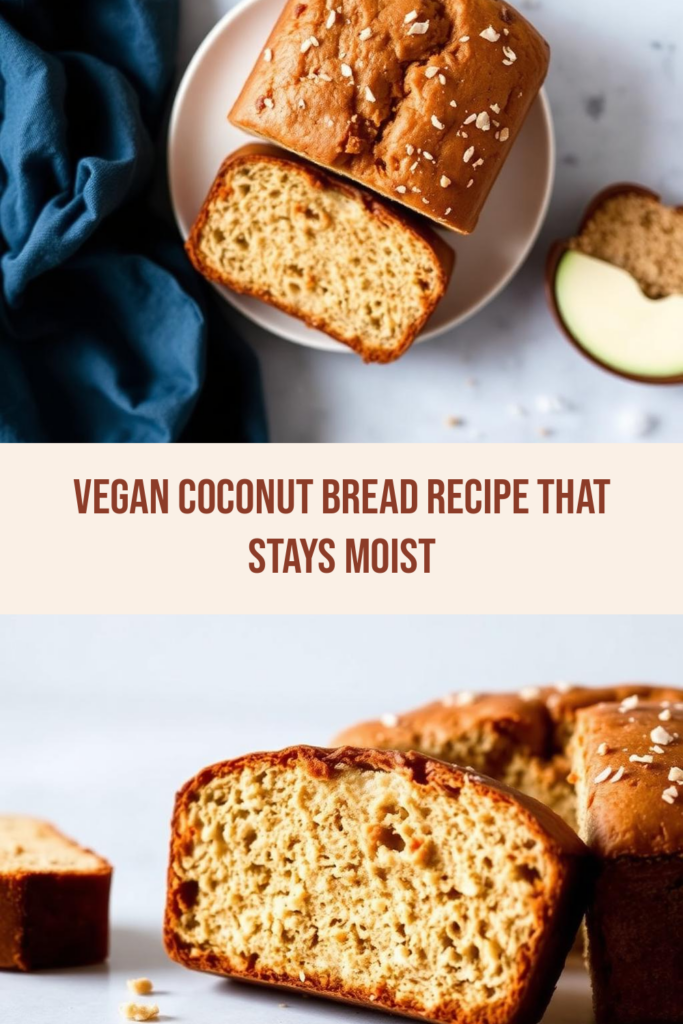
Vegan coconut bread gets its tenderness from full-fat coconut milk and its structure from a balance of flour and shredded coconut. The coconut milk replaces both dairy and eggs, while a touch of vinegar reacts with baking soda to give lift. Expect a moist, fine-crumbed loaf with a mild coconut flavor and a golden, slightly crisp top.
Ingredients
- 2 cups (250 g) all-purpose flour
- 1 cup (80 g) unsweetened shredded coconut
- 2 tsp baking powder
- 1/2 tsp baking soda
- 1/2 tsp salt
- 1 cup (200 g) granulated sugar
- 1 can (13.5 oz / 400 ml) full-fat coconut milk, shaken well
- 1/3 cup (80 ml) neutral oil (such as canola or sunflower)
- 1 tbsp apple cider vinegar
- 1 tsp vanilla extract
Instructions
- Preheat the oven to 350°F (175°C). Grease a 9×5-inch (23×13 cm) loaf pan and line the bottom with parchment paper.
- In a large bowl, whisk together the flour, shredded coconut, baking powder, baking soda, salt, and sugar.
- In a medium bowl, whisk the coconut milk, oil, vinegar, and vanilla until combined. The mixture may look slightly curdled; that is fine.
- Pour the wet ingredients into the dry and stir with a spatula until just combined. Do not overmix; a few streaks of flour are okay.
- Scrape the batter into the prepared pan and smooth the top.
- Bake for 50–60 minutes, until a toothpick inserted in the center comes out clean or with only a few moist crumbs. The top should be deep golden brown.
- Cool in the pan on a wire rack for 15 minutes, then remove the loaf and cool completely before slicing.
Why Does It Come Out Too Dry, Too Dense, or Too Runny?
Too dry: Overbaking is the most common cause. Start checking at 50 minutes. Also, using light coconut milk instead of full-fat reduces moisture; stick with full-fat. If your flour is very absorbent, add 2–3 tablespoons more coconut milk.
Too dense: Overmixing develops gluten, which makes the loaf heavy. Stir only until the flour disappears. Also, check that your baking powder and baking soda are fresh—test by dropping a little into warm water; it should bubble.
Too runny in the center: The loaf may not be fully baked. A 9×5-inch pan needs the full time; a wider pan bakes faster. Always test with a toothpick. If the top browns too quickly but the center is still wet, cover loosely with foil after 40 minutes.
What Can I Substitute?
- Coconut milk: Use another full-fat plant milk (oat, soy) plus 2 tablespoons coconut oil or vegan butter, melted. The coconut flavor will be milder.
- Shredded coconut: Omit for a plain vegan loaf; add 1/4 cup (30 g) more flour to keep the structure.
- Oil: Melted coconut oil works, but the loaf may be slightly more tender. Use the same amount.
- Vinegar: Lemon juice works in the same ratio; it reacts with baking soda similarly.
- Sugar: Coconut sugar or brown sugar adds a deeper flavor and a slightly denser crumb. Use the same amount.
How Should I Serve and Pair It?
Slice and serve warm or at room temperature. It pairs well with coffee or tea. For breakfast, toast a slice and spread with vegan butter or a little jam. For dessert, serve with coconut yogurt and fresh mango or pineapple. The bread is sturdy enough to use for French toast—dip slices in a mixture of plant milk, cornstarch, and cinnamon, then pan-fry.
How Long Does Vegan Coconut Bread Keep?
Store the loaf wrapped in plastic or in an airtight container at room temperature for up to 3 days. For longer storage, wrap tightly and freeze for up to 3 months. Thaw overnight in the refrigerator or at room temperature. If you refrigerate the bread, it will dry out faster; only refrigerate if you live in a very warm climate. Reheat slices in a toaster or a 300°F (150°C) oven for 5 minutes to refresh the texture.
Can I Make It Gluten-Free or Nut-Free?
Gluten-free: Replace the all-purpose flour with a 1:1 gluten-free baking flour blend that contains xanthan gum. The texture will be slightly more crumbly, but the coconut flavor stays. Add 1 extra tablespoon of coconut milk if the batter seems stiff.
Nut-free: This recipe is naturally nut-free as written. Check the labels on your coconut milk and shredded coconut to ensure no cross-contamination if that is a concern.
Why Did the Top Crack?
A crack down the center is normal for quick breads; the batter sets on top before the middle rises, so it splits. To minimize it, make sure your baking powder is not expired and do not overmix. You can also score the top with a knife before baking, but it is not necessary.
Can I Add Mix-Ins?
Yes. Fold in 1 cup of chocolate chips, dried cranberries, or chopped toasted nuts after mixing. If you add fruit, pat it dry first and toss it in a little flour to prevent sinking. Reduce the sugar to 3/4 cup (150 g) if you add very sweet mix-ins like chocolate chips.
Safe minimum internal temperatures follow USDA FSIS; raw-fish guidance follows the U.S. FDA. See our food safety notes.
Spotted an error? Tell us and we will correct it (corrections policy).





