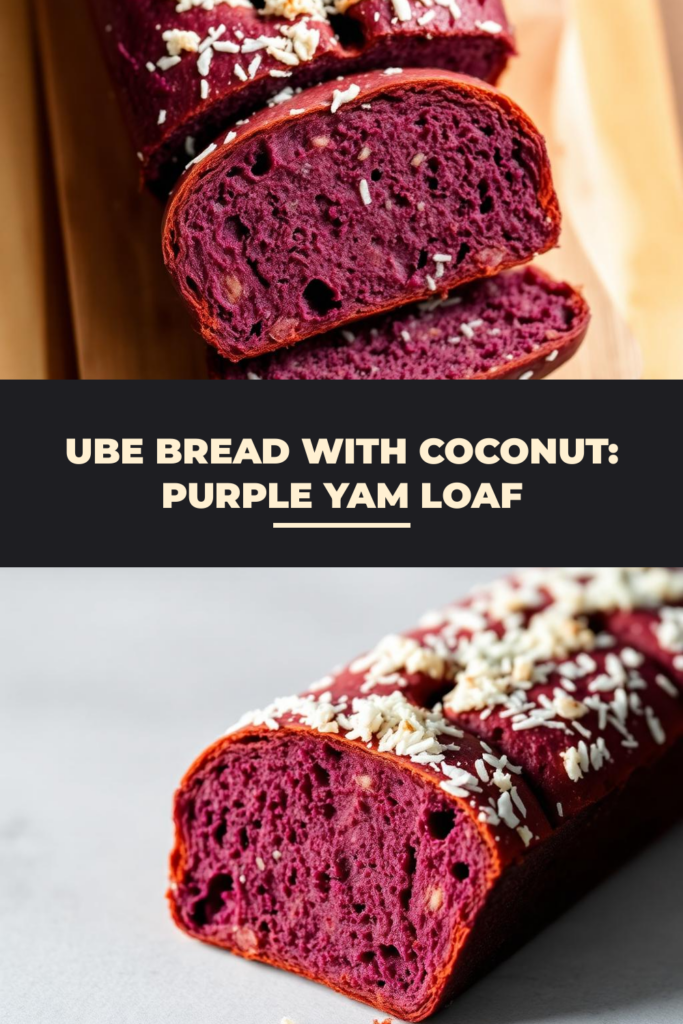
Ube bread with coconut is a soft, lightly sweet quick bread made from purple yam (ube) and coconut milk or shredded coconut, with a tender crumb and a mild, nutty flavor. The coconut fat and ube purée keep the loaf moist without making it heavy, so it works for breakfast, snack, or dessert. This version bakes as a single 9×5-inch loaf and uses ube halaya (cooked purple yam jam) for the deepest color and flavor.
Ingredients
- 1 ¾ cups (220 g) all-purpose flour
- 1 ½ teaspoons baking powder
- ½ teaspoon baking soda
- ½ teaspoon salt
- ¾ cup (150 g) granulated sugar
- 2 large eggs, at room temperature
- ½ cup (120 ml) neutral oil (canola or vegetable)
- ¾ cup (180 ml) full-fat coconut milk, shaken well
- 1 teaspoon vanilla extract
- ½ teaspoon ube extract (optional, for stronger color)
- 1 cup (240 g) ube halaya (cooked purple yam jam), at room temperature
- ½ cup (45 g) unsweetened shredded coconut
Instructions
- Heat the oven to 350°F (177°C). Grease a 9×5-inch (23×13 cm) loaf pan and line the bottom with parchment paper.
- In a medium bowl, whisk together the flour, baking powder, baking soda, and salt.
- In a large bowl, beat the sugar, eggs, oil, coconut milk, vanilla, and ube extract (if using) until smooth and slightly thickened, about 1 minute.
- Add the ube halaya and mix until fully incorporated; the batter will be purple and smooth.
- Fold the dry ingredients into the wet mixture until just combined—do not overmix. Gently fold in the shredded coconut.
- Pour the batter into the prepared pan and smooth the top. Bake for 50–60 minutes, until a toothpick inserted in the center comes out clean or with only a few moist crumbs. If the top browns too quickly, tent loosely with foil after 40 minutes.
- Cool in the pan on a wire rack for 15 minutes, then remove the loaf and cool completely before slicing, about 1 hour.
Why the Crumb Turns Out Dense or Gummy—and How to Fix It
Ube halaya is thick and sticky, so the batter can easily become overmixed. Overmixing develops gluten, which makes the bread tough and dense instead of tender. Mix only until the flour disappears, and fold the coconut in by hand. Another cause is underbaking: the center may look set but still be wet. Bake until a toothpick comes out clean, and remember the loaf continues to cook slightly as it cools. If the bread is gummy, it likely needed 5–10 more minutes in the oven.
Too Dry? Check the Coconut Milk and Halaya
If your ube halaya is very thick and dry (some commercial jars are), the loaf can turn out dry. Add 2 extra tablespoons of coconut milk if the batter looks stiff before baking. Also, shake the coconut milk can well before measuring—the cream separates and the watery part alone will not provide enough moisture.
Substitutions That Change the Loaf
- Ube halaya → ube powder: Use 3 tablespoons ube powder mixed with ¼ cup (60 ml) warm water to make a paste. The flavor will be less sweet and more earthy; increase sugar by 2 tablespoons.
- Coconut milk → whole milk or buttermilk: Use the same amount. Buttermilk adds tang and a slightly tighter crumb; whole milk makes the bread a touch less rich.
- Shredded coconut → coconut flakes: Chop larger flakes into smaller pieces so they distribute evenly. The texture will be more noticeable.
- Neutral oil → melted butter: Use ½ cup (113 g) melted butter. The bread will be more tender and have a buttery flavor, but the crumb may be slightly less moist.
- All-purpose flour → gluten-free 1:1 blend: Use the same amount. The loaf will be more crumbly and may need 5 extra minutes of baking.
Two Mistakes That Ruin the Color and Flavor
Using too little ube halaya. If you use less than 1 cup, the bread will be pale and the ube flavor faint. Stick to the full cup; the bread will still bake through because the halaya is mostly cooked yam and sugar.
Skipping the ube extract. Without extract, the color comes only from the halaya, which many brands make with added color. If you want a vivid purple, add ½ teaspoon ube extract; without it, the loaf may be more beige-purple. The flavor will still be ube, but milder.
Storing and Freezing the Baked Loaf
Wrap the cooled loaf tightly in plastic wrap and store at room temperature for up to 3 days. For longer storage, wrap in plastic then foil and freeze for up to 3 months. Thaw overnight in the refrigerator or at room temperature for 2–3 hours. The coconut milk in the bread means it should not sit out longer than 2 hours after slicing; refrigerate any leftovers after the first day to be safe.
To reheat individual slices, toast in a toaster oven at 350°F (177°C) for 3–4 minutes, or microwave for 15 seconds. The bread is best served slightly warm or at room temperature.
Safe minimum internal temperatures follow USDA FSIS; raw-fish guidance follows the U.S. FDA. See our food safety notes.
Spotted an error? Tell us and we will correct it (corrections policy).





