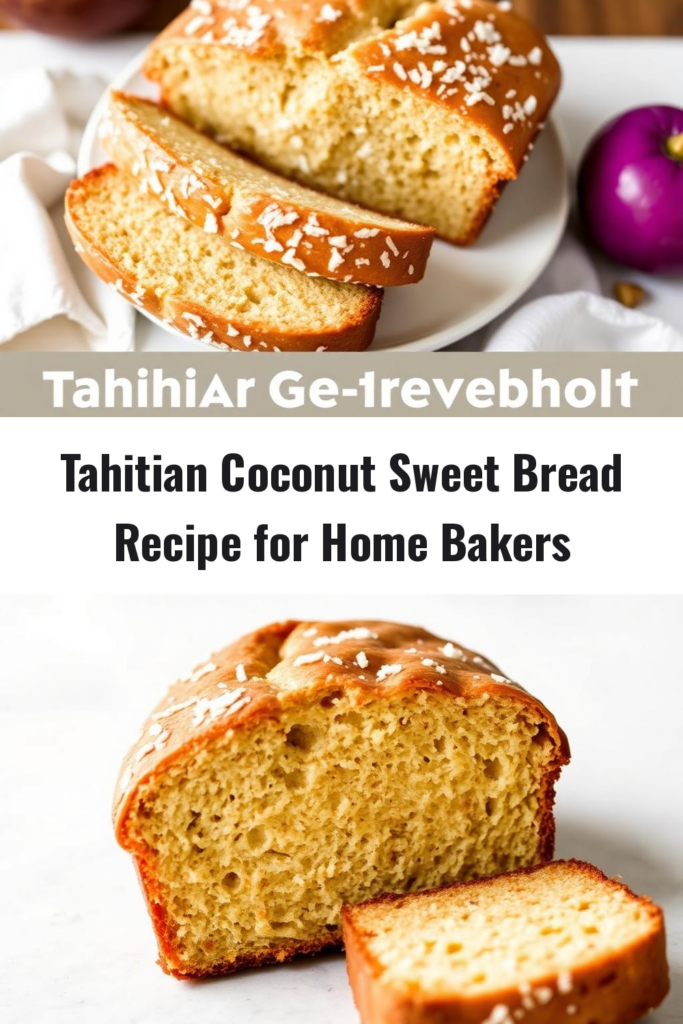
Tahitian coconut sweet bread is a soft, tender loaf with a fine crumb and a gentle coconut flavor that comes from both coconut milk and shredded coconut. It is a quick bread, not a yeast bread, so it comes together in about 15 minutes of active work and bakes in under an hour. The key to its texture is using full-fat coconut milk and not overmixing the batter, which keeps the crumb moist and light.
Ingredients
- 2 cups (250 g) all-purpose flour
- 1 cup (200 g) granulated sugar
- 1 teaspoon baking powder
- 1/2 teaspoon baking soda
- 1/2 teaspoon salt
- 2 large eggs, room temperature
- 1 cup (240 ml) full-fat coconut milk, shaken well
- 1/2 cup (120 ml) neutral oil (canola or vegetable)
- 1 teaspoon vanilla extract
- 1 cup (85 g) unsweetened shredded coconut
- 1/4 cup (60 ml) coconut milk for brushing (optional)
The One Technique That Makes It Work
Whisk the dry ingredients together first, then make a well in the center and pour in the wet ingredients. Stir with a spatula just until the flour disappears—about 15 strokes. Lumps are fine; overmixing develops gluten and makes the bread tough and dense. The batter will be thicker than a standard quick bread because of the shredded coconut, which is correct.
Instructions
- Heat the oven to 350°F (175°C). Grease a 9×5-inch (23×13 cm) loaf pan and line it with parchment paper, leaving overhang on two sides.
- In a large bowl, whisk together the flour, sugar, baking powder, baking soda, and salt.
- In a separate bowl, whisk the eggs, 1 cup coconut milk, oil, and vanilla until smooth.
- Pour the wet ingredients into the dry ingredients and stir with a spatula until just combined. Fold in the shredded coconut.
- Scrape the batter into the prepared pan and smooth the top. Bake for 45–55 minutes, until a toothpick inserted in the center comes out with only a few moist crumbs attached. If the top browns too quickly, tent loosely with foil after 30 minutes.
- Let the bread cool in the pan on a wire rack for 15 minutes. If using the optional coconut milk brush, brush the top while still warm. Lift out using the parchment and cool completely before slicing.
Substitutions and What Changes
- Coconut milk: Use full-fat canned coconut milk for the best flavor and moisture. Light coconut milk will make a drier, less rich bread. If you only have carton coconut milk, use it, but expect a slightly less tender crumb.
- Shredded coconut: Unsweetened is essential; sweetened will make the bread overly sweet and change the texture. If you only have sweetened, reduce the sugar to 3/4 cup (150 g).
- Oil: Melted butter (1/2 cup, 113 g) works instead of oil, but the bread will be slightly denser and have a buttery flavor. Coconut oil (melted and cooled) also works, but use 1/2 cup (120 ml) and add 1 extra tablespoon of coconut milk to keep the batter moist.
- Eggs: For an egg-free version, use 2 flax eggs (2 tablespoons ground flaxseed mixed with 6 tablespoons water, left to thicken 5 minutes). The bread will be less tender and may need 5 extra minutes of baking.
Mistakes That Ruin This Bread
Overmixing the Batter
Stirring until the batter is completely smooth develops gluten, which makes the loaf tough and rubbery. Stop as soon as no dry flour remains, even if there are streaks of coconut.
Using Unsweetened Coconut Milk in a Carton
Carton coconut milk is mostly water and stabilizers; it does not have the fat content of canned coconut milk. The bread will be dry and crumbly. Check the label: full-fat canned coconut milk should list coconut and water, with at least 10 grams of fat per 1/4 cup (60 ml).
Cutting While Hot
The crumb sets as it cools. Slicing a warm loaf will make it fall apart. Cool completely on a wire rack, about 1 hour, before cutting. If you need warm slices, wait at least 30 minutes and use a serrated knife.
Storage and Keeping
Store the bread wrapped in plastic wrap or in an airtight container at room temperature for up to 3 days. It will stay moist because of the coconut milk and oil. For longer storage, wrap tightly and freeze for up to 3 months; thaw overnight in the refrigerator and bring to room temperature before serving. If the bread seems dry after a day, brush slices with a little coconut milk before toasting.
Why the Crumb Is Tender and How to Check
The combination of oil and coconut milk provides fat that coats the flour proteins, preventing them from forming too much gluten. The baking soda reacts with the acid in the coconut milk to help the bread rise. To check doneness, insert a toothpick into the center; it should come out with a few moist crumbs, not wet batter. If the toothpick is clean, the bread is slightly overbaked but still good. The top should be deep golden brown and spring back when pressed gently.
Safe minimum internal temperatures follow USDA FSIS; raw-fish guidance follows the U.S. FDA. See our food safety notes.
Spotted an error? Tell us and we will correct it (corrections policy).





