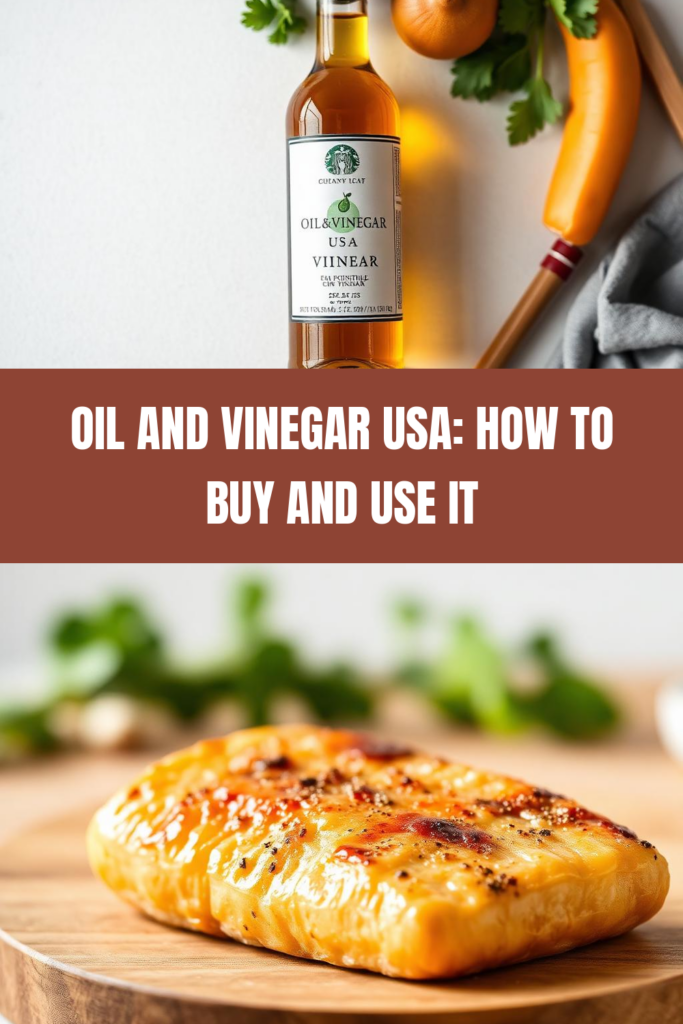
Time: 5 min to choose · Serves: 1 bottle · The key step: match the vinegar to the oil’s strength. Oil and vinegar is a pantry staple in the US, sold in bottles, used as a salad dressing base, a marinade, or a bread dip. The two ingredients are combined at the table or in a jar, not cooked together.
What You’re Actually Buying: Oil and Vinegar Bottles in the US
In American grocery stores, “oil and vinegar” usually means a bottle of vinegar with a separate bottle of oil, or a pre-mixed vinaigrette. The most common oils are olive, canola, and vegetable; the most common vinegars are red wine, white wine, apple cider, and balsamic. If you see a bottle labeled “oil and vinegar” as a single product, it’s a vinaigrette—already mixed, often with herbs or garlic. Read the label: a true vinaigrette has oil as the first ingredient, and vinegar as the second. A “balsamic glaze” is vinegar only, reduced.
For a basic homemade version, the standard ratio is 3 parts oil to 1 part vinegar, plus salt and pepper. That ratio works for red wine, white wine, and apple cider vinegar. For balsamic, use 2 parts oil to 1 part vinegar because balsamic is sweeter and thicker. For a stronger vinegar like sherry or champagne, stick with 3:1.
How to Pick the Right Oil and Vinegar Pairing
Match the oil’s flavor to the vinegar’s sharpness. Mild oils (canola, vegetable, light olive oil) work with any vinegar. Extra-virgin olive oil has a peppery, grassy taste—pair it with red wine or balsamic vinegar, not with white vinegar. Apple cider vinegar is fruity and pairs well with canola or a mild olive oil. Distilled white vinegar is harsh; use it only for cleaning or pickling, not for salad dressing.
For a bread dip, use extra-virgin olive oil and balsamic vinegar, or just olive oil with cracked pepper and salt. For a marinade, use a neutral oil (canola or vegetable) and red wine vinegar, because the oil carries the herbs and the vinegar tenderizes the meat. For a slaw or potato salad, use apple cider vinegar and a mild oil.
How to Mix and Store Oil and Vinegar
To make a vinaigrette, measure the oil and vinegar into a jar with a tight lid. Add salt, pepper, and any herbs or mustard. Shake for 30 seconds until the mixture looks cloudy and stays combined for a minute before separating. Mustard or honey helps the emulsion hold longer, but it will still separate—that’s normal.
Store the mixed vinaigrette in the refrigerator. Oil solidifies when cold; that’s fine. Take it out 15 minutes before using and shake again. A vinaigrette with fresh herbs or garlic keeps 4 days in the fridge. A vinaigrette with only oil, vinegar, salt, and pepper keeps 2 weeks in the fridge. Never leave a vinaigrette with garlic or herbs at room temperature—botulism risk. If you add raw egg or mayonnaise, use pasteurized eggs and keep it refrigerated; discard after 4 days.
Store the separate bottles of oil and vinegar in a cool, dark cabinet, away from the stove. Oil keeps about 6 months after opening; vinegar keeps indefinitely. Check the oil’s smell—if it smells like crayons or old nuts, it’s rancid, discard it.
Common Mistakes That Ruin Oil and Vinegar
Using the wrong ratio: too much vinegar makes it sour and harsh; too little makes it oily. Stick to 3:1 or 2:1 for balsamic. Adding salt after the oil and vinegar are mixed—salt dissolves better if you mix it with the vinegar first, then add the oil. Using extra-virgin olive oil for a hot marinade—it burns and turns bitter; use a neutral oil for cooking. Shaking a vinaigrette with fresh herbs too hard—the herbs bruise and turn bitter; stir gently instead. Storing the bottle near the stove—heat makes oil go rancid faster.
For a salad, dress the greens just before serving. Dressed greens wilt within 10 minutes. Use about 1 tablespoon of vinaigrette per 2 cups of greens. For a pasta salad, dress it while the pasta is warm so the oil soaks in, then add more vinaigrette before serving.
Make ahead: mix the vinaigrette up to 2 weeks ahead (without herbs) and add herbs just before serving. For a party, set out a cruet of oil and a cruet of vinegar, plus salt and pepper, so guests mix their own. That’s the classic American “oil and vinegar” setup at a salad bar or Italian restaurant table.
Related
- Lemon Bread With Oil: Moist Quick Bread Recipe
- Substitute for Oil in Zucchini Bread
- Apple Cider Vinegar Vinaigrette Recipe
Safe minimum internal temperatures follow USDA FSIS; raw-fish guidance follows the U.S. FDA. See our food safety notes.
Spotted an error? Tell us and we will correct it (corrections policy).