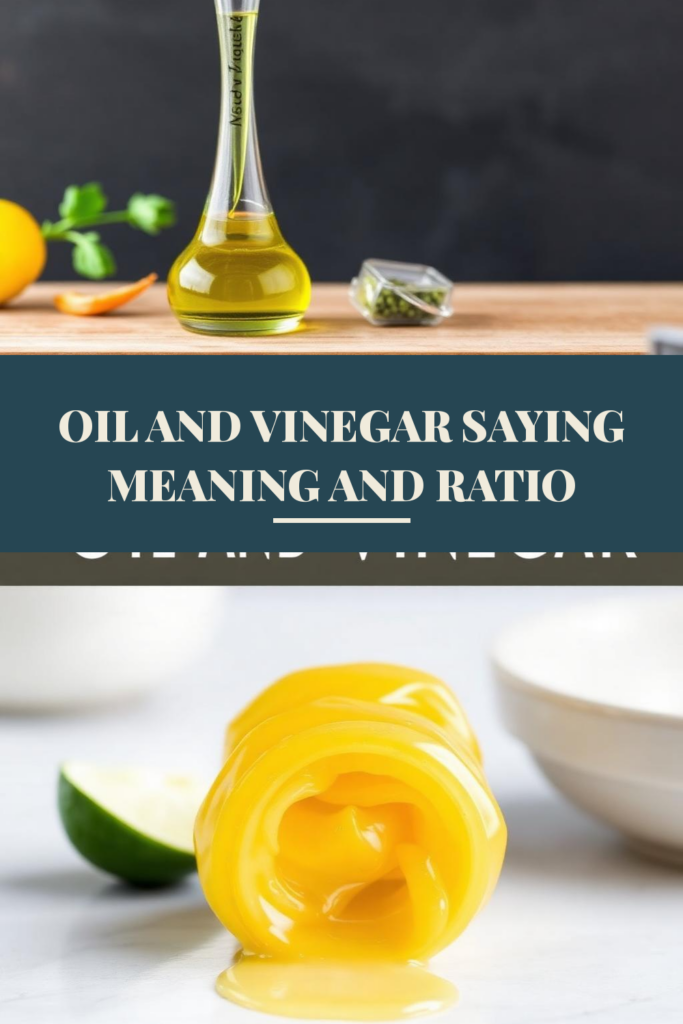
Time: 5 minutes · Serves: 1 cup · The key step: Whisk or shake until emulsified, then taste and adjust.
The phrase “oil and vinegar” describes two opposite things that work better together, like a classic vinaigrette. This page gives the standard 3:1 oil-to-vinegar ratio, how to make a stable dressing, and what to do when it separates or tastes too sharp.
Ingredients
- 3/4 cup (180 ml) olive oil or neutral oil
- 1/4 cup (60 ml) vinegar (red wine, white wine, apple cider, or sherry)
- 1 teaspoon (5 ml) Dijon mustard (optional, helps emulsify)
- 1/2 teaspoon salt, plus more to taste
- 1/4 teaspoon black pepper
- 1 small garlic clove, minced (optional)
- 1 teaspoon (5 ml) honey or maple syrup (optional, to balance acidity)
Instructions
- In a small bowl, whisk together the vinegar, mustard, salt, pepper, garlic, and honey if using. Let sit for 2 minutes so the salt dissolves.
- Slowly drizzle in the oil while whisking constantly. Start with a few drops, then a thin stream, until the dressing looks creamy and slightly thickened. This takes about 2 minutes by hand.
- Taste and adjust: add more salt or vinegar if flat, more oil if too sharp. The ratio is a starting point, not a rule.
- Use immediately, or store in a jar with a tight lid. Shake well before each use because it will separate.
The 3:1 Ratio Is a Starting Point, Not a Law
Classic vinaigrette uses three parts oil to one part vinegar. That yields a balanced, tangy dressing that coats lettuce without pooling. If you prefer less acid, use 4:1; if you like it sharper, use 2:1. The ratio also depends on the vinegar: balsamic is sweeter and less acidic, so you can use more of it (try 2:1). Distilled white vinegar is harsher, so stick closer to 3:1 or 4:1.
For a single salad serving, use 1 tablespoon (15 ml) vinegar and 3 tablespoons (45 ml) oil. For a big salad, double the recipe below.
| Batch | Oil | Vinegar |
|---|---|---|
| Half (1/2 cup total) | 6 tbsp (90 ml) | 2 tbsp (30 ml) |
| Single (1 cup total) | 3/4 cup (180 ml) | 1/4 cup (60 ml) |
| Double (2 cups total) | 1 1/2 cups (360 ml) | 1/2 cup (120 ml) |
Why It Separates and How to Fix It
Oil and vinegar naturally separate because oil is less dense and not water-soluble. Shaking or whisking creates a temporary emulsion that holds for a few minutes. To make it last longer, add mustard, honey, or a pinch of xanthan gum (about 1/8 teaspoon per cup).
If your dressing separates in the bottle, shake it vigorously for 10 seconds. If it separates on the salad, toss the leaves again with your hands. If it looks broken (watery with oil droplets), whisk in 1 teaspoon of mustard and a few drops of water to re-emulsify.
Too Sharp, Too Oily, or Too Thick: Fixes
Too acidic
Add more oil 1 tablespoon (15 ml) at a time, or add a pinch of sugar or honey. The sweetness masks the acid without changing the ratio much.
Too oily
Add more vinegar 1 teaspoon (5 ml) at a time, or add a drop of water and whisk. The dressing should taste bright, not greasy.
Too thick or clumpy
This happens when you add oil too fast and the emulsion breaks. Whisk in 1 teaspoon of warm water, or start over with a clean bowl and whisk the broken dressing into a teaspoon of mustard.
Storing Vinaigrette Safely
Homemade vinaigrette with fresh garlic or herbs must be refrigerated and used within 4 days because garlic in oil can grow botulism bacteria at room temperature. Without garlic or herbs, you can keep it at room temperature for up to 2 hours, but refrigeration is safer. Shake well before using; cold oil will thicken, so let it sit at room temperature for 10 minutes if needed.
Vinaigrette does not freeze well; the emulsion breaks and the texture becomes watery. Make only what you will use in a week.
Common Mistakes That Ruin the Dressing
- Adding oil too fast: The dressing separates and looks greasy. Fix by whisking in a teaspoon of mustard or starting over.
- Using cold oil: Cold oil thickens and won’t emulsify. Use oil at room temperature, or warm the bottle in your hands for a minute.
- Not seasoning enough: Salt and pepper are what make the dressing taste like something, not just oil and acid. Add salt after mixing, then taste again.
Related
- Lemon Bread With Oil: Moist Quick Bread Recipe
- Substitute for Oil in Zucchini Bread
- Apple Cider Vinegar Vinaigrette Recipe
Safe minimum internal temperatures follow USDA FSIS; raw-fish guidance follows the U.S. FDA. See our food safety notes.
Spotted an error? Tell us and we will correct it (corrections policy).