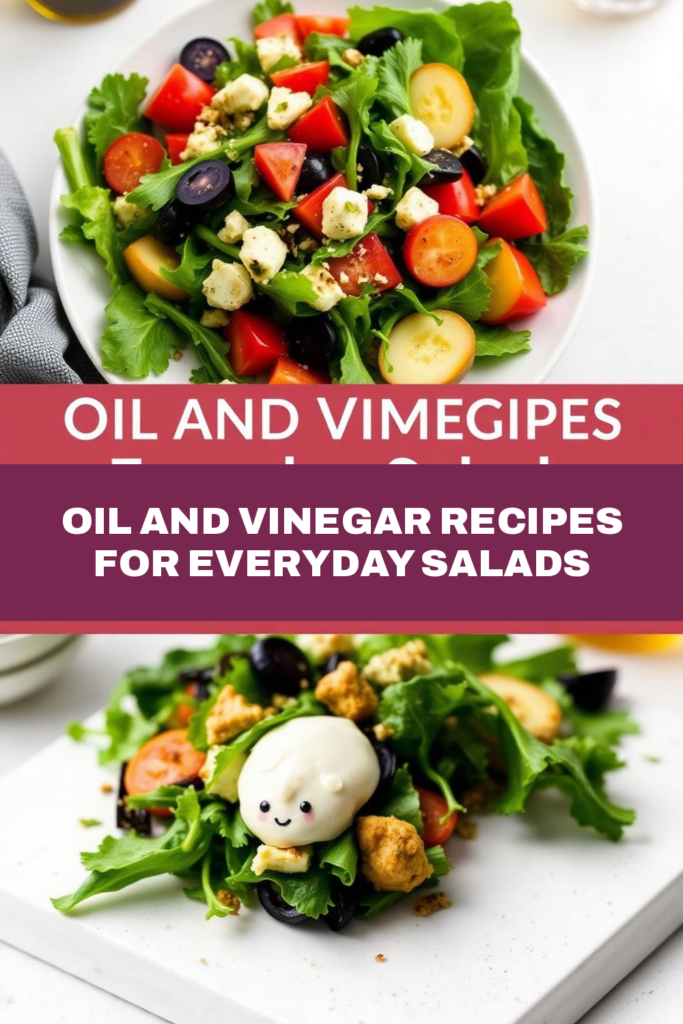
Oil and vinegar is the simplest salad dressing you can make at home, and it works for more than lettuce. With a 3-to-1 oil-to-vinegar ratio as your base, you can build a dozen variations in under five minutes. This page gives you the basic formula, three ready-to-use recipes, and the storage rules that keep them safe.
Basic Vinaigrette Ratio: 3 Parts Oil to 1 Part Vinegar
Start with 3 tablespoons (45 ml) oil to 1 tablespoon (15 ml) vinegar for a balanced dressing. For a sharper dressing, use 2:1; for a milder one, 4:1. Whisk in a bowl or shake in a jar with a tight lid. Add salt and pepper after mixing, then taste by dipping a clean spoon. The oil should coat your tongue without leaving a slick, and the vinegar should brighten, not burn.
Ingredients for the Basic Vinaigrette
- 3 tbsp (45 ml) extra-virgin olive oil
- 1 tbsp (15 ml) red wine vinegar or white wine vinegar
- 1/4 tsp fine salt
- 1/8 tsp black pepper
- Optional: 1/2 tsp Dijon mustard (helps emulsify and adds tang)
Instructions for the Basic Vinaigrette
- In a small bowl, combine the vinegar, salt, pepper, and mustard if using. Whisk until the salt dissolves.
- Slowly drizzle in the oil while whisking constantly. The dressing should look slightly thickened and opaque.
- Taste and adjust: add more oil if too sharp, more vinegar if too flat, or a pinch of salt if it tastes dull.
- Use immediately or refrigerate in a sealed container for up to 1 week. Shake well before each use.
Three Oil and Vinegar Recipes to Vary Your Salads
Each recipe makes about 1/2 cup (120 ml) of dressing, enough for 4-6 servings of salad. All keep in the fridge for up to 1 week.
Lemon-Herb Vinaigrette
- 1/4 cup (60 ml) fresh lemon juice (about 1 lemon)
- 3/4 cup (180 ml) extra-virgin olive oil
- 1 tsp Dijon mustard
- 1 tbsp (15 ml) chopped fresh parsley, dill, or chives
- 1/4 tsp salt
- 1/8 tsp black pepper
- Whisk lemon juice, mustard, salt, and pepper in a bowl.
- Slowly whisk in the oil until emulsified.
- Stir in the herbs. Use within 1 week; shake before serving.
Balsamic-Shallot Vinaigrette
- 1/4 cup (60 ml) balsamic vinegar
- 3/4 cup (180 ml) olive oil
- 1 small shallot, finely minced (about 2 tbsp / 30 ml)
- 1/2 tsp honey or maple syrup (optional)
- 1/4 tsp salt
- 1/8 tsp black pepper
- Combine vinegar, shallot, honey if using, salt, and pepper in a jar.
- Add the oil, seal the jar, and shake vigorously for 30 seconds.
- Refrigerate up to 1 week. Shake again before using.
Apple Cider Vinaigrette with Honey
- 1/4 cup (60 ml) apple cider vinegar
- 3/4 cup (180 ml) neutral oil such as canola or sunflower
- 1 tbsp (15 ml) honey
- 1/2 tsp Dijon mustard
- 1/4 tsp salt
- 1/8 tsp black pepper
- Whisk vinegar, honey, mustard, salt, and pepper in a bowl.
- Slowly whisk in the oil until smooth.
- Refrigerate up to 1 week. If honey solidifies, let the dressing sit at room temperature for 10 minutes, then shake.
What to Swap When You’re Out of an Ingredient
You can replace any vinegar with another of similar acidity. Red wine, white wine, apple cider, and sherry vinegar are interchangeable 1:1. Balsamic is sweeter and thicker; if you swap it for a lighter vinegar, reduce any added sweetener. Lemon juice can stand in for vinegar at the same amount, but it is less acidic, so add a pinch more salt.
For oil, extra-virgin olive oil has a strong flavor; a neutral oil like canola or grapeseed makes a milder dressing. If you use a flavored oil (like walnut or avocado), start with half the amount and taste before adding more. Mustard is not essential; it only helps the dressing stay mixed longer.
Make-Ahead Timeline for Oil and Vinegar Dressings
You can make any of these dressings up to 1 week ahead. Store in a glass jar with a tight lid. The oil will solidify in the fridge; that is normal. Take the jar out 15 minutes before serving, or run the jar under warm water for 30 seconds, then shake vigorously. For a party, make the dressing the morning of the event and keep it chilled until serving.
How to Store Oil and Vinegar Dressings Safely
Refrigerate any dressing that contains fresh herbs, garlic, shallots, or honey. These ingredients can support bacterial growth at room temperature. Dressings with only oil, vinegar, salt, and pepper can stay at room temperature for a few days, but refrigeration extends freshness. Always use a clean spoon to take dressing out; never return used dressing to the jar. Discard any dressing that smells off, changes color, or develops mold. Fresh herb and garlic dressings should be used within 4 days for best safety; others keep up to 1 week.
Pairing Ideas for Each Dressing
Lemon-herb vinaigrette suits green salads with chicken, shrimp, or avocado. Balsamic-shallot works with arugula, roasted vegetables, or a Caprese salad. Apple cider honey dressing pairs well with slaws, grain bowls, or salads with apples and nuts. For a simple side salad, toss 2 cups (about 60 g) of mixed greens with 2 tablespoons (30 ml) of dressing; add more if the leaves are thick like kale.
Why Does My Dressing Separate and How to Fix It
Oil and vinegar naturally separate because oil is less dense and does not dissolve in water. Shake or whisk just before serving. To make a temporary emulsion that lasts longer, add 1/2 teaspoon Dijon mustard or 1 teaspoon honey; these act as stabilizers. For a creamy texture, you can blend in 1 tablespoon (15 ml) of plain yogurt or mayonnaise, but then refrigerate and use within 3 days.
Can I Use This Dressing on Warm Salads?
Yes, but add the dressing just before serving so the greens do not wilt. For roasted vegetables, you can toss them with the dressing while still warm; the oil will coat them better. Do not heat the dressing itself, as that can change the flavor of the oil.
How to Check if Your Dressing Is Balanced
Dip a clean spoon into the dressing and taste it. It should have a bright, tangy note from the vinegar, a smooth mouthfeel from the oil, and enough salt to make the flavors pop. If it tastes flat, add a pinch of salt. If it burns your tongue, add a little more oil. If it feels greasy, add a few drops of vinegar. Adjust in small amounts—1 teaspoon at a time—until it tastes right.
Related
- Lemon Bread With Oil: Moist Quick Bread Recipe
- Substitute for Oil in Zucchini Bread
- Apple Cider Vinegar Vinaigrette Recipe
Safe minimum internal temperatures follow USDA FSIS; raw-fish guidance follows the U.S. FDA. See our food safety notes.
Spotted an error? Tell us and we will correct it (corrections policy).