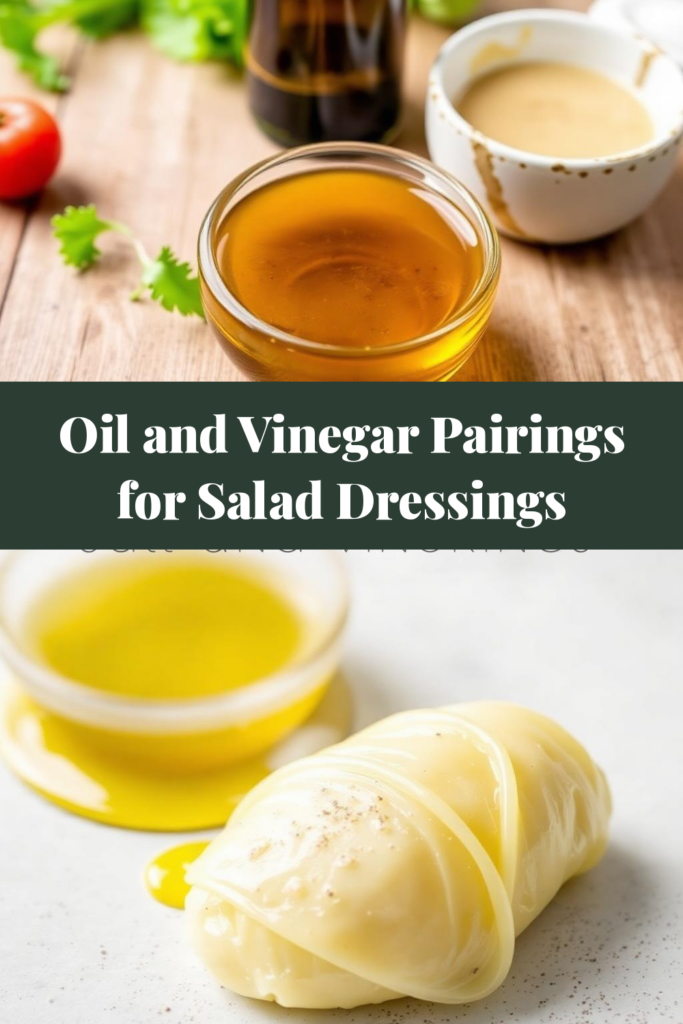
Oil and vinegar pairings are the backbone of simple salad dressings, where the oil carries flavor and the vinegar cuts through with acidity. The right match balances a bold vinegar with a mild oil, or a delicate vinegar with a fruity oil. This guide gives you exact pairings, ratios, and how to store them safely.
Ingredients
- 3 parts oil (see pairings below for specific oils)
- 1 part vinegar (see pairings below for specific vinegars)
- 1/2 tsp (2 g) fine salt per 1/2 cup (120 ml) dressing
- 1/4 tsp (1 g) black pepper per 1/2 cup (120 ml) dressing
- Optional: 1 tsp (5 ml) Dijon mustard per 1/2 cup (120 ml) to help emulsify
Instructions
- Choose your oil and vinegar from the table below. For a neutral base, use 3 tablespoons (45 ml) oil and 1 tablespoon (15 ml) vinegar per serving.
- In a small bowl, whisk the vinegar, salt, pepper, and mustard (if using) until the salt dissolves.
- Slowly drizzle in the oil while whisking constantly until the dressing looks cloudy and slightly thickened. This takes about 30 seconds.
- Alternatively, combine all ingredients in a jar with a tight lid and shake for 20 seconds.
- Taste and adjust: add more vinegar in 1/2-teaspoon (2.5 ml) increments if you prefer more tang, or more oil if it tastes too sharp.
Oil and Vinegar Pairing Table
| Vinegar | Best Oil | Flavor Profile | Best For |
|---|---|---|---|
| Balsamic (aged) | Extra-virgin olive oil | Sweet, rich, syrupy | Tomatoes, mozzarella, grilled vegetables |
| Red wine | Extra-virgin olive oil | Tangy, fruity | Greek salads, beans, roasted peppers |
| White wine | Light olive oil or canola | Mild, crisp | Green salads, chicken, fish |
| Apple cider | Olive oil or walnut oil | Fruity, slightly sweet | Coleslaw, fall salads, pork |
| Sherry | Extra-virgin olive oil | Nutty, complex | Spinach, arugula, roasted beets |
| Champagne | Light olive oil or grapeseed | Delicate, bubbly | Delicate greens, seafood |
| Rice vinegar | Toasted sesame oil or canola | Mild, slightly sweet | Asian slaws, noodle salads |
| Malt vinegar | Canola or sunflower | Bold, malty | Fish and chips, hearty salads |
How Long Does Oil and Vinegar Dressing Keep?
Store any oil and vinegar dressing in a sealed jar in the refrigerator for up to 2 weeks. The oil will solidify when cold; let it sit at room temperature for 10 minutes and shake well before using. Discard if you see mold, off-odor, or if the oil turns rancid (smells like old paint). If you add fresh garlic, herbs, or shallots, refrigerate and use within 4 days due to botulism risk. Do not keep garlic or herb-infused dressings at room temperature.
Variations for Specific Salads
Greek Salad
Use 3 tbsp (45 ml) extra-virgin olive oil and 1 tbsp (15 ml) red wine vinegar. Add 1/2 tsp dried oregano and a pinch of sugar. Toss with tomatoes, cucumber, red onion, and feta.
Asian Slaw
Use 2 tbsp (30 ml) canola oil and 1 tbsp (15 ml) rice vinegar, plus 1 tsp (5 ml) toasted sesame oil and 1 tsp (5 ml) honey. Shake well. Toss with cabbage, carrots, and cilantro.
What to Do With Leftover Dressing
Use leftover dressing within 2 weeks as a marinade for chicken or fish (but do not reuse marinade that touched raw meat). It also works as a drizzle over roasted vegetables, grilled bread, or as a quick sauce for grain bowls. If you have more than you need, freeze in an ice cube tray for up to 3 months; thaw in the refrigerator overnight and shake before using.
Oil and Vinegar for Marinades and Quick Pickles
The same pairings work for marinades: use 3 parts oil to 1 part vinegar, plus herbs and spices. For quick pickles (refrigerator pickles), do not use oil; use 1 part vinegar to 1 part water with salt and sugar, and refrigerate. Never water-bath can these; store in the refrigerator only.
Oil and Vinegar for Large Batches and Kids
For a big batch (serves 12), multiply the recipe by 3: 9 tbsp (135 ml) oil and 3 tbsp (45 ml) vinegar. For kids, use milder vinegars like white wine or rice, and reduce the vinegar to 2 parts oil to 1 part vinegar. Add a teaspoon of honey or maple syrup to balance acidity. Always shake well before serving.
Related
- Lemon Bread With Oil: Moist Quick Bread Recipe
- Substitute for Oil in Zucchini Bread
- Apple Cider Vinegar Vinaigrette Recipe
Safe minimum internal temperatures follow USDA FSIS; raw-fish guidance follows the U.S. FDA. See our food safety notes.
Spotted an error? Tell us and we will correct it (corrections policy).