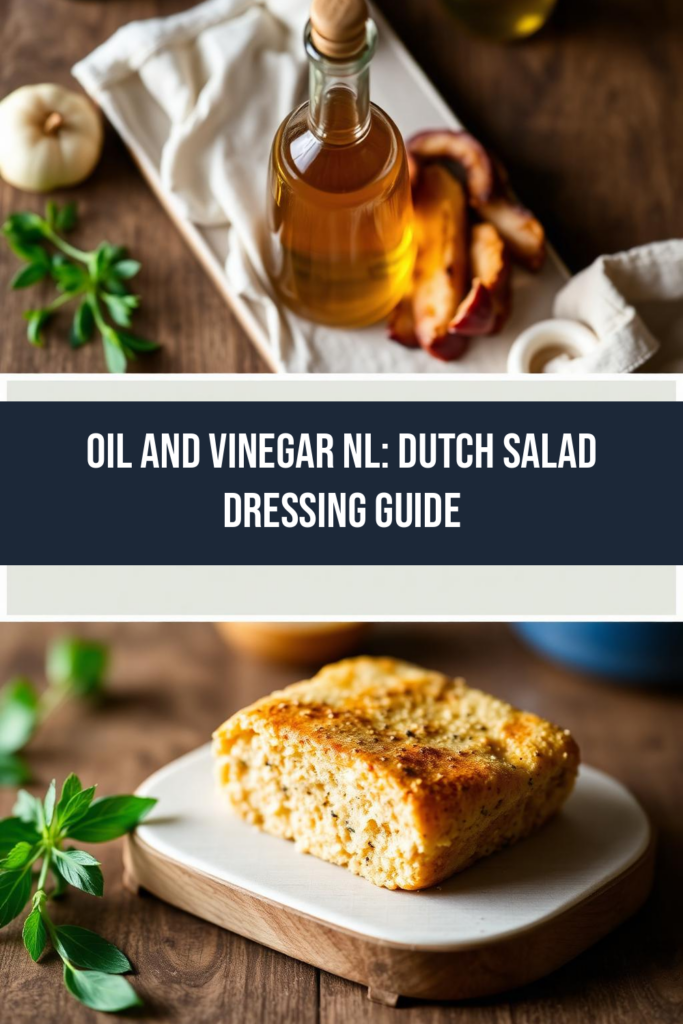
Oil and vinegar is the simplest salad dressing, and in the Netherlands it is often served as a classic vinaigrette over leafy greens, tomatoes, and cucumbers. It suits a quick weeknight side salad or a summer cookout, and it pairs well with crusty bread, grilled meats, or a simple green bean dish. This page gives you the classic Dutch-style ratio, a few variations, and the storage rules you need.
Classic Dutch Vinaigrette
The standard Dutch dressing is a simple 3:1 oil-to-vinegar ratio, seasoned with salt, pepper, and often a pinch of sugar or a dab of mustard. It is poured over salad just before serving, not used as a marinade. The vinegar is usually a mild one, like white wine vinegar or cider vinegar, so it does not overpower the greens.
Ingredients
- 3 tablespoons (45 ml) neutral oil, such as sunflower or canola
- 1 tablespoon (15 ml) white wine vinegar or cider vinegar
- 1/2 teaspoon Dijon mustard (optional)
- 1/4 teaspoon fine salt
- 1/8 teaspoon black pepper
- 1/4 teaspoon sugar (optional, to balance acidity)
Instructions
- In a small bowl, whisk together the vinegar, mustard (if using), salt, pepper, and sugar until the salt dissolves.
- Slowly drizzle in the oil while whisking constantly, until the dressing is emulsified and slightly thickened.
- Taste and adjust seasoning, adding more salt or vinegar in small increments if needed.
- Dress the salad just before serving: use about 1 tablespoon (15 ml) of dressing per 2 cups (about 60 g) of greens, tossing until lightly coated.
Substitutions and Adjustments
Vinegar Options
Replace white wine vinegar with an equal amount of red wine vinegar, sherry vinegar, or apple cider vinegar. Red wine vinegar is slightly stronger; sherry vinegar adds a nutty note. Lemon juice can replace vinegar in a 1:1 ratio, but the dressing will be less acidic and more tart.
Oil Options
Use extra-virgin olive oil for a fruitier flavor, but note it solidifies in the fridge. A 50/50 mix of olive oil and neutral oil keeps the flavor while staying liquid when chilled. Walnut or hazelnut oil adds a nutty taste; use them in place of the neutral oil, but they are more perishable.
Mustard and Sweetener
Dijon mustard helps emulsify and adds a mild tang; a whole-grain mustard gives texture. For a sweeter dressing, use honey or maple syrup instead of sugar, but add it sparingly—1/4 teaspoon is enough for most salads.
Equipment That Matters
A small whisk and a bowl work fine; a jar with a tight lid lets you shake the dressing in seconds. If you use a blender or food processor, the emulsion will be more stable, but it is not necessary. For a single serving, a fork in a cup is enough.
Storage and Safety
Store the dressing in a sealed jar in the refrigerator for up to 1 week. Because it contains no dairy or eggs, it is safe at room temperature for a short time, but refrigeration keeps the oil from going rancid. If the dressing separates, shake or whisk it again. If you add fresh herbs or garlic, refrigerate and use within 4 days—garlic in oil can harbor botulism if left at room temperature. Always discard dressing that smells off or shows mold.
For a Dutch-style salad, toss the greens with the dressing right before serving; dressed greens wilt within 30 minutes. If you are making a salad for a crowd, keep the dressing separate and add it at the table.
Common Questions
Why does my dressing separate?
Oil and vinegar naturally separate. The mustard helps keep them together, but even a well-emulsified dressing will separate over time. Shake or whisk just before use.
Can I use balsamic vinegar?
Yes, but balsamic is sweeter and thicker. Use a 2:1 oil-to-vinegar ratio instead of 3:1, and skip the sugar. The flavor is more robust, so it suits strong greens like arugula.
How much dressing do I need for a salad?
Plan on about 1 tablespoon (15 ml) of dressing per 2 cups (60 g) of loosely packed greens. For a heartier salad with vegetables, you may need a bit more, but start with less and add as needed.