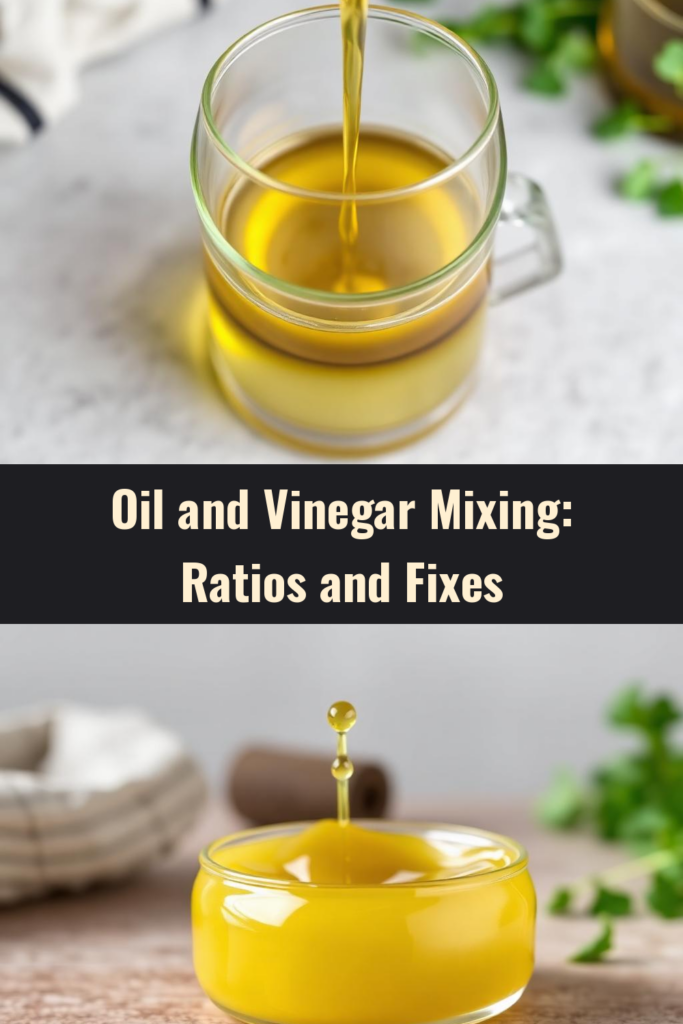
Oil and vinegar separate because oil is nonpolar and vinegar is mostly water, so a vinaigrette is a temporary emulsion that needs shaking or whisking right before use. The standard ratio is 3 parts oil to 1 part vinegar, which gives a balanced tartness that coats salad leaves without pooling. For a thicker, longer-lasting emulsion, add a teaspoon of Dijon mustard, which contains emulsifiers that help suspend the vinegar droplets in the oil.
Ingredients for a Basic Vinaigrette
- 3/4 cup (180 ml) neutral oil, such as canola or grapeseed
- 1/4 cup (60 ml) vinegar, such as red wine, white wine, or apple cider
- 1 teaspoon Dijon mustard (optional, for emulsion)
- 1/2 teaspoon salt
- 1/4 teaspoon black pepper
- 1 small shallot, minced (about 1 tablespoon / 10 g), optional
Instructions: Whisk or Shake in the Right Order
- In a small bowl, combine the vinegar, mustard, salt, pepper, and shallot if using. Whisk until the salt dissolves, about 30 seconds.
- While whisking constantly, add the oil in a slow, steady stream. Start with a few drops, then increase to a thin stream. This helps the vinegar and oil form a temporary emulsion. If you pour the oil too fast, the mixture will separate immediately.
- Whisk for about 1 minute until the dressing looks cloudy and slightly thickened. Taste and adjust salt or vinegar if needed.
- If making ahead, store in a jar with a tight lid. Shake vigorously for 10–15 seconds before each use, because the emulsion will separate as it sits.
Why Oil and Vinegar Separate, and How to Keep Them Mixed
Oil and vinegar separate because oil is nonpolar and vinegar is mostly water, so they do not dissolve in each other. Without an emulsifier, the two liquids will always separate within minutes. The mustard in the recipe acts as an emulsifier: its molecules have one end that attracts water and another that attracts oil, so it coats the oil droplets and keeps them suspended in the vinegar. For a more stable emulsion, you can use a blender or food processor, which breaks the oil into smaller droplets that stay mixed longer. A hand blender works well: combine all ingredients in a tall jar and blend for 30 seconds. The resulting dressing will stay emulsified for several hours in the fridge, but it will still separate eventually.
What If It Separates Anyway?
Separation is not a failure. If the dressing separates, just shake or whisk it again. If it separates immediately after whisking, the oil was added too quickly or the ingredients were cold. Let the dressing sit at room temperature for 10 minutes, then whisk again. If it still separates, add another 1/2 teaspoon of mustard and whisk vigorously.
Substitutions: Vinegar, Oil, and Emulsifier Swaps
You can swap the vinegar and oil, but each change affects flavor and thickness. Use the same 3:1 ratio unless noted.
- Vinegar swaps: Replace red wine vinegar with white wine vinegar (milder), apple cider vinegar (fruitier), or sherry vinegar (nutty). Lemon juice can replace vinegar in equal amounts, but it is less acidic, so add a pinch more salt.
- Oil swaps: Use olive oil for a fruity flavor, but it solidifies in the fridge, so let the dressing come to room temperature before shaking. Avocado oil is neutral and high in monounsaturated fat, making it a good substitute for canola. Walnut or hazelnut oil adds a nutty taste; use half nut oil and half neutral oil to avoid overpowering.
- Emulsifier swaps: If you don’t have Dijon mustard, use 1/2 teaspoon honey or maple syrup (adds sweetness) or 1 egg yolk (use pasteurized egg yolk for safety; the yolk makes a creamy, stable emulsion). Mayonnaise works too: use 1 teaspoon and reduce the oil by 1 teaspoon.
Three Mistakes That Make a Vinaigrette Too Dry, Too Runny, or Too Dense
Too Dry (Oil-Dominated)
If the dressing tastes greasy and barely coats the leaves, you used too much oil or not enough vinegar. Fix by whisking in 1 tablespoon (15 ml) of vinegar at a time until the flavor balances. For a standard vinaigrette, the ratio should be 3:1 oil to vinegar; if you prefer more tang, go to 2:1.
Too Runny (Vinegar-Dominated)
If the dressing is thin and sharp, you used too much vinegar or not enough oil. Add oil in 1-tablespoon (15 ml) increments while whisking until the dressing coats the back of a spoon. Remember that a vinaigrette is meant to be pourable, not thick like mayonnaise, so a slightly runny texture is normal.
Too Dense (Over-Emulsified)
If you used a blender and the dressing turned into a thick, mayonnaise-like paste, you over-emulsified. This happens when the oil droplets are so small that the mixture becomes a gel. To fix it, whisk in 1 tablespoon (15 ml) of water or vinegar to thin it out. For future batches, blend for only 20–30 seconds, not longer.
Storing Oil and Vinegar Dressing
Store vinaigrette in a sealed glass jar or bottle in the refrigerator for up to 2 weeks. Olive oil will solidify when cold, so let it sit at room temperature for 10–15 minutes before shaking. If you added fresh garlic, shallots, or herbs, the shelf life drops to 4 days because of botulism risk from garlic in oil; refrigerate and use within 4 days. Never leave a vinaigrette with garlic or shallots at room temperature for more than 2 hours. Shake well before each use, as separation is natural. Discard if you see mold or an off smell.
Related
- Lemon Bread With Oil: Moist Quick Bread Recipe
- Substitute for Oil in Zucchini Bread
- Apple Cider Vinegar Vinaigrette Recipe
Safe minimum internal temperatures follow USDA FSIS; raw-fish guidance follows the U.S. FDA. See our food safety notes.
Spotted an error? Tell us and we will correct it (corrections policy).