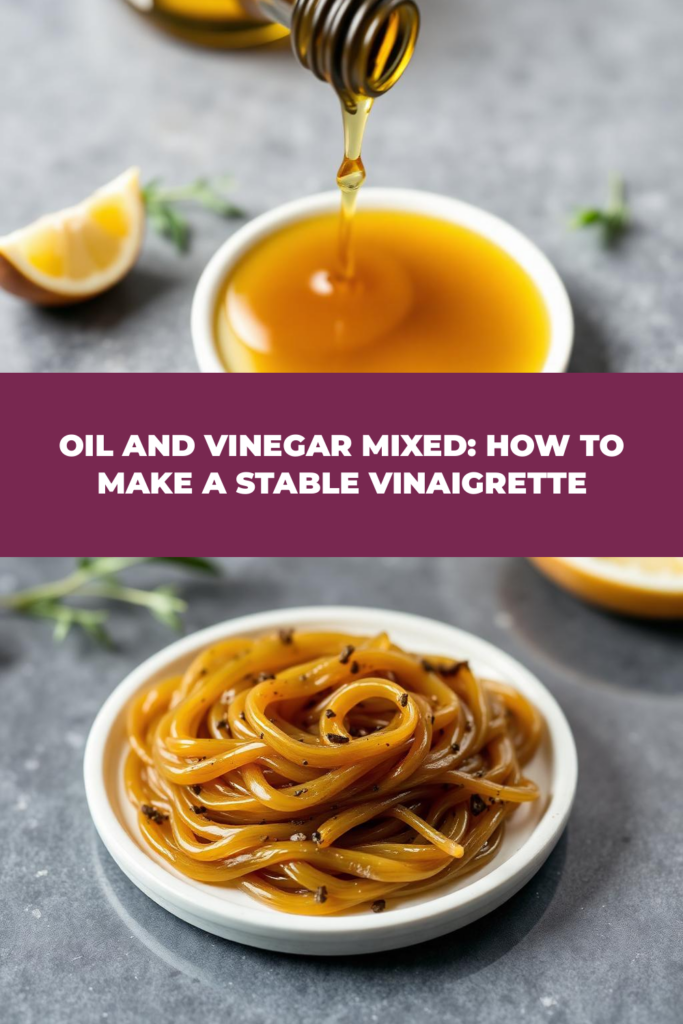
Time: 5 minutes · Serves: 4 (about 1/2 cup) · The key step: whisk or shake the oil into the vinegar slowly so the dressing emulsifies and clings to salad leaves instead of pooling at the bottom of the bowl. This is a basic vinaigrette: tangy vinegar, fruity oil, a little salt and pepper, and a dab of mustard to keep the two liquids from separating. It suits a weeknight salad, a picnic side, or a quick marinade for vegetables.
Why Oil and Vinegar Separate, and How to Keep Them Mixed
Oil and vinegar do not dissolve in each other. Vinegar is mostly water; oil is a fat. Left alone, they form two layers. A vinaigrette is a temporary emulsion: tiny droplets of oil suspended in the vinegar. The droplets stay suspended for a few minutes to a few hours, then slowly rise and merge back into a layer. To slow that separation, you add a small amount of an emulsifier—mustard, honey, or mayonnaise—which coats the oil droplets and keeps them apart. You also need to break the oil into small drops, which is why you whisk or shake while adding the oil in a thin stream. The finer the drops, the longer the emulsion holds.
For a stable dressing that lasts several days in the fridge, use a 3:1 oil-to-vinegar ratio and include 1 teaspoon of Dijon mustard. A 2:1 ratio is more tart and will separate faster. The mustard is not just for flavor; it is the emulsifier that keeps the dressing creamy for up to a week.
Ingredients
- 3 tablespoons (45 ml) red wine vinegar or white wine vinegar
- 1 teaspoon Dijon mustard
- 1/2 teaspoon fine salt
- 1/4 teaspoon black pepper
- 1/2 cup (120 ml) extra-virgin olive oil or neutral oil like grapeseed
Swaps: Use lemon juice instead of vinegar for a brighter, less acidic dressing. Use a pinch of sugar or 1/2 teaspoon honey if you like a sweeter vinaigrette; honey also helps emulsify. For a creamy version, replace the mustard with 1 tablespoon mayonnaise.
Instructions
- In a small bowl, combine the vinegar, mustard, salt, and pepper. Whisk until the salt dissolves and the mustard is fully incorporated.
- While whisking constantly, add the oil in a slow, steady stream. Start with a few drops, then increase to a thin trickle. Whisk for about 30 seconds after all the oil is in, until the dressing looks thick and creamy.
- Taste and adjust: add a pinch more salt or a drop more vinegar if needed. Use immediately, or transfer to a jar with a tight lid and refrigerate.
If the dressing separates after sitting, shake it in a sealed jar for 10 seconds or whisk again for 15 seconds—it will re-emulsify.
What Ruins a Vinaigrette (and How to Fix It)
Adding oil too fast. If you pour the oil all at once, the mixture stays separated. Fix: keep whisking; it will eventually come together, but the texture will be less creamy. Next time, pour slower.
Too much vinegar. A 1:1 ratio tastes sharp and watery. Fix: add more oil, a tablespoon at a time, until the balance is right.
Using cold oil. Cold oil is thicker and harder to break into drops. Fix: let the oil sit at room temperature for 10 minutes before making the dressing, or whisk longer.
Not enough salt. Salt is what makes the vinegar taste less harsh. If the dressing tastes flat, add another pinch of salt before adding more oil.
Letting it sit too long. Even with mustard, a vinaigrette will separate after a few hours at room temperature. That is normal—just shake it before use. If it sits in the fridge for more than a week, the oil may turn rancid; discard it.
Storage and Make-Ahead Timeline
Store the vinaigrette in a sealed glass jar or bottle in the refrigerator for up to 1 week. The oil will solidify when cold; take it out 10 minutes before using and shake well. Do not leave it at room temperature for more than 2 hours total. For a make-ahead salad, dress the leaves just before serving—dressed salad wilts within 30 minutes. You can make the vinaigrette up to 3 days ahead; the flavor mellows slightly, which is fine.
For a picnic or potluck, pack the dressing in a small jar and dress the salad at the table. If you are using the vinaigrette as a marinade for vegetables or chicken, use it within the same day and discard any leftover marinade that touched raw meat.
Serving and Pairing Ideas
This vinaigrette works on crisp greens like romaine, arugula, or mixed baby lettuce. It also dresses grain salads—farro, quinoa, or couscous—and roasted vegetables like carrots or zucchini. For a classic French-style salad, toss with sliced shallots and fresh herbs like parsley or chives. The dressing is also a quick sauce for grilled chicken or fish: drizzle 1 tablespoon over each serving just before eating.
If you want a thicker dressing for a wedge salad, add 1 tablespoon of sour cream or Greek yogurt along with the mustard. That turns it into a creamy vinaigrette that clings to iceberg lettuce.
Common Questions
Can I use balsamic vinegar? Yes, but balsamic is sweeter and darker. Use 2 tablespoons balsamic plus 1 tablespoon water to keep the same volume, and reduce the mustard to 1/2 teaspoon.
What oil is best? Extra-virgin olive oil has the strongest flavor; use it for salads. For a neutral base, use grapeseed or canola. A mix—half olive, half neutral—gives a mild flavor that does not overpower delicate greens.
How do I make a single serving? Use 1 tablespoon vinegar, 1/4 teaspoon mustard, a pinch of salt, and 3 tablespoons oil. Whisk in a small bowl or shake in a jar.
Why does my dressing taste bitter? Often the olive oil is too strong or old. Try a lighter olive oil or a neutral oil. Also, if you used extra-virgin olive oil that has been stored in sunlight, it can turn bitter; store oil in a dark cupboard.
Related
- Lemon Bread With Oil: Moist Quick Bread Recipe
- Substitute for Oil in Zucchini Bread
- Apple Cider Vinegar Vinaigrette Recipe
Safe minimum internal temperatures follow USDA FSIS; raw-fish guidance follows the U.S. FDA. See our food safety notes.
Spotted an error? Tell us and we will correct it (corrections policy).