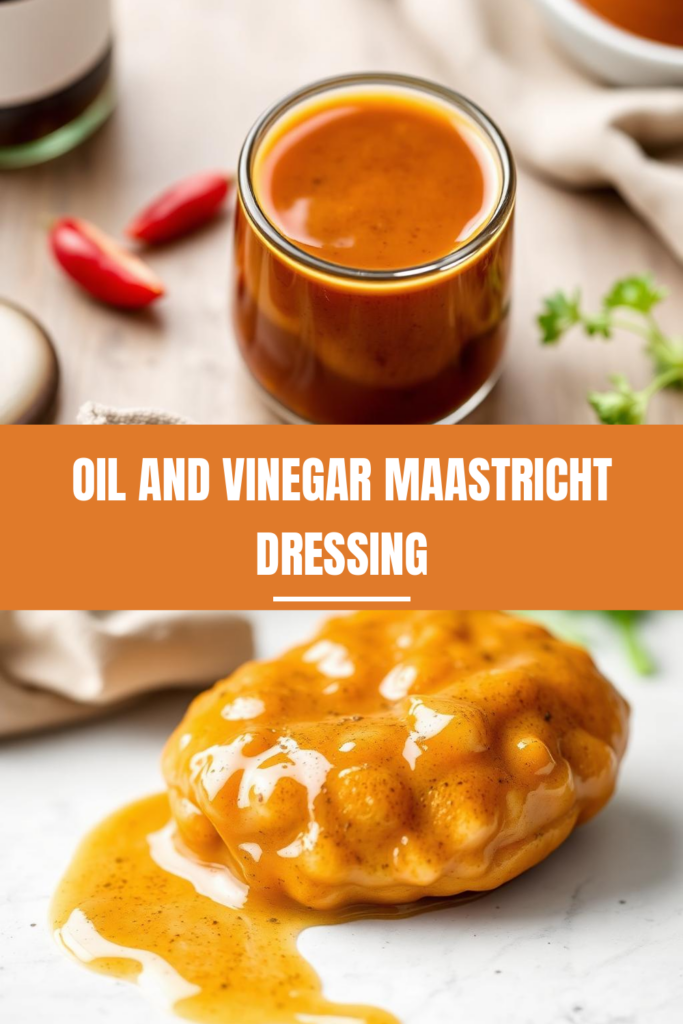
This is a homemade version of the tangy, herb-flecked oil and vinegar dressing served at the Oil & Vinegar shops in Maastricht. It’s a sharp, slightly sweet vinaigrette with a creamy body from Dijon mustard, perfect for green salads, roasted vegetables, or as a marinade for chicken. The key is the balance of acid to oil and the fine mince of shallot and herbs.
Ingredients
- 1/2 cup (120 ml) red wine vinegar
- 1 tbsp (15 ml) Dijon mustard
- 1 tsp (5 ml) honey
- 1 small shallot, finely minced (about 2 tbsp / 20 g)
- 1/2 tsp salt
- 1/4 tsp black pepper
- 1 cup (240 ml) extra-virgin olive oil
- 1 tbsp (3 g) fresh parsley, finely chopped
- 1 tsp (1 g) fresh thyme leaves
Instructions
- In a medium bowl, whisk together the red wine vinegar, Dijon mustard, honey, minced shallot, salt, and pepper until the salt dissolves.
- Slowly drizzle in the olive oil while whisking constantly, until the dressing emulsifies and thickens slightly.
- Stir in the parsley and thyme. Taste and adjust salt or vinegar if needed.
- Use immediately or refrigerate in a sealed jar for up to 1 week. Shake or whisk well before each use.
What Makes This Dressing Different
Most vinaigrettes use a 3:1 oil-to-vinegar ratio; this one is closer to 2:1, giving it a sharper, more assertive tang. The Dijon mustard acts as an emulsifier, so the dressing stays mixed longer than a simple oil-and-vinegar shake. The honey adds a subtle sweetness that rounds out the acidity without making it sugary.
Substitutions That Work
Red wine vinegar: Swap with white wine vinegar or sherry vinegar in equal measure. White wine vinegar is slightly milder; sherry vinegar adds a nutty depth. Balsamic vinegar will make it sweeter and darker—use 1/2 cup (120 ml) balsamic with 1/4 cup (60 ml) water to keep the same acidity.
Dijon mustard: Use whole-grain mustard for a chunkier texture, or 1 tsp (5 g) dry mustard powder dissolved in the vinegar. Each changes the flavor: whole-grain adds mustard seeds, dry powder is more pungent.
Honey: Maple syrup or agave nectar work in the same amount. Maple adds a woody note; agave is neutral. For a sugar-free version, use 1/2 tsp (2 g) monk fruit sweetener.
Shallot: Substitute 1/4 cup (40 g) finely minced red onion or 1 small garlic clove, minced. Red onion is milder; garlic will make it punchier—use less if you prefer a gentler dressing.
Herbs: Use 1 tsp (1 g) dried parsley and 1/2 tsp (0.5 g) dried thyme instead of fresh. Dried herbs need at least 15 minutes to rehydrate, so let the dressing sit before serving.
How to Use This Dressing
This dressing is assertive enough to stand up to bitter greens like radicchio, endive, or arugula. Toss it with a simple salad of mixed greens, shaved fennel, and orange segments. It also works as a marinade for chicken or pork: use 1/2 cup (120 ml) per pound of meat, marinate for 30 minutes to 2 hours, then cook to the safe minimum internal temperature (chicken 165°F / 74°C; pork 145°F / 63°C with a 3-minute rest).
For a warm potato salad, toss boiled potatoes with the dressing while they’re still hot—they absorb more flavor. Drizzle it over roasted carrots or grilled zucchini just before serving.
Make-Ahead and Storage
This dressing keeps in the refrigerator for up to 1 week in a sealed glass jar. The olive oil will solidify when cold; let it sit at room temperature for 15–20 minutes, then shake vigorously to re-emulsify. Do not leave it out at room temperature for more than 2 hours total.
If you want to make a larger batch, double the recipe—it stores the same. The herbs will fade after a few days, so if you plan to keep it longer, add the fresh herbs only to the portion you’ll use within 3 days.
Why the Emulsion Breaks and How to Fix It
If the dressing separates, it’s not ruined. The mustard and honey help, but a broken vinaigrette is normal. To fix it, pour the separated dressing into a blender or food processor and blend for 10 seconds, or whisk it with 1 tsp (5 ml) of water and a pinch of mustard powder. For a more stable emulsion, add the oil in a very slow, thin stream while whisking—this is the most reliable method.
Questions About This Dressing
Can I use a different oil? Yes, but extra-virgin olive oil gives the characteristic fruity, peppery flavor. For a milder taste, use half olive oil and half neutral oil like grapeseed or canola. Avoid using only neutral oil—the dressing will lack depth.
Is this dressing safe to keep at room temperature? No. Because it contains fresh shallot and herbs, it must be refrigerated. The acid in the vinegar does not make it shelf-stable. Refrigerate within 2 hours of making and use within 1 week.
Can I use dried herbs instead of fresh? Yes, but use 1 tsp (1 g) dried parsley and 1/2 tsp (0.5 g) dried thyme. Let the dressing sit for at least 15 minutes after mixing so the dried herbs soften and release flavor.
Related
- Lemon Bread With Oil: Moist Quick Bread Recipe
- Substitute for Oil in Zucchini Bread
- Apple Cider Vinegar Vinaigrette Recipe
Safe minimum internal temperatures follow USDA FSIS; raw-fish guidance follows the U.S. FDA. See our food safety notes.
Spotted an error? Tell us and we will correct it (corrections policy).