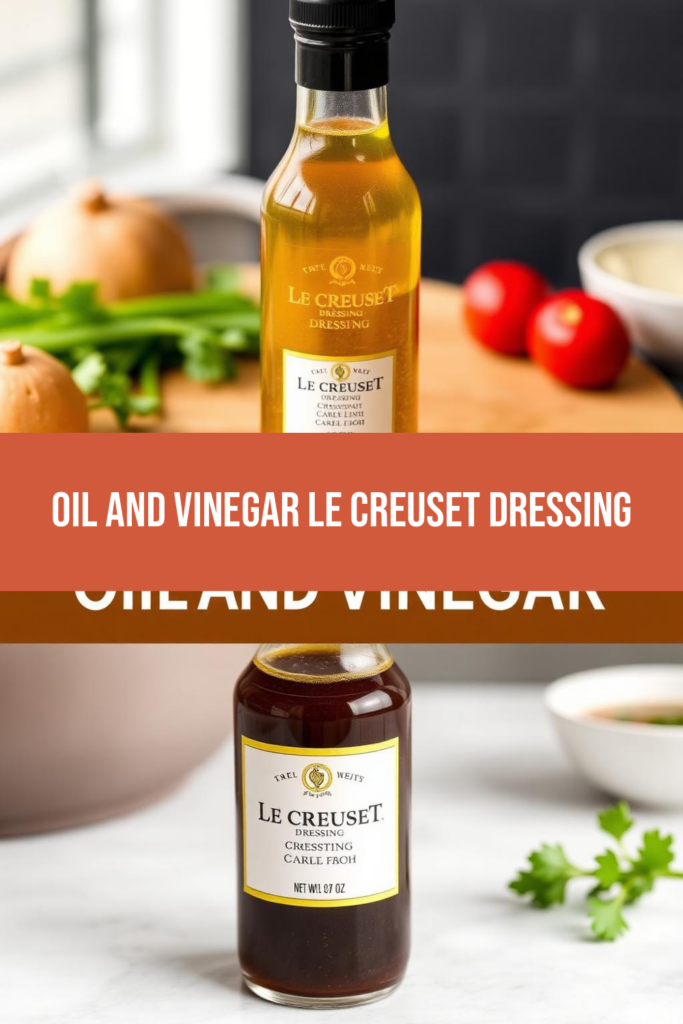
This is a simple vinaigrette made in a Le Creuset pitcher or any glass jar, with a balanced ratio of oil to vinegar and a touch of Dijon mustard for emulsion. It suits a weeknight salad, a potluck green bean salad, or a quick marinade for chicken. The recipe makes about 1 cup (240 ml), enough for 8 servings of salad.
Ingredients
- 1/4 cup (60 ml) red wine vinegar
- 1 tbsp (15 ml) Dijon mustard
- 1 tsp (5 ml) honey (optional)
- 1/2 tsp (2 g) fine sea salt
- 1/4 tsp (0.5 g) freshly ground black pepper
- 3/4 cup (180 ml) extra-virgin olive oil
Instructions
- In a Le Creuset pitcher or a glass jar with a tight-fitting lid, combine the vinegar, mustard, honey (if using), salt, and pepper. Whisk or shake until the salt dissolves, about 30 seconds.
- Slowly add the olive oil in a steady stream while whisking continuously, or add it all at once and shake the jar vigorously for 20 seconds. The dressing will look cloudy and slightly thickened.
- Taste and adjust salt or vinegar if needed. Use immediately or refrigerate in a sealed container.
Make-Ahead and Storage
This dressing keeps in the refrigerator for up to 2 weeks in a sealed jar. The olive oil will solidify when cold; let it sit at room temperature for 15–20 minutes and shake well before using. Do not leave it out on the counter for more than 2 hours total. If you add fresh garlic or herbs, refrigerate and use within 4 days (botulism risk).
What to Serve With It
This vinaigrette pairs with crisp greens like romaine or arugula, sliced tomatoes, and shaved red onion. It also works as a marinade for chicken breast or fish—use about 1/4 cup (60 ml) per pound (450 g) of meat, marinate in the refrigerator for 30 minutes to 2 hours, then cook to the USDA safe minimum internal temperature (poultry 165°F / 74°C, fish 145°F / 63°C).
Adjusting the Ratio
The standard ratio is 3 parts oil to 1 part vinegar. For a sharper dressing, use 2 parts oil to 1 part vinegar (1/2 cup / 120 ml oil to 1/4 cup / 60 ml vinegar). For a milder one, use 4 parts oil to 1 part vinegar (1 cup / 240 ml oil to 1/4 cup / 60 ml vinegar). The mustard helps keep the emulsion stable for a few hours, but it will separate eventually—just shake again.
Swaps and Variations
Replace red wine vinegar with white wine vinegar, apple cider vinegar, or sherry vinegar—each changes the flavor slightly. Use lemon juice instead of vinegar for a brighter taste. For a dairy-free or vegan version, skip the honey or use maple syrup. If you don’t have Dijon, use 1/2 tsp (2 g) dry mustard powder mixed into the vinegar first. For a herbed dressing, add 1 tbsp (3 g) chopped fresh parsley, chives, or dill just before serving.
Using a Le Creuset Pitcher
Le Creuset pitchers are made of stoneware and are not meant for stovetop use. They are safe in the dishwasher, but hand-washing is gentler. The pitcher’s narrow spout helps pour the dressing without dripping. If you don’t have one, any glass jar with a lid works the same way. The stoneware does not react with acidic vinegar, so the dressing won’t pick up a metallic taste.
Common Questions
Why does my dressing separate?
Oil and vinegar naturally separate. The mustard acts as an emulsifier, but it only slows separation. Shake or whisk right before serving. This is normal and does not affect safety.
Can I use this dressing on a warm salad?
Yes, but add it to warm vegetables (like roasted potatoes) just before serving. The oil will coat them well. Do not heat the dressing itself, as the vinegar can become harsh.
How much dressing per salad?
Use about 2 tablespoons (30 ml) per 4 cups (100 g) of leafy greens. Start with less and add more to taste.
Is it safe to keep this at room temperature?
No. Perishable items like this dressing (contains no dairy, but the oil and vinegar mixture with mustard and honey) should not sit out more than 2 hours. Refrigerate after use.
Related
- Lemon Bread With Oil: Moist Quick Bread Recipe
- Substitute for Oil in Zucchini Bread
- Apple Cider Vinegar Vinaigrette Recipe
Safe minimum internal temperatures follow USDA FSIS; raw-fish guidance follows the U.S. FDA. See our food safety notes.
Spotted an error? Tell us and we will correct it (corrections policy).