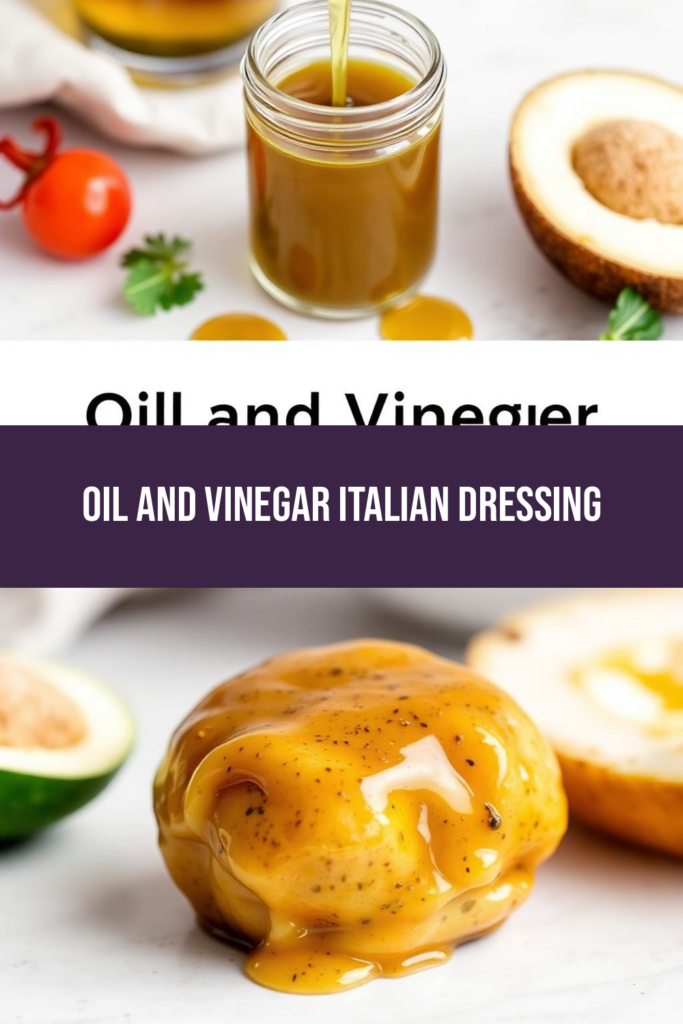
This classic Italian dressing is a sharp, herby vinaigrette that comes together in minutes and suits weeknight salads, pasta salads, and marinating chicken or vegetables. It is best made at least 30 minutes ahead so the herbs and garlic meld, and it keeps well in the fridge for up to a week.
Ingredients
- 1/2 cup (120 ml) red wine vinegar
- 1 tbsp (15 ml) lemon juice
- 1 tsp (5 g) Dijon mustard
- 1 tsp (5 g) honey or sugar
- 1 small garlic clove, minced (about 1/2 tsp / 1 g)
- 1/2 tsp (1 g) dried oregano
- 1/2 tsp (1 g) dried basil
- 1/4 tsp (0.5 g) dried thyme
- 1/2 tsp (3 g) salt, plus more to taste
- 1/4 tsp (0.5 g) black pepper
- 3/4 cup (180 ml) extra-virgin olive oil
Instructions
- In a medium bowl or a jar with a tight-fitting lid, combine the red wine vinegar, lemon juice, Dijon mustard, honey, garlic, oregano, basil, thyme, salt, and pepper. Whisk or shake until the salt dissolves and the mustard is blended.
- Slowly drizzle in the olive oil while whisking constantly, or add it to the jar, seal, and shake vigorously for 20–30 seconds until the dressing is emulsified and slightly thickened.
- Taste and adjust salt or vinegar. If it tastes too sharp, add a teaspoon of olive oil; if too flat, add a teaspoon of vinegar.
- Use immediately, or refrigerate for up to 1 week. If refrigerated, let it sit at room temperature for 10 minutes and shake or whisk again before serving, as the oil will solidify when cold.
How to Tell It Is Done
The dressing is ready when it forms a temporary emulsion: it should look cloudy and slightly thick, and the oil should not separate into a distinct layer within the first minute after shaking. It will separate on standing, which is normal; shake or whisk before each use.
Storage and Shelf Life
Store in a sealed glass jar or container in the refrigerator for up to 1 week. Because it contains fresh garlic, never leave it at room temperature for more than 2 hours (1 hour if the room is above 90°F/32°C). If you prefer to skip the garlic, the dressing keeps for up to 2 weeks refrigerated. Do not freeze; the emulsion will break and the texture will become grainy.
Scaling for Half or Double Batches
| Ingredient | Half batch | Full batch | Double batch |
|---|---|---|---|
| Red wine vinegar | 1/4 cup (60 ml) | 1/2 cup (120 ml) | 1 cup (240 ml) |
| Lemon juice | 1 1/2 tsp (7 ml) | 1 tbsp (15 ml) | 2 tbsp (30 ml) |
| Dijon mustard | 1/2 tsp (2.5 g) | 1 tsp (5 g) | 2 tsp (10 g) |
| Honey or sugar | 1/2 tsp (2.5 g) | 1 tsp (5 g) | 2 tsp (10 g) |
| Garlic, minced | 1/4 tsp (0.5 g) | 1/2 tsp (1 g) | 1 tsp (2 g) |
| Dried oregano | 1/4 tsp (0.5 g) | 1/2 tsp (1 g) | 1 tsp (2 g) |
| Dried basil | 1/4 tsp (0.5 g) | 1/2 tsp (1 g) | 1 tsp (2 g) |
| Dried thyme | 1/8 tsp (0.25 g) | 1/4 tsp (0.5 g) | 1/2 tsp (1 g) |
| Salt | 1/4 tsp (1.5 g) | 1/2 tsp (3 g) | 1 tsp (6 g) |
| Black pepper | 1/8 tsp (0.25 g) | 1/4 tsp (0.5 g) | 1/2 tsp (1 g) |
| Olive oil | 6 tbsp (90 ml) | 3/4 cup (180 ml) | 1 1/2 cups (360 ml) |
For a half batch, use a small jar and shake well; for a double batch, a 1-quart (1-liter) jar works well.
Equipment That Matters
A jar with a lid is the simplest tool: it measures, mixes, and stores in one vessel. A whisk and bowl work but require a steady hand when adding oil. An immersion blender makes the most stable emulsion, but it is not necessary. If you use a blender or food processor, add the oil in a slow stream while running on low; the dressing will be thicker and creamier than the whisked version.
Variations and Substitutions
White Wine or Apple Cider Vinegar
Substitute the red wine vinegar with an equal amount of white wine vinegar for a milder, less sharp dressing, or apple cider vinegar for a slightly fruity note. Both change the color to pale gold.
Fresh Herbs
Replace the dried herbs with 1 tbsp (about 3 g) each of chopped fresh oregano, basil, and thyme. Add them after whisking, and use within 3 days; fresh herbs lose their punch faster.
No Garlic Version
Omit the garlic entirely for a milder dressing that lasts up to 2 weeks refrigerated. Add 1/4 tsp (0.5 g) onion powder if you want a savory note without the garlic.
Lemon-Herb Version
Increase lemon juice to 2 tbsp (30 ml) and reduce vinegar to 1/4 cup (60 ml). Add 1 tsp (1 g) grated lemon zest. This brightens the dressing for fish or chicken salads.
Using This Dressing
This recipe makes about 1 1/4 cups (300 ml), enough for 8–10 servings of salad (about 2 tbsp / 30 ml per serving). It also works as a marinade for 1 1/2 lb (680 g) of chicken or vegetables; use it within 4 hours of adding raw meat, and discard any marinade that touched raw poultry. For a pasta salad, toss 1/2 cup (120 ml) of dressing with 1 lb (450 g) cooked, cooled pasta and add vegetables; serve within 2 hours or refrigerate.
Why It Separates and How to Fix It
Oil and vinegar naturally separate because oil is less dense and does not dissolve in water. The mustard and honey act as emulsifiers, helping them mix temporarily. If the dressing separates after sitting, shake it vigorously for 15 seconds; if it has been refrigerated, let it warm to room temperature first. If it separates permanently (looks greasy and thin even after shaking), whisk in 1 tsp (5 g) more mustard and 1 tsp (5 ml) cold water, then shake again.
Related
- Italian Dressing Without Vinegar: Creamy & Tangy
- How Long Does Homemade Italian Dressing Last in the Fridge?
- Apple Cider Vinegar Vinaigrette Dressing Recipe
Safe minimum internal temperatures follow USDA FSIS; raw-fish guidance follows the U.S. FDA. See our food safety notes.
Spotted an error? Tell us and we will correct it (corrections policy).