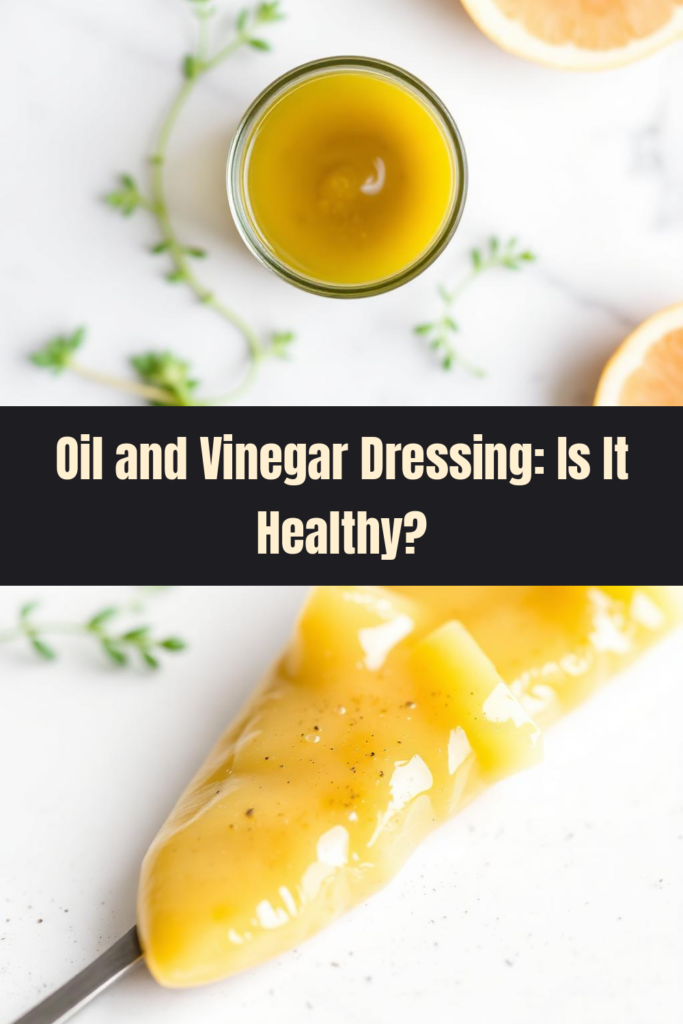
Oil and vinegar is a simple salad dressing that suits weeknight dinners and make-ahead lunches alike. It tastes bright and tangy, with a rich mouthfeel from the oil, and it pairs with any green salad, grain bowl, or roasted vegetable. You can whisk it in a bowl or shake it in a jar in under five minutes.
What Makes It Healthy
Oil and vinegar is a classic dressing because it uses whole ingredients: oil, vinegar, and a pinch of salt. Unlike creamy bottled dressings, it has no added sugar, thickeners, or preservatives. The oil provides fat that helps your body absorb fat-soluble vitamins from the vegetables, and the vinegar adds acidity without sodium-heavy flavorings. That said, “healthy” depends on the oil you choose and how much you use. Extra-virgin olive oil is a common choice for its flavor and monounsaturated fat, but any vegetable oil works. The ratio of oil to vinegar is usually 3:1 or 2:1; a 3:1 ratio is milder, while 2:1 is more tart.
Ingredients
Use this basic ratio for about 1/2 cup (120 ml) of dressing, enough for 4–6 servings of salad.
- 6 tbsp (90 ml) extra-virgin olive oil
- 2 tbsp (30 ml) red wine vinegar (or white wine, apple cider, or balsamic)
- 1/2 tsp Dijon mustard (optional, helps emulsify)
- 1/4 tsp fine sea salt
- 1/8 tsp black pepper
- 1 small garlic clove, minced (optional)
- 1/2 tsp dried oregano or thyme (optional)
Instructions
- In a small bowl, whisk together the vinegar, mustard (if using), salt, pepper, garlic, and herbs until the salt dissolves.
- Slowly drizzle in the olive oil while whisking constantly. The dressing will look thick and slightly cloudy when emulsified.
- Taste and adjust: add a pinch more salt or a drop of vinegar if it tastes flat. Use immediately or refrigerate.
- If refrigerated, let the dressing sit at room temperature for 10–15 minutes and shake or whisk before serving, because the oil will solidify when cold.
Substitutions
- Oil: Replace olive oil with avocado, canola, or grapeseed oil in equal measure. Avocado oil has a neutral flavor; canola is lighter.
- Vinegar: Swap red wine vinegar for white wine, apple cider, champagne, or sherry vinegar in equal amounts. Balsamic is sweeter and darker; use 1:1 but expect a richer taste.
- Mustard: Omit it entirely, or use 1/2 tsp honey or maple syrup for a subtle sweetness. Mustard helps keep the dressing blended longer.
- Garlic: Use 1/4 tsp garlic powder if you don’t have fresh; it won’t be as pungent.
- Herbs: Use 1 tbsp (3 g) fresh chopped herbs like parsley, basil, or chives instead of dried, added just before serving.
Storage and Safety
Store oil and vinegar dressing in a sealed jar or bottle in the refrigerator for up to 2 weeks. The oil will solidify when cold; that’s normal. Shake well before each use. If you add fresh garlic or herbs, refrigerate and use within 4 days, because garlic and herbs in oil can support botulism bacteria at room temperature. Always keep it chilled, and never leave it out for more than 2 hours. Discard if you see mold or an off smell. For a single serving, make just what you need—the dressing is quick to whisk fresh.
How to Use It
This dressing works on any green salad, from simple lettuce to hearty kale (massage the leaves first). It also dresses grain bowls, roasted vegetables, or cold pasta salad. For a classic vinaigrette, toss with salad just before serving—about 1–2 tbsp (15–30 ml) per 4 cups (100 g) of greens. If you’re packing lunch, keep the dressing in a separate small container and add it right before eating to avoid soggy greens.
Frequently Asked Questions
Is oil and vinegar dressing good for you?
It’s made from whole ingredients and has no added sugar or preservatives, but it is still a source of fat and calories. The amount you use matters—about 1–2 tablespoons per salad is typical. The health benefit comes from the oil’s unsaturated fats and the vinegar’s acidity, not from any special property.
What is the best oil-to-vinegar ratio?
The standard ratio is 3 parts oil to 1 part vinegar (3:1) for a mild dressing, or 2:1 for a more tart, tangy dressing. Start with 3:1 and adjust to taste.
Can I use balsamic vinegar instead of red wine?
Yes, use the same amount. Balsamic is sweeter and thicker, so the dressing will be darker and richer. You may want to reduce the oil slightly if it seems too thick.
Why does my dressing separate?
Oil and vinegar naturally separate because oil is less dense and doesn’t mix with water-based vinegar. Mustard acts as an emulsifier to slow separation, but it will still separate over time. Shake or whisk before each use.