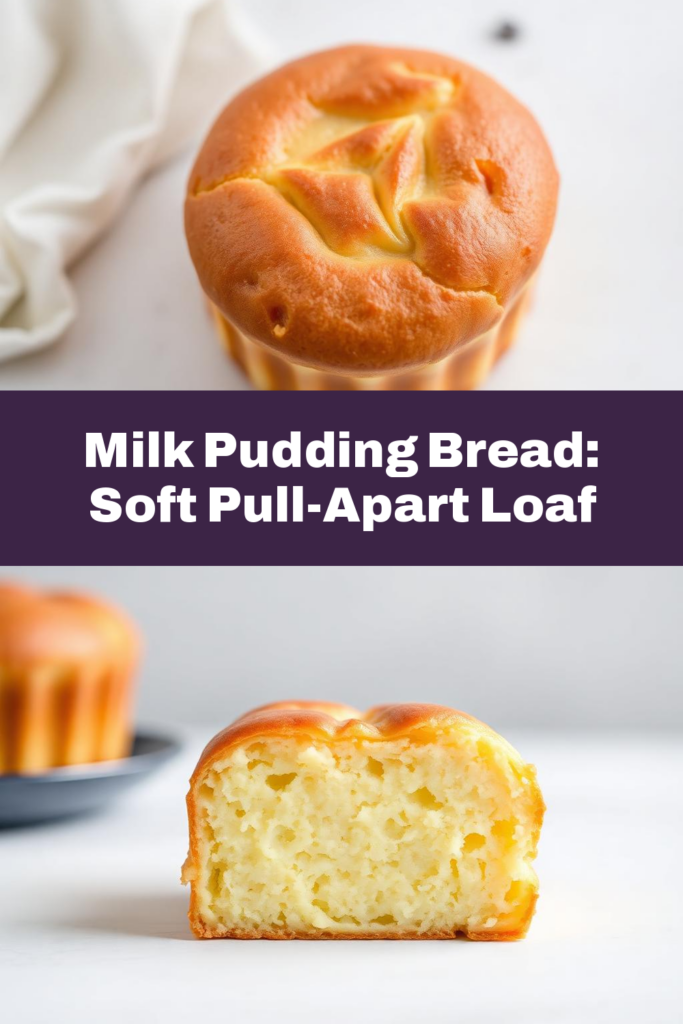
Milk pudding bread is a soft, slightly sweet pull-apart loaf enriched with milk and butter, with a custard-like filling baked into the layers. It suits breakfast, brunch, or an afternoon snack, and it keeps well for a few days. The key ratio is about 1 cup of milk per 3 cups of flour, which gives a tender crumb without making the dough sticky.
Ingredients
- 3 cups (375 g) all-purpose flour, plus more for dusting
- 1/4 cup (50 g) granulated sugar
- 2 1/4 tsp (7 g) instant yeast (one packet)
- 1/2 tsp salt
- 1 cup (240 ml) whole milk, warmed to 110°F (43°C)
- 1 large egg, room temperature
- 3 tbsp (42 g) unsalted butter, melted, plus more for brushing
- For the pudding filling:
- 1 cup (240 ml) whole milk
- 1/4 cup (50 g) granulated sugar
- 2 tbsp (16 g) cornstarch
- 2 large egg yolks
- 1 tsp vanilla extract
- 2 tbsp (28 g) unsalted butter, cut into small pieces
Make the Milk Pudding Filling
- In a medium saucepan, whisk together 1/4 cup sugar, cornstarch, and egg yolks until smooth. Gradually whisk in 1 cup milk.
- Cook over medium heat, stirring constantly, until the mixture thickens and comes to a gentle boil, about 5–7 minutes. It should be thick enough to coat the back of a spoon.
- Remove from heat and stir in vanilla and 2 tbsp butter until melted. Transfer to a bowl, cover with plastic wrap directly on the surface, and refrigerate until cool, about 30 minutes.
Make the Dough and Assemble
- In a large bowl, whisk together flour, sugar, yeast, and salt. Add warm milk, egg, and 3 tbsp melted butter. Stir until a shaggy dough forms.
- Turn out onto a lightly floured surface and knead for 8–10 minutes, until smooth and elastic. The dough should be soft but not sticky; add flour 1 tbsp at a time if needed.
- Place dough in a lightly greased bowl, cover, and let rise in a warm spot until doubled, about 1 hour.
- Punch down the dough. On a floured surface, roll it into a 12×18-inch (30×45 cm) rectangle.
- Spread the cooled pudding filling evenly over the dough, leaving a 1/2-inch border. If the filling is too thick to spread, stir in 1–2 tsp milk.
- Roll the dough tightly from a long side into a log. Cut the log into 8 equal slices.
- Place the slices cut-side up in a greased 9×5-inch (23×13 cm) loaf pan. Cover loosely and let rise until puffy, about 30 minutes.
Bake the Bread
- Preheat oven to 350°F (175°C).
- Bake the bread for 30–35 minutes, until the top is deep golden brown and the internal temperature reaches 190°F (88°C) in the center (or 200°F/93°C for a fully baked loaf). If the top browns too quickly, tent loosely with foil after 20 minutes.
- Remove from oven and let cool in the pan for 10 minutes, then transfer to a wire rack. Serve warm or at room temperature.
Why It Can Come Out Dry, Runny, or Dense
Dry bread usually means too much flour or overbaking. Measure flour by spooning it into the cup and leveling off, not scooping. Bake until the internal temperature reads 190°F (88°C), not just by time.
Runny filling happens when the pudding is undercooked or the bread is cut too soon. Cook the pudding until it visibly boils and thickens, and let the bread cool at least 20 minutes before slicing.
Dense bread comes from under-kneading or a short first rise. Knead until the dough passes the windowpane test: stretch a small piece thin enough to see light through without tearing. Let it rise until truly doubled, which can take longer in a cool kitchen.
Substitutions and Variations
- Milk: Use 2% or whole milk for the dough; non-dairy milk like oat or almond works, but the bread will be slightly less tender. For the filling, use any milk you like.
- Butter: Swap in margarine or a plant-based butter for a dairy-free version; the flavor will be less rich.
- Egg: For an egg-free dough, omit the egg and increase milk by 2 tbsp (30 ml). The bread will be a bit less soft.
- Flavor: Add 1 tsp lemon zest or 1/2 tsp cinnamon to the filling for a different twist.
Storing and Reheating
Store the bread in an airtight container at room temperature for up to 2 days. For longer storage, wrap tightly and refrigerate for up to 4 days, or freeze for up to 1 month. To reheat, warm slices in a toaster or microwave for 10–15 seconds. The filling contains dairy and eggs, so do not leave the bread out for more than 2 hours total.
Can I Make This Ahead?
Yes. You can prepare the pudding filling up to 2 days ahead and keep it refrigerated. The assembled, unbaked loaf can be covered and refrigerated overnight after the second rise; bake it straight from the fridge, adding 5–10 minutes to the baking time. The internal temperature should still reach 190°F (88°C).
What If I Don’t Have Instant Yeast?
Use active dry yeast instead. Dissolve it in the warm milk with a pinch of sugar and let it sit for 5–10 minutes until foamy before adding to the dry ingredients. The rise times may be slightly longer.
Safe minimum internal temperatures follow USDA FSIS; raw-fish guidance follows the U.S. FDA. See our food safety notes.
Spotted an error? Tell us and we will correct it (corrections policy).





