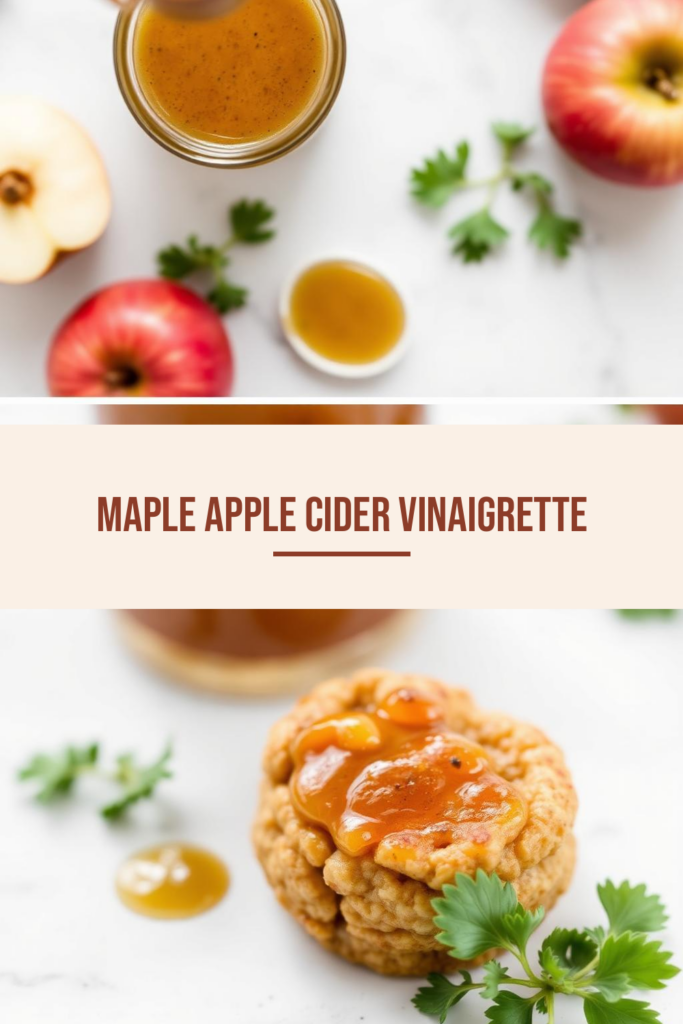
Maple apple cider vinaigrette is a tangy-sweet salad dressing built on a 3:1 oil-to-acid ratio, with maple syrup balancing the cider vinegar’s sharpness. It clings to greens and roasted vegetables, and suits fall salads, grain bowls, or as a quick marinade for chicken. The emulsion is temporary—shake or whisk just before serving.
Ingredients
- 1/4 cup (60 ml) apple cider vinegar
- 2 tablespoons (30 ml) pure maple syrup
- 1 teaspoon Dijon mustard
- 1/4 teaspoon fine sea salt
- 1/8 teaspoon black pepper
- 1/2 cup (120 ml) neutral oil (sunflower, grapeseed, or canola)
- Optional: 1 small shallot, minced (about 1 tablespoon)
Instructions
- In a small bowl or a jar with a tight-fitting lid, combine the apple cider vinegar, maple syrup, Dijon mustard, salt, pepper, and shallot if using. Whisk or shake until the salt dissolves and the mustard is fully incorporated.
- Slowly drizzle in the oil while whisking constantly, or add the oil to the jar, seal, and shake vigorously for 20–30 seconds until the dressing looks cloudy and slightly thickened.
- Taste and adjust: add a pinch more salt if flat, a teaspoon more maple if too tart, or a teaspoon more vinegar if too sweet.
- Use immediately, or refrigerate in a sealed jar for up to 1 week. Shake well before each use—the dressing will separate as it sits.
Why It Can Turn Out Too Tart, Too Sweet, or Too Thin
The balance of vinegar to maple is the main variable. If the dressing tastes harshly acidic, the maple syrup may be mild or the vinegar stronger than usual—add maple in 1-teaspoon increments. If it tastes cloying, add vinegar in 1-teaspoon increments. The oil-to-acid ratio is fixed at 2:1 (oil to vinegar); if you prefer a milder tang, use 3/4 cup (180 ml) oil instead of 1/2 cup, but the dressing will be thicker and richer.
A thin, watery dressing usually means the oil and vinegar have separated—this is normal and not a defect. Whisk or shake for 20 seconds before pouring. If the dressing is too thin even after shaking, you may have added too much vinegar relative to oil; whisk in an extra tablespoon of oil to rebalance.
Substitutions and What Changes
- Apple cider vinegar → white wine vinegar or champagne vinegar: Use the same 1/4 cup (60 ml). White wine vinegar is slightly less fruity; champagne vinegar is milder and less sharp. The maple flavor will come forward more.
- Maple syrup → honey: Use 2 tablespoons (30 ml) honey. Honey is thicker and sweeter, so the dressing will be slightly more viscous and a touch sweeter. If using a strong honey (like buckwheat), reduce to 1 1/2 tablespoons (22 ml) and taste.
- Dijon mustard → yellow mustard: Use 1 teaspoon. Yellow mustard is milder and less creamy; the emulsion will be slightly less stable, so shake more vigorously.
- Neutral oil → olive oil: Use 1/2 cup (120 ml) extra-virgin olive oil. The dressing will have a peppery, grassy note and may solidify in the fridge—let it sit at room temperature for 10 minutes before shaking.
- Shallot → 1/4 teaspoon garlic powder: Adds a milder allium flavor. Fresh garlic can be used, but it will intensify over time; use 1/2 teaspoon minced garlic and consume within 2 days.
Three Mistakes That Ruin the Dressing
Adding Oil Too Fast
If you pour all the oil in at once while whisking, the dressing will not emulsify and will stay separated. Even with mustard as an emulsifier, a slow stream is key. If it breaks, whisk in 1 teaspoon of Dijon mustard and then whisk the dressing vigorously—this often brings it back together.
Using Cold Maple Syrup
Cold maple syrup is thick and doesn’t dissolve evenly, leaving pockets of sweetness. Warm the syrup slightly (10 seconds in a microwave, or set the bottle in warm water for 5 minutes) before measuring, or whisk the syrup with the vinegar first until fully combined.
Over-Shaking with a Blender
Using a blender or food processor can create a thick, airy emulsion that turns foamy and separates quickly. A jar or whisk is enough. If you do use a blender, pulse only 2–3 times and use it within an hour.
Storing and Make-Ahead
Store the vinaigrette in a sealed glass jar in the refrigerator for up to 1 week. The oil will solidify and the dressing will separate—this is normal. Remove from the fridge 10–15 minutes before using, then shake vigorously for 20 seconds. If the dressing tastes flat after shaking, add a pinch of salt and shake again.
For a make-ahead salad, dress only the amount you plan to eat. Undressed greens keep 3–5 days in a crisper drawer; dressed greens wilt within 30 minutes. If you want to pack a salad for lunch, keep the dressing in a small separate container and add just before eating.
This dressing is not suitable for canning or room-temperature storage. Always refrigerate after mixing, and discard any dressing left at room temperature for more than 2 hours.
Safe minimum internal temperatures follow USDA FSIS; raw-fish guidance follows the U.S. FDA. See our food safety notes.
Spotted an error? Tell us and we will correct it (corrections policy).





